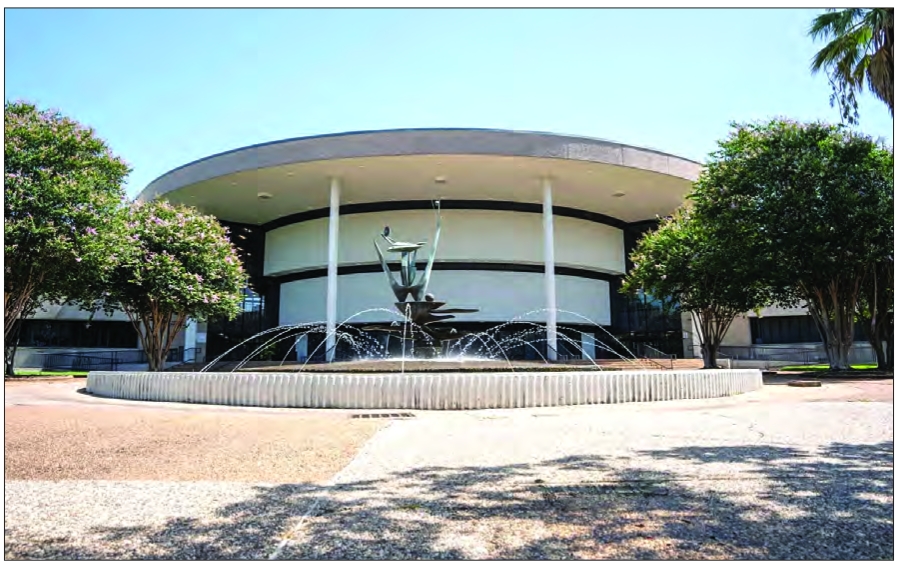
The Martin Luther King Jr. Humanities Center at Texas Southern University was designed by Saudenrs Chase Jr., Texas’ first licensed Black architect.
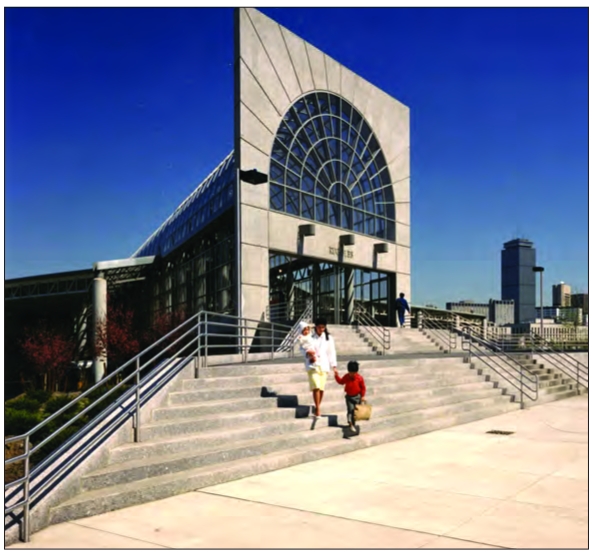
A Black-led architecture firm, Stull & Lee, Inc. led the planning for the extension of MBTA’s Orange Line and park at Ruggles Station.
Churches. HBCU campuses. A shopping center. Transportation infrastructure tied to one of the largest urban planning projects in Boston’s history.
This year’s class of Conserving Black Modernism grantees spans building types most preservation programs never touch together — and that range is exactly the point.
What ties them together isn’t type or location, but the architects: each was designed by a Black architect whose career helped shape the built environment beyond the credit they usually received.
Supported by funds from the National Trust for Historic Preservation’s Action Fund, five buildings across five states will share $750,000 in planning support. Boston’s contribution to the cohort is the Southwest Corridor Project and Ruggles Station — infrastructure that exists because a Black-led firm, Stull & Lee, stepped in after residents defeated a planned highway in 1969.
Northeastern University will use the funding to document the firm’s work along the corridor.
The initiative is a planning grant program built around one core standard: preserving the work of African American architects from the mid- to late 20th century.
Rather than treating each site as an isolated landmark, the program asks applicants to situate their building within a much larger story — one where architecture, politics and community life were never really separate.
“The main criteria is preserving African American architects of the 20th century,” said Tiffany Tolbert, co-director and vice president of the Action Fund.
Conserving Black Modernism pairs preservation planning with research, documenting not just a building’s structure but the history behind its design. Milwaukee’s Central City Plaza, for instance, started as a Black-owned retail hub meant to rebuild a neighborhood’s economy after urban renewal gutted it. Its designer, Alonzo Robinson Jr., held the first Black architecture license issued in Wisconsin. A Historic Structures Report will now guide repairs to the shelter space the Salvation Army operates there.
In Houston, Texas Southern University’s MLK Jr. Humanities Center came off the drafting table of John Saunders Chase Jr., the first Black architect licensed in that state. The newly announced grant will fund a structural assessment focused on the building’s foundation and envelope.
At Fisk University in Nashville, Park-Johnson Hall bears the design of Moses McKissack III, whose firm remains the oldest Black-owned architecture practice in the United States. The grant funds a management plan situating the hall in McKissack & McKissack’s broader body of work on campus.
And in East Chicago, Indiana, St. Mark AME Zion Church was shaped by Wendell Campbell, a founding figure of the National Organization of Minority Architects (NOMA). Funding covers a plan for its long-term upkeep.
Tolbert said that architectural history is often inseparable from the political and social movements of the era.
“There’s a component of research to capture the history of the architect and why they specifically designed a building in a certain way,” Tolbert said. “It could’ve been connected to the social justice movement or civil rights.”
This year’s grantee list reflects that range directly. Tolbert pointed to churches and HBCU campuses as anchors of the class, alongside a first for the program: a shopping center. The program is also backing research into transportation infrastructure, including Boston’s Southwest Corridor Project with the MBTA.
For Senior Preservation Architect Brandon Bibby, whose preservation work took him through communities across Arkansas before local projects tied to Northeastern, this year’s grantees represent something more specific than a checklist of building types — they reflect who’s driving the work.
Bibby described the forces behind the projects he’s been closest to as “specific community needs, driven by local leadership.” He named Black education spaces and the Southwest Corridor effort — among “the largest urban planning projects with MBTA in Boston””— as sites where architecture and community identity are deeply intertwined.
Bibby framed the stakes and impact as going beyond any single building or grant cycle.
“I think it’s important that we preserve those stories,” he said. “African American stories. Latin stories. Asian stories. All stories.”
Every poject in this year’s class moves forward under the same structure, Tolbert added: grantees work directly with Action Fund staff, guided by standards designed to keep the research and planning grounded in the communities the buildings serve.
“We do hve guidance and guidelines in ensuring that they are informed by community engagement,” Tolbert said. “Some properties are really about understanding the preservation needs.”
That’s a deliberate check against one of preservation’s most persistent problems, too, according to Tolbert: sustaining a site once the initial planning work is done. Funding remains the constant challenge, she said, but the Action Fund leans on creative design and preservation planning to help grantees stretch what they have.
The Action Fund tracks concrete outcomes like funding raised, revenue generated and people employed as markers that a preserved site is doing more than standing still.
Taken together, this year’s grantees — the churches, the HBCU campuses, the shopping center, the transportation projects tied to Boston’s transit history — represent a broader case about the program’s purpose.
“We are encouraged to see communities embracing history and heritage,” she said. The work, she added, builds toward “the broad understanding of African American life in this country,” a legacy she described as “ingrained in infrastructure, in buildings and communities. And it’s still there.”
That appears to be the through line across every site this grant season: buildings that were never just buildings, now getting the research, funding and recognition to make sure they aren’t forgotten.
From a Boston transit corridor to a first-time shopping center, the class of grantees illustrates just how wide “Black modernism” actually runs — through worship spaces, campuses, commerce and infrastructure alike — and how much of that history was hiding in plain sight.