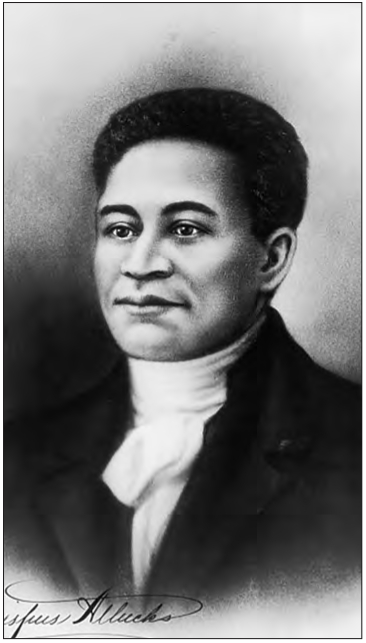
Speculative portrait of Crispus Attucks Division
is a word that stands in stark contrast to the ideals inherent to the
United States of America, but it has become an operative one for Donald
Trump and his administration.
Even
as the nation gathers to celebrate its 250th birthday, we witness an
insuperable divide, keenly illustrated in the notion of two differing
commemorations. One is “America 250” and the other “Freedom 250.”
The latter was initiated by Trump to counter the prior one established by Congress in 2016 as the official, nonpartisan commission and often cited as “America’s Block Party.”
In 2025, Trump issued an executive order, thereby creating an arm of his administration‘s Task Force 250. What we have, as one pundit put it, is one birthday and two planners.
First to die for his country
Of course, early on, the country observed that someone else’s birthday was in the mix when Ultimate Fighting Championship events were staged on the South Lawn of the White
House on June 14.
This was just another blatant example of
his egomania, his narcissism that has imperiled us since the
inauguration of his second term. We have, in these pages, posted
countless critiques of his tyranny of monarchy, and there is so much
more to be said as we endure his assault on our democratic rights.
The
soldiers shot, and five bodies fell. The first to die was a
fiftyyear-old former slave, either a Black or Indian mulatto sailor
named Crispus Attucks.
Evidence
of this occurs daily — the evisceration of the Voting Rights Act, the
suspension of the TPS that threatens the deportation of Haitians and
Syrians, and at the same time opening our portals to allegedly racially
embattled white South Africans, the militarization of our streets with
ICE agents, ending the Constitutional guarantees of birthright, an
unsanctioned and reckless war with Iran, and ad infinitum.
So
you have your choice as to which of the two parties to hang your hat,
commit your loyalty, and attend. What we are proposing is a third option
— let’s celebrate the birthday of Crispus Attucks, the first to fall in
the Boston Massacre in 1770.
Sailor, whaler, patriot
There
is still debate about his ancestry, whether he was Black, Native
American, or a bit of both. To a certain degree, that is inconsequential
when you consider he escaped from bondage and ended up among those
protesting the presence of British soldiers in Boston. According to the
best records, he was born in 1723, predating the Declaration of
Independence by 53 years.
Before
and after his enslavement, Attucks worked as a sailor and whaler, and
sometimes on the docks. One of my favorite accounts of his courage and
death was written by historian Kenneth C. Davis in his book, “Don’t Know
Much About History — Everything You Need to Know about American History
but Never Learned.”
“Early
in March 1770,” the book reads, “a group of ropemakers fought with a
detachment of soldiers who were taking their jobs, and all around
Boston, angry encounters between soldiers and citizens became more
frequent. Tensions mounted until March 5, where a mob, many of them
hard-drinking waterfront workers, confronted a detachment of nine
British soldiers”
“Confronted
by a taunting mob calling for their blood, the soldiers grew … nervous.
It only took the word ‘fire,’ and most likely yelled by one of the
crowd, to ignite the situation. The soldiers shot, and five bodies fell.
The first to die was a fifty-year-old former slave, either a Black or
Indian mulatto sailor named Crispus Attucks.”
Cries for justice and freedom
Thus
began the Revolutionary War, the subsequent rise of the so-called
founding fathers (many of them slave holders), and those hallowed but
unfulfilled words of the Declaration of Independence.
The
call to honor Attucks’ place in the nation’s history gives resonance to
the millions of enslaved African Americans, the decimation of Native
Americans, and their ongoing cry for justice and total freedom.
Added
to this cry is the demand for reparations, an end to the electoral
college, expansion of the Supreme Court, and erasure of the unitary
executive theory, the constitutional law that Article II of the
Constitution vests all executive power directly in the president.
Already, the current president is invested with far too much unchecked
authority.
We are not
sure of the date of Attucks’ birth, so we have made it July 4, 1776. Let
us hope and pray it doesn’t take 250 more years to obtain our meager
demands. On that day, we can truly celebrate an undivided United States.