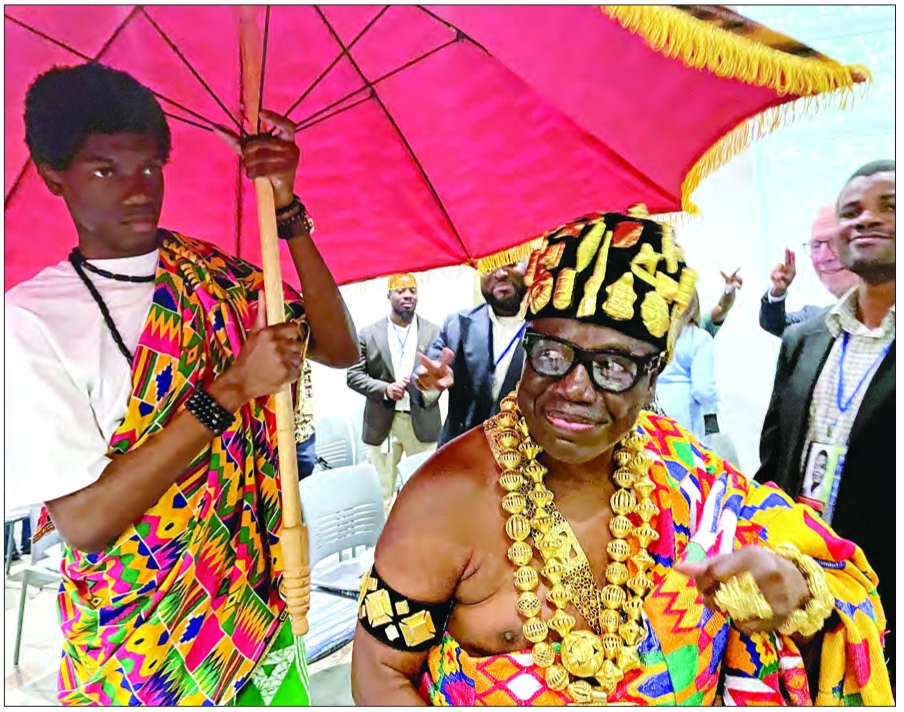
The kings of the local Ga community are led through the audience and to the front of the forum hall.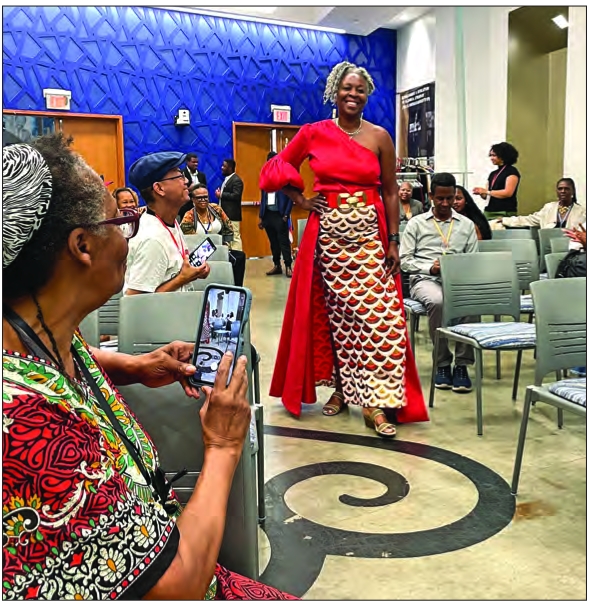
A model poses in the center aisle of the forum hall during the All-African Convention’s fashion show.
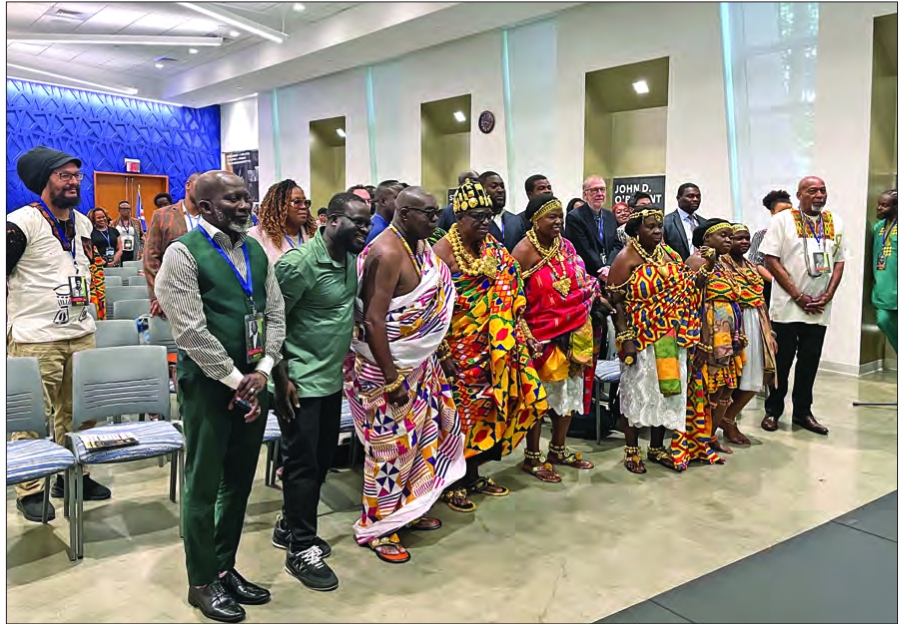
The king and queen of the local Boston Ga community are presented before the conference attendees.
Hundreds of people from around the African diaspora expanded their networks, celebrated their cultures and discussed some of the biggest issues facing the community at Boston’s second annual All-African Convention last weekend.
The three-day convention was organized by the Alliance for Total Freedom for Republics and Independent Countries of Africa Network (AFRICAN), an organization that seeks to engender unity, empowerment, justice and self-determination in African descendants all over the world.
This year’s convention theme was “Ubuntu: Unity in Action.” “Ubuntu” is an East African philosophy that translates to “I am because we are.” Convention organizers chose the theme as a natural follow-up to last year’s theme of “sankofa,” a Ghanaian word that means “go back and get it.”
“Like broken glass, you bring all the pieces together,” said head organizer Dr. Bright Eric Ohene, a Ghanaian cardiovascular surgeon. Ohene compared the diaspora to origami, where paper is folded along predetermined lines to create different images, and kirigami, where the paper is folded and cut; both require images to fit particular shapes and sizes that do not reflect their original forms.
“The cultural continuity of Africans and people of African descent, up until now, has been folded to fit a specific narrative,” he said.
Some 350 people registered for this year’s convention. The bulk of programming took place on Saturday at the John D. O’Bryant African American Institute at Northeastern University. Dozens of attendees that day listened to panels and presentations on growing West Africa’s medical economy, increasing global climate resiliency, investing resources and wealth to support the community and much more.
Ellyanne Chlystun-Githae, a teenage climate activist who has been an advocate since she was four years old, spoke on a panel on Saturday. The convention’s theme of collective unity, she said, speaks directly to her work: It is only through the help of other tree-lovers like herself that she was able to plant more than 1.3 million trees all over the world.
“I’ve been able to meet many people who have helped me increase my knowledge and help me understand what my passion is and help me elevate my passion,” she told the Banner.
Chlystun-Githae encouraged others to take advantage of the opportunities to connect.
“To be an individual is to partner with people,” Chlystun-Githae said. “You have to have that trust in yourself that you can be humble enough and ready enough to go and talk to other people and meet them and talk about what you’re doing.”
Isabelle Doh, a dance teacher and a political science student, moderated a panel on youth development on Saturday. She said that she is endlessly amazed by the way Black people of all backgrounds can come together for programs like the convention.
“Seeing all of us being in this place, already appreciating each other just because we can… I love that about the Black experience,” Doh said. “I don’t see it the same way in any other space.”
Doh stressed the importance of “holding each other’s hands” in the community.
“I think our job as humans is to keep a hand out to our elders to comfort them on their way out of life’s journey and to keep a hand out to the youth, to bring them up,”
Doh said. “How do we talk about that in [development]? How do we talk about that in science and technology? How do we talk about that in the workforce?”
Attendees also enjoyed live performances of songs from Nigerian-born musician Temidayo Balogun’s new album, “Afrolution,” and a fashion show displaying African garments handmade by local designer Yolanda Sealy.
Later, organizers honored leaders of Boston’s Ga community by naming four of its members local queens and kings. The Ga tribe, an ethnic group in Ghana, is known for retaining its institutions of power despite the threat of British colonialism, according to James Small, an activist and African Studies professor.
“Ga is one of the best-preserved communities, but it’s all over Africa,” Small told attendees. “This tradition, this institution — of the queen mothers, of our kings, of the kingmakers, of the courts — existed. They never destroyed us.”
When asked how attendees can uphold togetherness in their own lives after the convention ends, Ohene said people need to internalize thoughts about the ideas they’re discussing, organize and instigate those thoughts into actions, and expand those actions into institutions capable of supporting greater community work.
“Institutions is what keeps things [alive],” Ohene said.
“Lifelong things will always need an institution. This is the reason we have academics, lawyers, doctors, professors, among us.”
Doug Smith attended the convention to learn more about what’s happening in African countries. A legal coordinator at Dignidad, a Waltham immigration nonprofit, Smith works with African diaspora communities. He wanted to learn who the innovators were and how to keep people safe if they come to the United States.
A key takeaway, he said, was not to let differences among people impede action that can help everyone.
“People are facing common problems from different contexts,” Smith said. “There’s a lot to be learned and a lot of power together that doesn’t exist apart.”