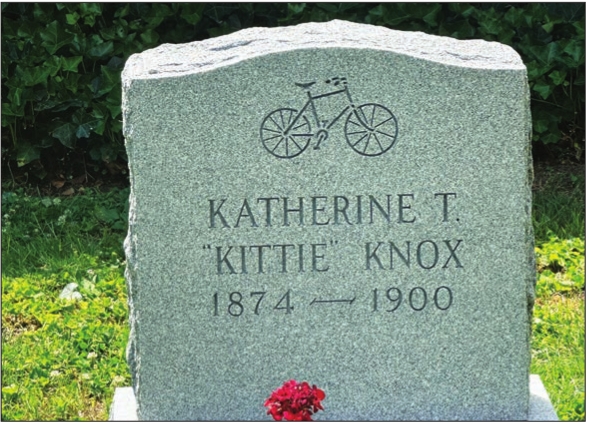
Cyclist Kittie Knox was only 26 when she died. 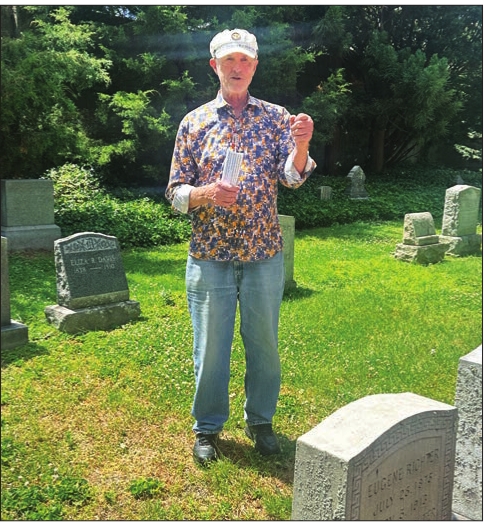
Historian Lorenz Finison discusses Kittie Knox’s place in cycling history.
Katherine “Kittie” Knox, born 1874 in Cambridge, was a pioneering and skilled biracial cyclist and seamstress at large during the Reconstruction Era. She gained national and international acclaim for challenging the misogyny and racism entrenched in Boston’s cycling circles. More than 125 years after her death in 1900, she continues to be honored in the region.
The daughter of a Black father and white mother, Knox was an activist and athlete in equal measure. Dubbed a “scorcher” by the local press at the time due to her speed, she was a champion of the early feminist movement.
Throughout the Reconstruction Era, women were expected to don layered, floor-length skirts for biking and were only permitted to use women’s bikes, which featured a lowered, concave frame that accommodated said skirts. People of color were also banned from the era’s dominant cycling organization, the League of American Wheelmen (LAW), under their segregated “color bar.”
Socially disadvantaged by the intersectional nature of her identity, Knox defied these two restrictions by sewing her own bloomers and wearing them as she rode men’s bicycles, forcing her way into LAW. She became the first accepted Black LAW member.
“Kittie’s story is the embodiment of boldness. She just grabbed life by the handlebars and biked,” Knox’s third cousin, Jeff Millet, told The Banner following a Juneteenth event and bike ride in her honor at Mount Auburn Cemetery in Cambridge.
After her premature death at age 26 due to nephritis, a kidney disease, Knox was essentially forgotten in public memory; she was buried in an unmarked grave at Mount Auburn. It wasn’t until recently that her rich story was rediscovered by Boston College historian Lorenz Finison.
“Kittie was forgotten for like, 70 years, and then finally there was a little note in ‘The Social History of Biking’ by Robert Smith, a 1970s book. That clued me in to her story, which I picked up and ran with,” Finison said, adding that historians at that time didn’t have access to the wide breadth of archives they do today. “Now, within the last 10 years, her name is becoming more and more known around the Boston area.”
Finison is considered the local expert on Knox, whose lesser-known story is now gaining publicity due to his work. Finison authored “Boston’s Cycling Craze, 1890-1900,” which details her story.