
As METCO marks its 60th anniversary, it stands as one of the longest-running voluntary desegregation programs in the United States — born out of protest, sustained by community, and still confronting the same structural inequities that made it necessary.
What we see today can make it easy to forget that METCO was the result of a hard-fought struggle led by many of Boston’s major Black leaders. It did not emerge from policy consensus or political goodwill.
It emerged because Black families, backed by a network of organizers, refused to accept a system that consigned their children to under-resourced schools while others benefited from opportunity.
To understand METCO, we have to start with an uncomfortable truth: segregation in Boston was not accidental — it was the result of deliberate policy choices.
Through redlining, discriminatory lending, and exclusionary housing practices, Black families were concentrated in neighborhoods like Roxbury, while white families gained access to suburban communities with better-funded schools, safer environments, and greater long-term opportunity. Education inequality followed housing inequality, and both were shaped by these systemic decisions.
By the 1950s and early 1960s, Black parents in Boston saw clearly what many in power refused to acknowledge: their children were being systematically denied equal educational opportunity.
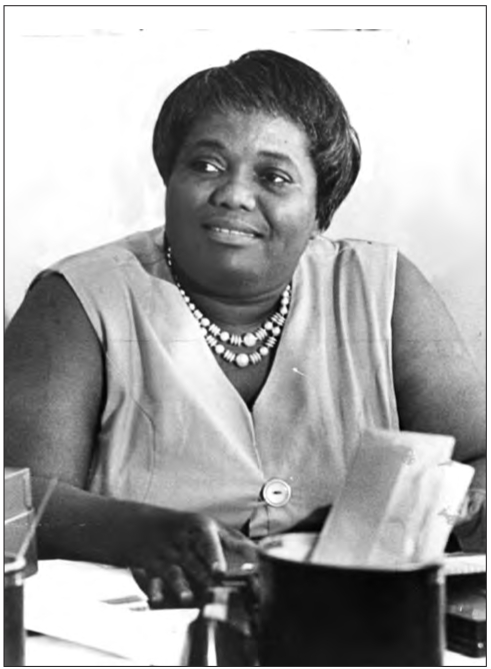
And they organized. The history of METCO is a story of integration, community leadership, institution-building, and sustained resistance. Black women, in particular, played central and often underrecognized leadership roles in this work. Their contributions were operational, strategic, and essential.
Their leadership spanned a broad ecosystem. There were strategists like Melnea Cass, who helped coordinate movement-wide efforts through the NAACP and broader civic networks. There were program builders like Ellen Jackson and Elizabeth Johnson, who created Operation Exodus— organizing transportation, logistics, and community support to move hundreds of Black children into better-resourced schools shortly before METCO’s formal launch.
There were operators like Viola McLeod, doing the day-to-day work that kept these efforts running. Educators like Peggy Dammond Day helped build Freedom Schools that taught Black history, civic responsibility, and nonviolence during student boycotts. Cultural leaders like Elma Lewis reinforced the importance of identity and affirmation alongside access. Bridge-builders like Katherine Jones connected Boston families with suburban communities willing to participate in integration efforts.
Institutional leaders like Jean McGuire would later sustain and expand METCO for decades, transforming it from an experiment into an enduring institution. Today, leaders like Dr. Kandice Sumner continue to adapt the program for a new generation.
At the same time, male leaders — including Paul Parks, Thomas Atkins, Mel King, Hubie Jones, Rev. Vernon Carter, Rev. James Breeden, Noel Day, Royal Bolling, Dr. Leon Trilling, and administrators like Charles Brown and Joseph Killory — played critical roles in providing legal, political, and institutional leverage. They helped scale and formalize efforts and opened access to systems of power that were otherwise closed.
This was a coordinated effort across roles, sectors, and communities.
It emerged in direct response to resistance.
The Boston School Committee — led by Louise Day Hicks — took a hard line. They denied that segregation existed at all. Even as Black parents, researchers, and civil rights leaders presented clear evidence of unequal schools, the Committee publicly insisted that Boston schools were not segregated and that disparities were not systemic.
That denial functioned as strategy.
It removed the basis for reform.
It protected existing resource distributions.
It blocked accountability. In 1963, Ruth Batson and others presented detailed evidence of inequality in a seven-hour hearing before the School Committee. The result was refusal. The Committee declined to acknowledge even the existence of the problem.
When institutions deny reality, communities escalate.
The response from Black Boston was swift and organized. Protests, sit-ins, and boycotts followed. The “Stay Out for Freedom” campaigns mobilized thousands of students to boycott segregated schools, while Freedom Schools provided meaningful education in their place.
These efforts created parallel systems—designed to resist and replace what was failing.
Operation Exodus extended that work further.
Black parents organized transportation networks to move their children into better schools across the city — without government mandate or formal support, driven by necessity and collective action.
METCO built on that foundation.
In 1966, the program formally launched, sending Black students from Boston to suburban school districts with available seats. It created access within a segregated system.
For many families, that access was life-changing.
The broader system, however, remained intact.
In 1974, when a federal court ordered Boston to desegregate its schools, the city’s resistance became undeniable. Black students were met with hostility and, in many cases, violence. White families boycotted schools, and entire neighborhoods mobilized against integration.
Public narratives that followed centered on “forced busing,” obscuring the decades of organizing that led to that moment. A civil rights struggle was reframed as a logistical disruption rather than a response to systemic injustice.
Through all of this, METCO continued.
It provided an alternative pathway. It reduced exposure to the most visible forms of resistance. It also required Black students to navigate long commutes, cultural isolation, and the burden of integration itself.
That burden was real. Black children were asked to adapt, to perform, and to succeed in environments that were not designed for them—all while the system that created the inequality remained largely unchanged.
And yet, they did succeed. Over six decades, METCO has served tens of thousands of students. It has built relationships across communities, expanded access to opportunity, and helped shape generations of leaders who have learned to navigate multiple worlds.
But success does not equal completion.
Today, Boston’s schools remain deeply segregated by race, income, and geography. Housing patterns continue to shape educational access. Structural inequities persist.
METCO stands as both a success and a signal.
It demonstrates what is possible.
It reveals what remains unfinished.
METCO emerged as a response to a system that refused to change. Its future calls for a system redesigned to deliver equity, access, and belonging at scale.
That future requires confronting housing segregation, funding disparities, and the structural inequities that continue to shape educational opportunity.
It also requires a clearer vision of success—one grounded in the lived experience of students and families.
As METCO looks toward its next 60 years, its leadership is clear about that vision. As CEO Dr. Kandice Sumner puts it:
“My overall goal as METCO enters its next 60 years is to make sure METCO students experience the fullness of their humanity in their education—that they can be excellent, joyful, and themselves without compromise. I want to make sure METCO’s parents and families affirm their ownership and build their power as our strongest educational advocates, and for alumni to be co-stewards of the growth, development, and sustainability of the program.”
This vision marks a shift. From access to belonging. From participation to power.
From persistence to full humanity.
Integration, in this next chapter, is measured by whether students thrive as their full selves—and whether families and alumni shape the systems that serve them.
The next chapter of METCO is defined by human dignity, shared power, and institutional accountability.
That is the standard. Because the ultimate goal has always been justice.
And rights, as METCO’s history reminds us, are never given.
They are fought for — and built.