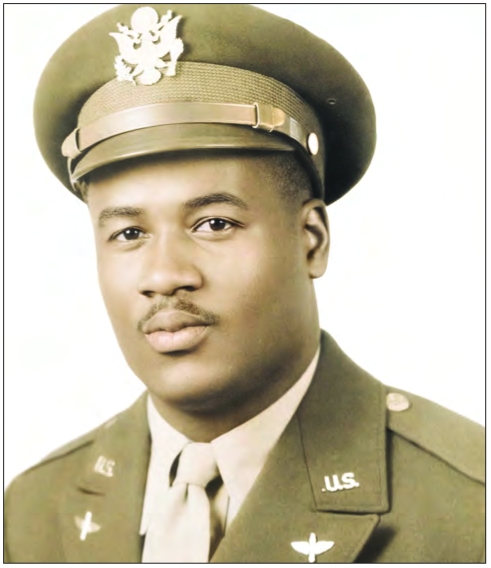
Milton Moses Hopkins Jr.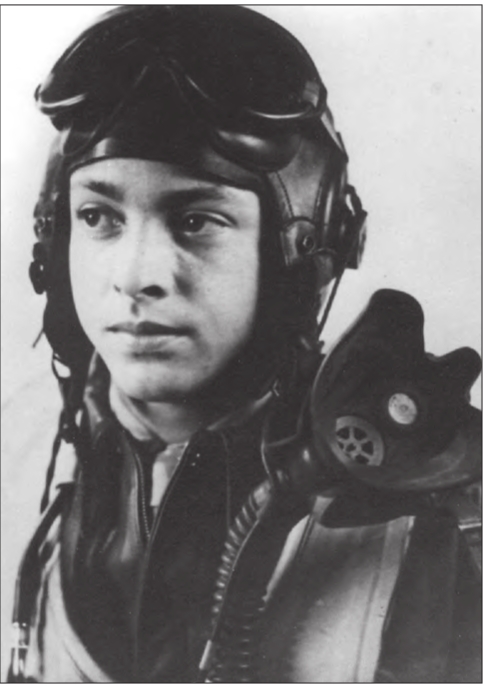
George Hardy
History is often told through generals and strategies, but its deepest truths emerge from personal stories. For Christina Hopkins, daughter of Milton Moses Hopkins Jr., history was alive at the Friday night card table, where “uncles” played poker and quietly shared the legacy of the Bedford Red Tails. Hopkins and Lt. Col. George Hardy’s stories embody “Wings of Protection,” where daily excellence and courage defined survival.
Initiated by engineer, Tuskegee Airmen Historian and Bedford, Mass. resident Sean Osborne, a March 26 commemoration sought to honor the enduring legacy and achievements of these trailblazers, building on Gov. Maura Healey’s designation of the fourth Thursday in March as Tuskegee Airmen Commemoration Day.
Shifting the focus to Milton M. Hopkins Jr., we see how individual discipline and family support laid the foundation for the excellence that defined his life.
Hopkins was raised in Houston’s Third Ward by a Pullman Porter father and a devoted mother. His daily 17-block walks to St. Nicholas Church instilled a discipline that later defined his military and scientific paths.
After majoring in physics at Xavier University, Hopkins swapped his academic robes for a flight suit in July 1943 when he became one of the first 14 Tuskegee Airmen meteorologists.
He was one of several Tuskegee Air-Mets who provided accurate weather data crucial to pilots, enabling them to safely execute 1,578 combat missions.
The success of these meteorologists proved that Black men could excel in specialized, scientific military roles, helping to break down racial barriers.
The youngest Red Tail: George Hardy
While Hopkins provided crucial weather data, George Hardy delivered protection in the skies. Born in Philadelphia in 1925, Hardy faced barriers from the country he served. At
17, his father at first refused to sign his Navy enlistment papers, wary of limited roles for Black sailors.
Hardy ultimately joined the U.S. Army Air Forces and trained at Tuskegee Army Air Field in 1944. By early 1945 in Italy, he became the youngest Red Tail to fly a combat sortie over Europe, flying 21 P-51 Mustang missions and witnessing flashes of enemy fire under his feet.
Hardy’s service continued beyond World War II. He flew 45 missions in Korea and 70 in Vietnam, earned degrees in electrical and systems engineering, and contributed to the Department of Defense’s first global military phone system.
To understand the full impact of the Tuskegee Airmen, their accomplishments are best reflected in statistics—figures that shattered persistent myths about Black capability:
- 15,000+: The number of individual sorties logged by the group.
- 1,600: The number of fighter missions flown over Nazi-occupied Europe.
- 150: The approximate number of Distinguished Flying Crosses earned by the group.
These men not only fought enemies abroad but also dismantled domestic myths of inferiority.
The “Wings of Protection” shielded both B-24s from Luftwaffe attacks and set a standard for future African Americans in the military. Their impact was honored with the Congressional Gold Medal in 2007 and the American Spirit Award in 2024.
The quiet flight path continues
After the war, Hopkins and Hardy moved from the cockpit to classrooms and labs. Hopkins worked with NASA during the Space Race, then taught physics and chemistry for 23 years. His wife, Perea, a mathematician and “human computer” at Aberdeen Proving Ground, strengthened this intellectually driven family. Christina only discovered her mother’s secret work after watching “Hidden Figures” together.
Willie Shellman, president of the New England Chapter of Tuskegee Airmen Inc., emphasized that the Airmen are not a monolith but rather part of the country’s military fabric: “African Americans have fought with valor and excellence in every armed conflict, even before the United States existed. Crispus Attucks, credited as the first to die during the 1770 Boston Massacre, shows this history stands for itself.”
Hopkins passed away in 2006, but his legacy continues. In 2007, Tuskegee Institute Middle School named a meteorology program in his honor. Family members like cousin Donovan now pursue atmospheric science.
Retired Lt. Col. Hardy passed in 2025 at age 100, after serving in three wars. His valor was officially etched into record through the Distinguished Flying Cross and twelve Air Medals, honors bestowed for his extraordinary heroism and singular achievements in the sky. After retiring his flight suit, he transitioned his leadership to the corporate world, dedicating more than fifteen years to program management at the GTE Corporation in Massachusetts.
The story of the Bedford Red Tails reminds us that history is not merely a record of conflict, but a testament to resilience. Milton Hopkins Jr. and George Hardy proved that excellence is the ultimate response to prejudice.
As George Hardy noted upon accepting his American Spirit Award, the fact that they proved they “could do anything that anyone else could do” is a legacy that continues to pay dividends for every American today. Their courage changed the world, but their humility ensured that for their families, they were simply heroes who happened to play a great game of poker.