“Black Woman Named to Cabinet by Weld.” On August 14, 1993, the news paper headline marked a milestone — but it didn’t tell the whole story. When Gov. William Weld and Lt. Gov. Paul Cellucci swore me in as Secretary of Consumer Affairs and Business Regulation at the 1747 Shirley-Eustis House in Roxbury, I felt the weight of history and the presence of community at the same time.
Standing beside me was Mel King — my first boss and lifelong teacher — and my girlfriends from Detroit, Michigan, women who understood that being first is never a solo act. At the ceremony, I said words that remain true today:
“I am not the first person with the talent — I am the first given the opportunity.”
Being first is not a victory lap. It is a responsibility. That moment followed two other firsts: Assistant Secretary of Administration and Finance— where I convened the first meeting between Gov. Weld and Black business owners — and before that, the first Black woman to serve as Assistant Secretary of Public Safety. There was no blueprint. When you are the first—or the only—you write the manual as you go. I was fortunate to be supported by leaders who understood that weight, including Rep. Byron Rushing and former Chief of Staff Karen Green. They modeled what I came to believe deeply: leadership is not about occupying space, but about expanding it.
That belief was formed early. I grew up in Bedford, the youngest of six children and the first girl after five boys. My mother was unwavering about two things: you don’t work, you don’t eat — and you never let anyone define you. We were the first Black family in Bedford, and we understood early that visibility comes with accountability.
Books became my window to the world. I read my way out of Bedford at the Bedford Library, where curiosity and imagination took root. Science fiction was my favorite—stories that asked what if and imagined new worlds. Long before I held authority, I was learning to see systems differently and to believe that better futures could be built.
That imagination was grounded in work. Like many Black families of Jamaican heritage, we worked more than one job to get ahead. We laughed at the “In Living Color” skit — How many jobs do you have? Only four? You’re lazy! — because it rang true. That ethic carried me through Harvard, where I completed my degree in four years while serving as Community Specialist for Teacher Corps Boston. I worked with women earning their GEDs, using telephone bills and grocery labels to teach reading —because real life, not See Spot Run, was the curriculum. They learned quickly, and so did I.
My doctoral thesis at the Harvard Graduate School of Education —Black Women in Blue-Collar Factory Jobs — was also a first.
It deepened my understanding of how people actually operate inside organizations, and how dignity, labor, and opportunity are inseparable.
My connection to Roxbury began early and never loosened. My grandmother and aunt lived in the Cabot Street Projects, near where Rep. Gloria Fox lived and led. My cousin Sandra and I—four months apart — spent countless weekends together. On Saturdays, I rode with my father on his garbage truck, work that taught me early about showing up—no matter the weather or the hour.
As a teenager, Sandy and I marched from Douglas Park with Dr. Martin Luther King Jr. to Boston Common, singing “Deep in my heart, I do believe.” Even then, I understood something essential: history is not something you watch. It is something you step into, carry forward, and leave better for those who follow.
I was a restless tween—always in motion. I absorbed the vitality of the Dudley area: Dutton’s, Robell’s, Kresge’s five-and-dime, Ferdinand’s, the Rivoli Theatre. I learned that community is built through work, commerce, culture, and care.
As a young woman, Roxbury was also freedom. I rode my motorcycle through the neighborhood, spent long afternoons in Franklin Park, and learned that belonging is lived, not granted. Almost everyone in Boston knows the Toon family; I became part of their extended family of 13. Mary Toon was my best friend. Her brother Danny was my hairdresser. Leadership, I learned, is relational.
My early work with Mel King at the Urban League and with Paul Parks through Model Cities set the trajectory for my life’s work. At Northeastern University, co-op placements allowed me to teach at the Timilty and Burke schools, organize Camp Bullwinkle at the Roxbury YMCA, and drive campers across Boston—to museums as far away as Rockport and Gloucester. I shared what I loved: art, culture, curiosity, and the simple idea that the world was bigger than any one neighborhood. Access, when shared, changes lives.
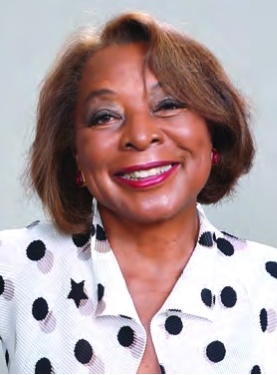
Priscilla H. Douglas is a Boston-based executive coach and author of Getting there and Staying There and Woke Leadership. You can find her on Substack: PHD2025. Her early work in Roxbury shaped her lifelong focus on equity, economics and leadership. She loves Broadway musicals, the arts, cycling and scuba diving.