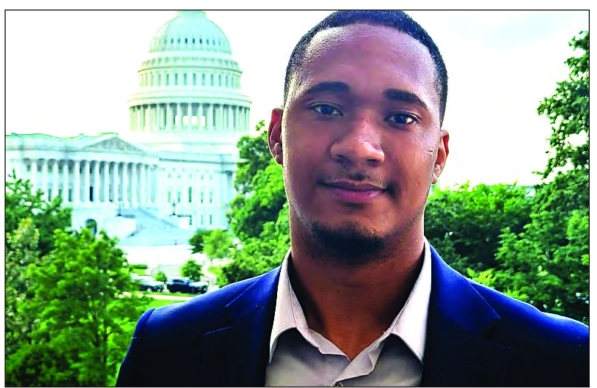
For
Tristan Thomas, director of policy and law at Alternatives for
Community and Environment, the climate report card’s environmental
justice section failed to inspire confidence.
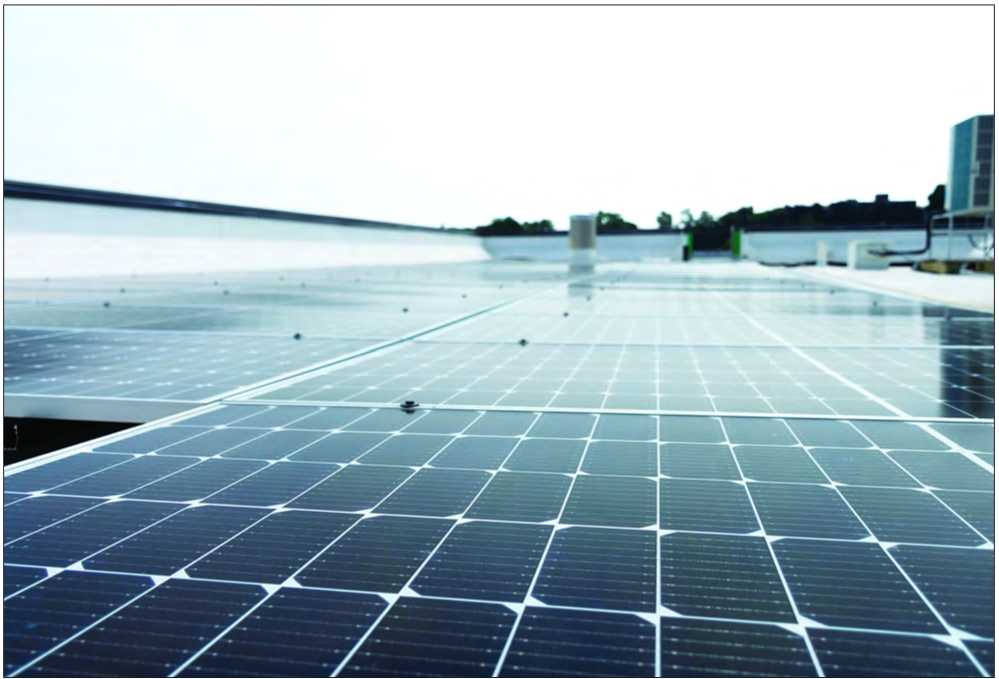
Solar
panels on the roof of the Kenzi building in Roxbury, July 2024. A new
report from the Healey-Driscoll administration tracked progress on the
state’s official climate metrics and targets.A climate report card released by the Massachusetts government has left some advocates frustrated with the pace of the state’s work around environmental justice areas.
The report card, released Feb. 13, is the third annual self-assessment released by the state regarding its clean energy and climate goals. The environmental justice section outlines efforts to address injustices and other disparities experienced by communities of color, low-income populations or populations that primarily speak a language other than English as a result of environmental actions taken by local, state or federal governments. It is one of six sections the report tracked.
The other sections looked at the
commonwealth’s progress on climate adaptations and resilience, natural
and working lands, transportation, buildings and environmental justice.
Overall, the state reported mixed results on its climate goals, with
higher than expected uptake of heat pumps, for example, but electric
vehicle adoption that didn’t measure up to state targets.
For
Tristan Thomas, director of policy and law at the Roxbury-based
nonprofit Alternatives for Community and Environment, which does
environmental justice advocacy, the report card’s environmental justice
section failed to inspire confidence.
“The report card is a reflection of the lack of progress that we’re making,” Thomas said, speaking broadly about the findings.
According
to the report card, the state saw some growth in the amount of state
funds directed to minority-owned businesses or in funding for programs
in environmental justice communities. In fiscal year 2025, the
Massachusetts Clean Energy Center, the state’s quasi-public agency
focused on climate-related economic development, spent $29 million of
its budget for workforce grants. Those grants help provide business
training on programs in environmental justice communities, up about $5
million from the year before and up nearly $9 million from the time of
the first report in 2023, even as that particular grant’s overall budget
dropped during that same period.
Also,
according to the new report card, 16.5% of spending through the state’s
Executive Office of Energy and Environmental Affairs went to
minority-owned businesses, more than twice what was reported in 2023.
But,
by other metrics, progress is lagging. For data about how many
residents in the state experience financial burdens with energy bills,
numbers have remained approximately flat in the three annual reports.
As
one of the metrics impacting the day-to-day life of residents, Thomas
called it “one of the most important metrics for our community.”
According
to the report card, 19.5% of households in Massachusetts pay more than
6% of their income in energy bills. Among residents receiving food
assistance (a proxy for low-income residents) the percentage of
households paying more than 6% of their income in energy bills rose to
48.9%. Those numbers haven’t varied by more than a couple tenths of a
percentage point since the state’s first climate report card.
For
other advocates, the state has been doing better than the report card
would suggest. John Walkey, director of climate justice at the
Chelsea-based environmental justice nonprofit Greenroots, said he thinks
the
state shortchanged itself on many of the efforts that the Massachusetts
Office of Environmental Justice and Equity has been doing to increase
parity in the siting and permitting of energy infrastructure.
He
pointed to how the state assesses which sites are suitable for energy
infrastructure and how it reaches out to communities to seek input
before it moves on such a project. The policy change reflects a shift
from what has often happened historically, where energy infrastructure
such as power plants have ended up in marginalized and other vulnerable
communities.
“All of these things, they’re all a quantum leap for the agencies,” Walkey said.
At
the same time, Walkey said he felt “some frustration” regarding the
energy burden numbers, but said that some of that is complicated by how
those metrics work with how utility companies set up their rates and
nebulous fees on electric bills like “energy efficiency” or “social
benefits.”
“I think there’s a lack of clarity over how much of your electrical bill is
going into the pockets of shareholders of these companies, and how much
of this electrical bill is actually going into the maintenance of the
system in a sensible way for the public,” Walkey said.
Also
complicating this year’s report is a lack of specified goals to be able
to measure progress. Other sections of the report include benchmarks,
but in the environmental justice section, only one of the five metrics
have established benchmarks. Of the other four, three are listed as
having targets that are still being developed; for the fifth, concerning
public and internal outreach and engagement, the state said there
aren’t current targets “at this time.”
Thomas said that to him, the lack of metrics suggests less investment in actually trying to solve the problem.
“If
we’re not measuring our success or even defining what success looks
like, then we’re not going to see the improvements that we need,” he
said.
Walkey said he
thinks creating official targets will “remain a challenge,” as any
benchmarks try to balance quantitative impacts with the social factors
that underlie them.
For
example, metrics on air quality can simply use data from air monitors
to track what sort of pollutants are in the air. But whether the air
quality is an environmental justice concern depends on the communities
impacted. Walkey pointed to East Boston, which has historically had and
continues to have lower air quality than other neighborhoods but where
median home sales have also sharply risen in recent years. “It becomes
an environmental concern, a public health concern, but less of an
[environmental justice] concern, as lower-income folks are being priced
just right out of the neighborhood,” Walkey said.
The targets are also
complicated by what the report card does and doesn’t cover. For the most
part, it’s focused on work through the state’s executive branch under
the Healey-Driscoll administration, but Walkey said a more complete
picture needs to consider the legislative branch as well.
“These are things that it takes a team, really, to do,” he said. “It’s like a group project in school.”
For
instance, Thomas and Walkey took issue with an energy affordability
bill passed by the House of Representatives Feb. 26, which would include
a $1 billion cut to Mass Save, a statewide program that aims to connect
residents with energy efficiency improvements.
Thomas said the program hasn’t always served environmental justice communities as well as it could have, but he believes
recent policy changes to Mass Save offered new opportunities to increase
equity. A $1 billion cut to the program would put those improvements at
risk, he said.
There
are other potential financial cuts that could also impact environmental
justice efforts as well. The governor’s budget proposal, filed with the
state Jan. 28, proposes that the state’s Office of Environmental Justice
and Equity receive just shy of $4.7 million in fiscal year 2027, about
$1.5 million less than it received last year and about $3.6 million less
than the Healey- Driscoll administration proposed that year.
In
the report card, the Healey-Driscoll administration pointed to federal
funding cuts as a primary challenge that has impacted the state’s work
on its environmental justice goals.
During
the Biden administration, organizations could seek more support from
the Environmental Protection Agency, but that pot of money has dried up
under the Trump administration.
Walkey
said funding for environmental justice efforts has “always been a bit
of a niche kind of boutique area of work,” where much of the financial
support has historically come from philanthropic sources. But, with the
“headwinds coming from the federal government, we need to be pushing
back against that,” he said.
Thomas
said he thinks it’s “unfortunate” that the state is emphasizing federal
disinvestment; he sees the budget changes as an indicator of state
disinvestment.
“I
anticipate that our 2026 report card will look even worse if the state
is cutting from its own environmental justice programs,” Thomas said.