
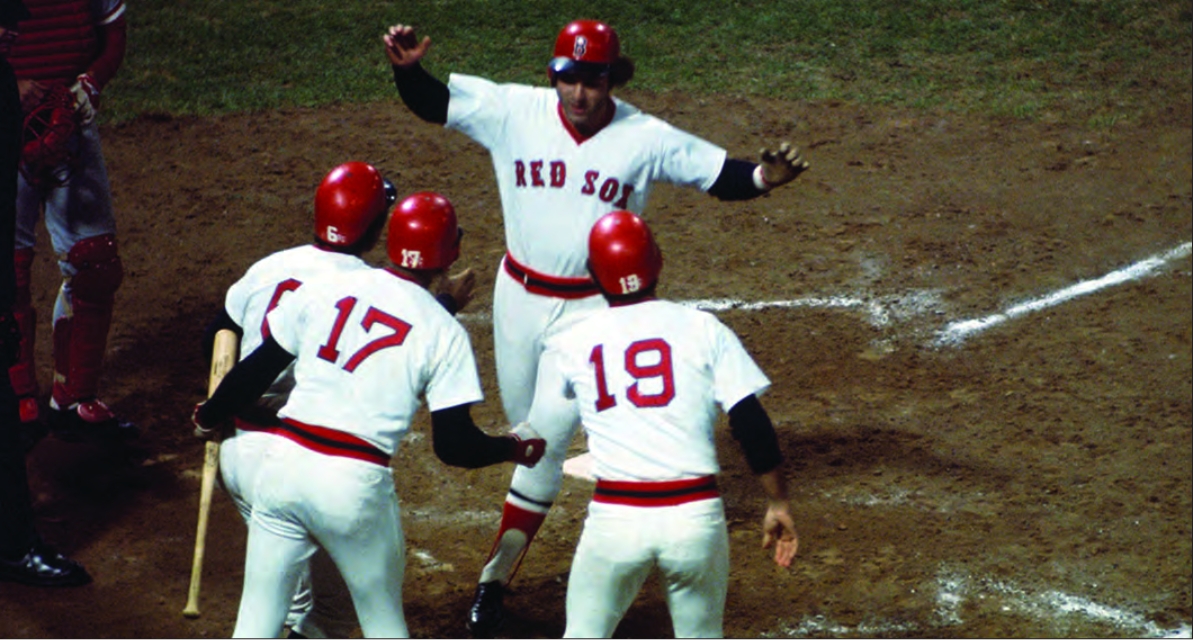
Bernie
Carbo crossing home after World Series HR against the Reds in 1975.
Carbo’s toy gorilla became a statement of the troubled times in Boston.

Author of “Segregation Games,” Prof. David Faflik
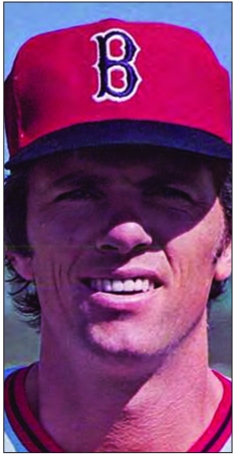
Red Sox Pitcher, Bill Lee, caused a stir in the 1970s with his support of Judge Arthur Garrity’s desegregation ruling.
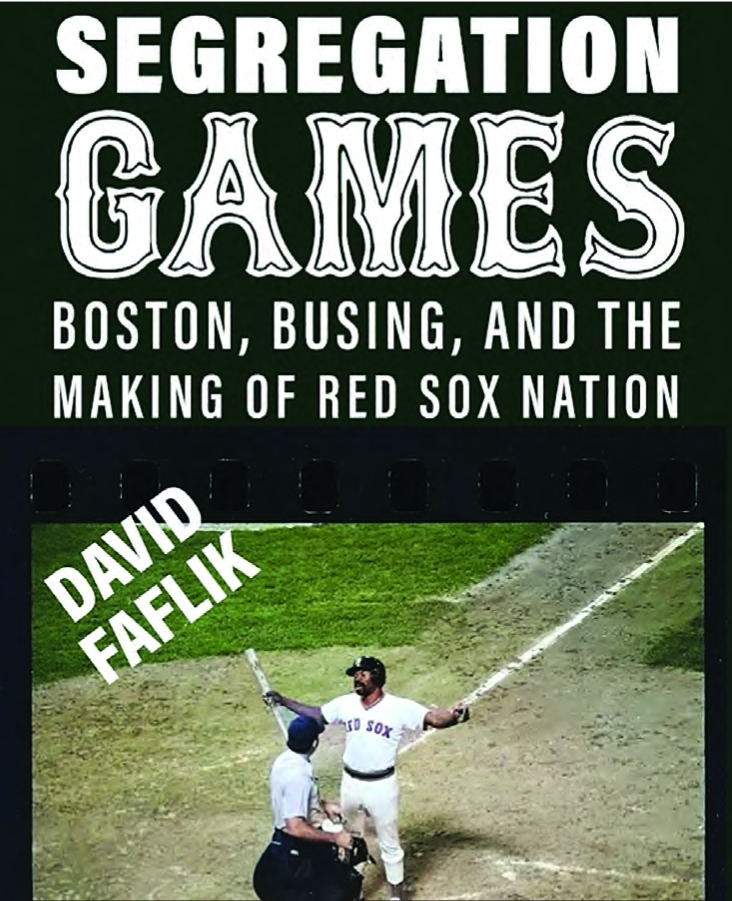
The Segregation Games book will be for sale on May 1, 2026.
A new Boston Sports book will be published later this year. The origin of this tome dates to a 2022 interview with professor David Faflik of the University of Rhode Island and me. Faflik is the author of the soon-to-be-released book “Segregation Games” — the first in a series by the University of Massachusetts Press-Sport for Social Change.
Faflik, a professor of American Literature and American Studies at URI, credits most of his research to the Bay State Banner.
The Banner was then owned by Mel Miller. Later, Faflik reached out to me and others for additional historical information for his book. He also read articles by Larry Whiteside of The Boston Globe, a major contributor to the book, whose insights, especially about Red Sox history, were invaluable.
“My only contribution from the Red Sox came through P.R. woman Sarah Coffin (now Ottinger), who was a valuable resource. She provided an avenue for me to reach Sox players. After numerous attempts to reach players, only pitcher Bill Lee would talk to me,” Faflik said. He also points out: “At the time, Lee was already under fire from the Boston media for his explosive comments about the city.” (Example: “The only man in this town with b***s is Judge Garrity.”)
While local media rankled over Lee’s comments, one newspaper made an impact by ignoring the Red Sox during the team’s 1975 World Series run: The Bay State Banner. The Banner’s attitude was, “The Red Sox don’t recognize the African American community, so why should the Black community recognize you?”
The Banner stood its ground and refused to write about the Red Sox during their run to the 1975 World Series. Historical note: The tension between the Banner and the Red Sox dated back to the 1960s. These are just some insights that will keep readers of this book entertained and educated about that period.
Faflik began researching his book in 2019. Its release date is scheduled for May 1. Former Red Sox outfielder Tommy Harper’s picture is on the cover. He is the central figure of Chapter 1. For those who don’t know, Harper was an outspoken critic of Red Sox management’s policies during his playing days. He would file a discrimination suit against the team, win and later return to the Red Sox organization in an executive role.
Faflik writes: “Upon studying the history of the Boston Red Sox — the last team in Major League Baseball to sign a Black ballplayer (Pumpsie Green) — and the team’s reluctance to hire Black employees for many years, I found myself looking deep into the correlation between busing and the city’s slow progress for change through one of its institutional sports franchises.
“Anti-busing protests became a sport” and many people felt the Red Sox were part of the stalled progress in the city. It took years for Boston to come to terms with Judge W. Arthur Garrity Jr.’s landmark decision ordering desegregation of the school system.
“The same can be said for the Boston Red Sox regarding the signing of Black players. In Chapter 2, I discuss how busing affected high school sports and the ugly story beneath the story. The ‘institutional awareness’ of busing and its effects on young people who saw its repercussions firsthand remains uncomfortable to discuss, even after all these years. It took years of research to write this book. There were many hours of soul-searching and asking myself, ‘Why do I want to do this?’ The answer was always the same — this history needs to be written for present and future generations.”
Faflik examines how the busing-era Red Sox differ from today’s Red Sox. He concludes his book with hope: that people will confront past ills openly to build a better future. He is grateful to Tommy Harper for his courage in driving change. He wants readers to understand Harper’s deep character and recognize his role in moving the Red Sox from a “shadowy past” to a franchise that has “shown growth” in addressing race.
That growth is echoed in Boston itself. Faflik’s book closely examines the historical facts of the Red Sox and busing, the result of years of painstaking research. He hopes his work will be appreciated and studied for its content.
This reporter shares the author’s sentiments in “Segregation Games.” Much remains unwritten about the Boston Red Sox and busing. Few are willing to confront the controversies from the late 1960s and 1970s to now. David Faflik courageously addresses that period. As a college professor, he wrote his book with the hope that society learns from its past to build a better future — a lesson we should all learn.
Postscript: Among the author’s academic credentials is that he created an undergraduate program in American Studies at the University of Rhode Island.