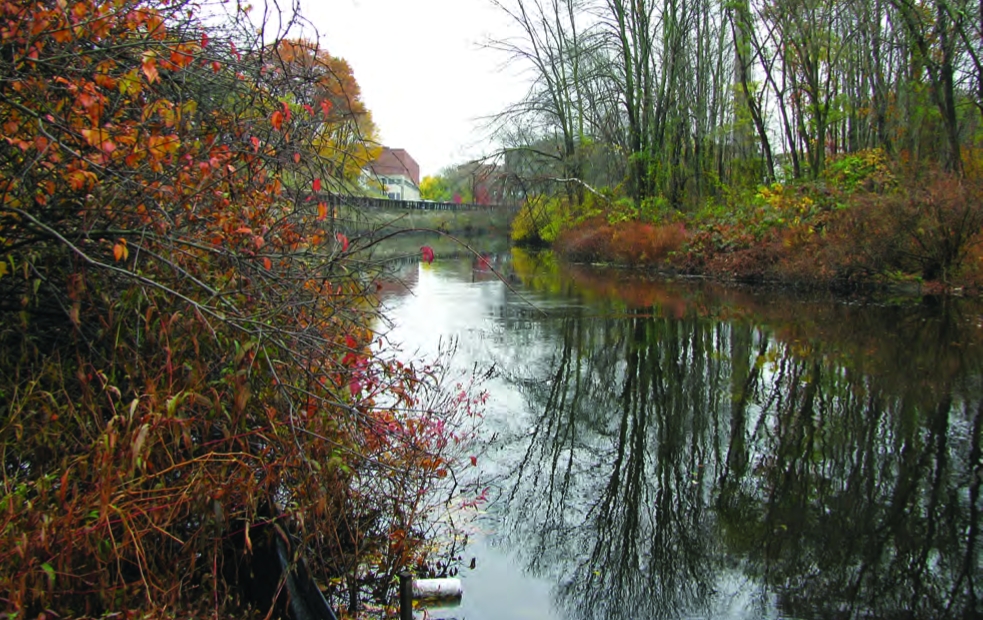
The
Lower Neponset River. A 3.7-mile stretch of the river was declared a
Superfund site in 2022 based on the high concentrations of PCBs.A report released by the U.S. Environmental Protection Agency (EPA) on Jan.
26 marks a new step for the cleanup of the long-polluted Lower Neponset River.
In 2022, the EPA declared a 3.7-mile stretch of the river a Superfund site based on the high concentrations of polychlorinated biphenyls (PCBs), which are man-made industrial chemicals from factories that operated in the area dating to the late 1920s.
U.S. law banned the use of PCBs in 1979 after studies revealed that exposure to PCBs through the air, through skin contact with PCB-contaminated electrical devices or when people consumed fish from such water could lead to a host of health concerns, including an increased risk of cancer.
The Superfund designation has made the Neponset River a priority for the EPA to clean up.
The cleanup so far has focused largely on the first mile of the almost 4-mile stretch, or what’s known as Phase One. It includes the part of the river from its confluence with Mother Brook in Hyde Park to the Tileston and Hollingsworth (T&H) Dam between Hyde Park and Milton. A pair of other highly contaminated sites alongside the river have also been part of the initial cleanup efforts.
The new report focuses on the rest of the Superfund site, referred to as Phase Two. While this stretch, from the T&H Dam to the Walter Baker Dam in Lower Mills, is less contaminated than the Phase One stretch, it still has concerning levels of contamination, the report found.
“We’re still seeing unacceptable levels [of contaminants], but in much less magnitude,” said Tristan Pluta, an EPA remedial project manager for the site.
A decrease in PCBs isn’t surprising, said Andres Ripley, greenways manager at the Neponset River Watershed Association (NepRWA), the nonprofit organization that oversees the river’s health. PCBs tend to attach to mucky sediment in the riverbed. The T&H Dam at the end of the first mile-long stretch of the river also restricts the movement of sediment into the second phase, providing fewer opportunities for PCBs to bind.
The
report relied on water samples, soil samples from the riverbanks,
sediment samples from the riverbed and tissue samples from fish and
mussels in the river to compile its data.
Examining
tissue samples is essential because consuming freshwater food from
contaminated rivers is the most direct way people may come in contact
with PCBs. The report revealed that levels of PCBs in all the fish
samples were above safe consumption limits.
The
Lower Neponset is currently subject to a state-issued fishing advisory
based on older data, which allows for recreational fishing. The advisory
only includes warnings for certain vulnerable groups and
recommendations to others against consuming large amounts of river fish.
NepRWA, however, is advocating to further narrow the guidelines.
“We’re
hoping the advisory can be changed to, ‘Don’t eat any of the fish in
this stretch of the Neponset … while the EPA is working to remove the
contamination,’” said Ripley.
Evidence of how PCBs are moving beyond the riverbed into the ecosystem
was especially pronounced in mussel tissue samples. As filter feeders,
mussels have long been used as biological tools to track pollution. To
test how these mollusks respond to PCBs, mussels from a nearby
uncontaminated pond were collected and moved into the Lower Neponset. In
just
90 days PCB levels in all 11 mussel tissue samples that were placed in
the Phase Two area were above the accepted limits.
The contamination is “working its way up the food chain,” Ripley said.
A
spokesperson for the state Department of Public Health said it is
reviewing the new data released by the EPA to determine if it will
update the advisory.
In
addition to PCBs, the EPA report tracked concentrations of heavy
metals, which have lingered in the river, and pesticides, which are
contemporary pollutants from nearby yards and gardens.
The
release of the new data will help the EPA assess the site’s ecological
and health risks, which will in turn allow the agency to put together
its overarching plans for cleaning the site.
Developing
that plan will happen while cleanup of the Phase One stretch continues.
In November 2025 the EPA released an “action memorandum” outlining its
approach to Phase One, including dredging PCB-rich sediment from the
bottom of the river and adding a new layer of material over the riverbed
to prevent any remaining contaminants from moving along the river and
into the ecosystem. The plan also includes removing the T&H Dam.
The
EPA is engaged in a legal process to find “potentially responsible
parties,” individuals or groups under the Superfund law that might be
responsible for the contamination because those groups could provide
funding for the work or could tackle some of it themselves, said
Elizabeth McCarthy, a community engagement coordinator with the EPA.
Pluta
said the team hopes to publish its decision for how to approach the
Phase Two work shortly after completion of the Phase One work, which is
expected to take four years.
The
EPA also plans to hold a public meeting about the new data and any
updates on the Phase One work in the spring, although a date has not yet
been announced.