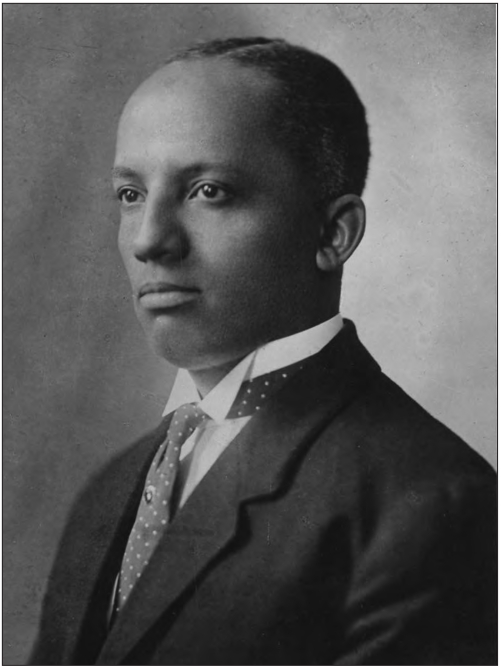
Dr. Carter G. Woodson, creator of Negro History Week, the precursor to Black History Month. 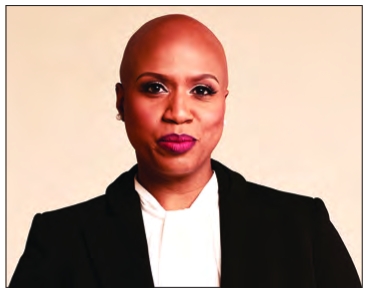
We honor and celebrate Black History Month this year at a critical inflection point in our nation’s history.
2026 marks the 100th anniversary of Black History Month and the 250th anniversary of the founding of the United States. These milestones are not separate stories; they are interwoven because Black History is American History.
A century ago, Dr. Carter G. Woodson created what was then Negro History Week to resist erasure and affirm our stories, our genius, and our contributions are at the center of the American narrative.
One hundred years later, we are pushing back against attacks on DEI, book bans, and Black history itself.
We are bearing witness to a want-to-be dictator and his co-conspirators attempting to rewrite our shared history and replace the challenges and triumphs of Black people with false narratives forged in white supremacist ideology.
We will not allow them to censor our history, ignore systemic oppression of marginalized people, and attack our intellectual freedoms.
These attacks are targeted attempts to silence and shrink our communities.
Their hate, their cruelty is meant to overwhelm. It is meant to flood the zone.
But Black folk do not yield to revisionist narratives and a whitewashing of structural racism and policy violence.
Black History is American history, and no attempt at erasure will ever succeed.
A true re-telling of American History includes the brilliance of every marginalized individual, the labor and talent of our enslaved Black ancestors, and the contributions of our Black communities. We refuse to allow any small man’s narrow vision of what it means to be American rewrite our shared, truthful history and disgrace the labor and joy of those before us.
Black Americans have been at the center of critical junctures throughout our country’s history. From Crispus Attucks as the first casualty of the American Revolution in Boston, to the 54th Massachusetts Regiment, to Black freedom fighters, and the everyday Black families who have done the important movement work, the story of Black people has been a narrative not only of resilience, but of radical joy and unwavering hope.
The bold Black history of Boston is the American story.
It was here that the first ever chapter of the NAACP was formed, that Martin and Coretta first met, that an Afro-Caribbean community built a rich, vibrant history, and that Phyllis Wheatley published the first book of poetry by a Black woman.
It was here where Mel King became the first Black person to run for Mayor and Sarah-Ann Shaw became the first Black woman journalist to be televised.
And it was here where we broke the 230-year-plus concrete ceiling when our beloved community swore me in at RCC as the first Black woman to represent Massachusetts in Congress.
Boston knows what it is to be Black, beautiful, and brilliant.
Black History Month is not just retrospective. It is a call to action. As Corretta Scott King said, “Freedom is never really won—you earn it in every generation”.
When our neighbors are facing attacks on their access to nutritious food, affordable health care, economic dignity, reproductive freedom, and the right to learn our full history, our charge is clear.
We must meet this crossroads with radical love, collective organizing, and transformative legislation that affirms every person is worthy and deserving of.
The blueprint left by our ancestors isn’t just a dream. It is a work plan for our survival. It is instruction on living and breathing our joy while doing the work of liberation, fighting for a world we know is possible.
A world where Black history is told.
Where Black wealth and Black health matter. Where Black mamas are met with care and compassion, and Black babies see every opportunity as a reality. Where Black men grow old, and Black boy joy is a rite of passage.
My mother Sandy, may she rest in peace and power, and my father Martin made sure I knew that it was a beautiful thing to be Black and something that I should be proud of.
This Black History Month, we come together to affirm our Black brilliance and be unapologetic in our Black joy. We come together to center our collective humanity, and to fortify ourselves for the ongoing work of Black resistance.
We must build the multiracial, inclusive democracy that those before us fought for and our children deserve.
Let us do the work so that generations to come will look back at this moment and say that we were faithful stewards of history and bold architects of an America as good as its promise.
Happy Black History Month to all.
Ayanna Presssley is U.S. representative for Massachusetts’ 7th congressional district.