
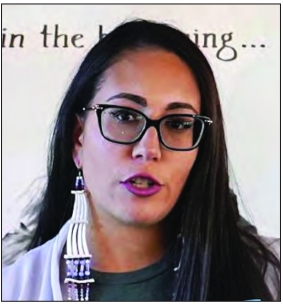
Leah Hopkins, DCR Indigenous People’s Partnership coordinator, is a member of the Narragansett Tribe.
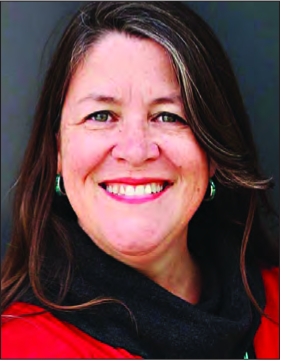
Traci Sorell, a citizen of the Cherokee Nation, is one of the featured authors in the FPFS library program.
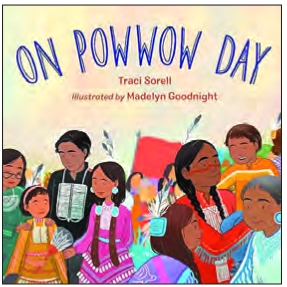
A children’s book by author Traci Sorell celebrates the sights and sounds of Pow Wow Day.
On Jan. 23 the Massachusetts Department of Conservation and Recreation (DCR) announced the launch of an initiative to promote Native youth-focused literary works that celebrate the region’s Indigenous communities, preserving tribal history and stewardship.
The First Peoples First Steward (FPFS) children’s library initiative is available at nine DCR visitor centers at parks and watersheds in the commonwealth. The program is filling a gap in representation of Indigenous people and land-based stories in DCR parks, which span 450,000 acres of land across the state.
Over 20 titles are featured in the curated collection of fiction and nonfiction, including firsthand accounts of Indigenous history and culture. The works explain several tribes’ connection to land and water, told by an array of Indigenous authors such as Traci Sorell, a citizen of the Cherokee Nation.
“It’s very important to me that we as an agency and parks department can make Native people feel at home in their own homelands and in the land that we are now, that DCR is now stewards of,” said Leah Hopkins, a citizen of the Narragansett Tribe in Rhode Island who serves as DCR’s Indigenous People’s Partnership coordinator.
The erasure of history and culture has bothered her since childhood and encouraged her to pursue a professional career that uplifts Indigenous voices.
“When we can promote stories that do not have stereotypes, or when we can tell the truth about different Indigenous issues, then the public is going to understand and relate,” said Hopkins. She added that the presence of representation in these parks — which have such large connections to the Native community — is a crucial step in giving back to the original stewards of the land.
Within a five-minute walk of entering the designated parks, visitors will see a book written by an Indigenous author about an Indigenous child “that you can relate to in some way, shape or form,” she said. “For the Indigenous audience, the Native audience, those kids could see themselves right away. But for the non-Indigenous audience and visitors to our park — they can learn from this experience.”
When curating books, there was a heavy focus on not just Indigenous narratives but stewardship of the land. Hopkins explained the importance of not only children but people of all ages being able to pick up a book about Native animals or plants and read about their importance. Including Native relationships with the land is the true purpose of the FPFS program.
The initiative also works to build relationships with tribal governments and Indigenous community stakeholders, such as nonprofits or conservation organizations. This partnership ensures that Native communities have a direct role in how their culture is shared with the public, allowing Indigenous voices to provide accurate representation of their communities.
The FPFS library program marks only the beginning of DCR’s changing relationship with tribal partners, which aims to assess the conditions of land across various state parks.
One welcome change is the Growing Wild Program. Restoring vital native plants that support wildlife and the overall environment, this program housed under DCR works to provide pollinator seeds and baby plants from indigenous vegetation across the commonwealth.
The DCR is also working on an initiative to change and update signage around the parks to better incorporate Indigenous history and ecological knowledge. The process is lengthy, to ensure proper inclusion, and is one of several initiatives DCR is pushing forward to help Indigenous communities reclaim their voices and connection to these spaces.
Visitor centers that feature the library program include Blackstone River and Canal Heritage State Park in Uxbridge; Blackstone River Greenway Visitor Center at Worcester; Blue Hills Reservation in Milton; Borderland State Park in North Easton; Breakheart Reservation in Saugus; Fall River Heritage State Park; Great Falls Discovery Center in Turners Falls; Mount Greylock State Reservation in Lanesborough; and the Quabbin Reservoir in Belchertown.
These locations were chosen to ensure that a large number of areas across the state would have the opportunity to access these titles. The FPFS is also looking into other locations to accommodate more of the public.