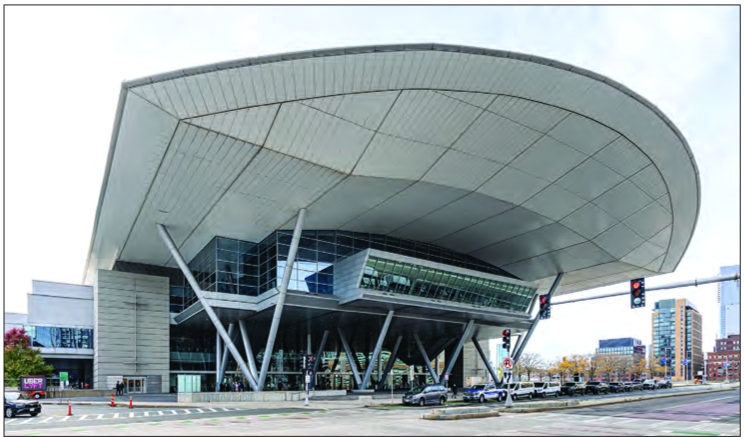
Boston Convention and Exhibition Center
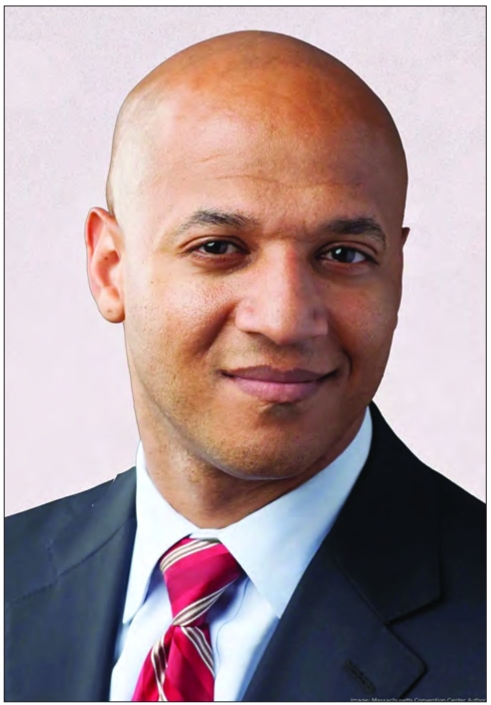
John Barros has been named interim executive director of the Massachusetts Convention Center Authority.
Entering a prominent role like heading the Massachusetts Convention Center Authority — especially after the previous executive director’s high-profile departure — could provoke scrutiny.
For John Barros, who stepped into the role of the authority’s interim executive director Jan. 14, the inquiries even came from his own family.
“My mother asked me that question: ‘What are you going to be doing there? Can you explain that to me?’” Barros said in an interview.
The short version: helping Massachusetts to be a good tourist destination.
His longer answer was that of a vision to use the heft of the quasi-public agency, and of the state’s $24.2 billion tourism sector, to expand the economy, create jobs and put money back into Boston and state.
“This is an organization that is making sure that Massachusetts — and particularly Boston and Springfield right now — are able to host meetings, host conventions, host events and attract tourists to our hotels and our restaurants so that they can leave money here,” Barros said.
In that work, he said it’s important to him to make sure the economic benefits don’t just stop in neighborhoods like Seaport, where the authority manages the Thomas M. Menino Convention & Exhibition Center, or in Back Bay with the Hynes Convention Center (the agency also is responsible for MassMutual Center in Springfield and the parking garage under the Boston Common).
Instead, Barros — who was raised in Roxbury and now lives in Dorchester — said he wants to make sure those tourism dollars reach areas across the city.
“It’s not just immediate restaurants around our facilities — although that’s really important — but it’s also the other neighborhoods,” Barros said. “It’s critical that when people come and they’re looking for a place to go, that they have a place that can send them to the right place.”
That broader reach of benefits is also a goal for the Black Economic Council of Massachusetts. Nicole Obi, the group’s president and CEO, said using the MCCA reach as a tool for inclusive procurement — a long-standing priority of BECMA — is a chance to expand economic opportunities to more diverse businesses.
“Travel, tourism, hospitality are the top three industries here in the commonwealth, and we need the MCCA, you know, functioning effectively in order to maximize the potential that’s inherent in having such a major industry in our commonwealth,” Obi said.
Obi said BECMA was encouraged by the swift action to fill a vacancy after the center’s last executive director, Marcel Vernon Sr. was pushed out of his role in December. She was also encouraged by the selection of Barros, who was on the group’s short list of recommended candidates and whom she called a “capable leader.”
Barros brings to the role nearly three decades of leadership experience spanning the nonprofit, governmental and private sectors.
He spent almost 14 years leading the Dudley Street Neighborhood Initiative, where he said he was responsible for planning and building out a neighborhood without displacing residents — a focus he said he plans to bring to his work at the MCCA.
For almost eight years he worked as the city’s inaugural chief of economic development under former Mayor Marty Walsh. Barros said that gave him the experience to know how to work with local, state and federal governments, which he views as “incredibly important” to the authority. Barros also made two unsuccessful bids to serve as mayor of Boston in 2013 and 2021.
From his time in the private sector — he spent about two years managing principal at commercial real estate broker Cushman and Wakefield and another three as a managing principal at Civitas Builders — he said he’s bringing a mindset around business outcome: to help create financial impact for small businesses, hotels and restaurants to do better.
“It’s critical that we conduct business in a way that is clear about the goals and our bottom line for the residents of Massachusetts,” he said.
Rahsaan Hall, president and CEO of the Urban League of Eastern Massachusetts, said he believes Barros “brings a good amount of experience and connections to really have an impact” at the MCCA.
Busy year ahead for Boston tourism
Barros is joining the organization at the start of a busy year for the state and its tourism industry. This year marks the country’s 250th anniversary, and much pomp and circumstance (and increased travel) is expected to come to a city that featured prominently in the birth of America.
In July, Boston will serve as the last stop in Sail250, a maritime celebration of the founding of the United States that is expected to bring tall ships from around the world and an estimated 5 million visitors.
From June 13 through July 9, Gillette Stadium will host seven matches for the 2026 FIFA World Cup.
Barros called this year a “golden opportunity” to foster job creation and economic stimulus, particularly at a time when prices are high.
“How do we bring more people in? How do we engage more people here in that economic growth?” he said. “That’s the real opportunity for us.”
That landscape presents a unique opportunity, Obi said, especially as it relates to supplier diversity efforts. She said she’d like to see the state — including through the MCCA — use that opportunity to continue or sustain momentum that Boston and Massachusetts have seen in increasing supplier diversity in recent years.
In its report for the 2024 fiscal year, the latest one published, the state’s Supplier Diversity office spent $3.78 billion with diverse and small businesses, up nearly 12% from the year before. Spending with minority-owned businesses rose by about $33 million.
“[This year is] a moment,” Obi said. “It’s not going to be here in 2027 that will have this inflow of revenue. This is a moment where we can actually walk the talk that we’ve had now for the last couple of years. It would be an enormous miss if these events come and go and all the money goes to all the same places, and we’ve done nothing on inclusive procurement outcomes.”
Diversity efforts
Also on Barros’ plate as interim executive director are long-standing concerns about diversity efforts within the organization. He replaces Vernon, who announced his intention to leave after about a year on the job.
Vernon was brought into the role, at least in part, to address long-standing concerns about diversity and alleged racial discrimination in the organization.
In 2023, the Boston-based law firm Prince Lobel Tye was tapped to conduct an independent investigation into allegations of racial discrimination at the authority.
The audit found that event attendees and organizers tended to have positive experiences with the authority [contrary to allegations in the Boston Globe article in March 2023 that spurred the review], however, Black and Hispanic staff were underrepresented in the organization — particularly at higher levels — even if there wasn’t significant evidence of an overtly hostile work environment.
At the time of the Globe article, there were no other Black people among the authority’s top 25 paid roles.
By the time the Prince Lobel Tye audit was released, that list included one Black employee, a chief diversity officer, who was the first Black employee to occupy an executive leadership role in the authority since 2019.
Notably, the report identified a “significant opportunity” for supporting supplier diversity, with the organization’s sizable budget — at the time, about $80 million annually, two-thirds of which, the report said, was spent on goods and services. However, it found that the authority was stuck in a measurement stage, adhering to minimum goals.
At the time, there were no written policies or guidelines governing supplier diversity and limited internal tracking about what supplier diversity metrics it was or was not meeting.
That audit also offered a series of recommendations about how the Massachusetts Convention Center Authority could improve, including expanding outreach and recruiting efforts to hire a more diverse workforce and improving employee development and mentoring to address diversity issues around staffing. For supplier diversity, it recommended improved tracking of supplier diversity numbers, publishing opportunities well in advance to give small businesses more time to prepare and to consider breaking large contracts into smaller parts to make them manageable for smaller businesses.
Obi said BECMA is prepared to “stand ready to help make that inclusive, inclusive procurement of progress real.”
Barros said that addressing the concerns outlined in the report is a priority and a mandate from on high — Gov. Maura Healey made it clear to him that the authority needed to address those issues, he said.
He said he is speaking with the team at Prince Lobel Tye to learn more about the specifics of its findings as well as the recommendations outlined in the report. In addressing the issues, he said, outside assistance and advice, including from Prince Lobel Tye, will be “critical.”
The Legislature’s Joint Committee on Racial Equity, Civil Rights and Inclusion was slated to have a hearing about diversity efforts at the authority in January, but the hearing was postponed, with no new date set.
But whatever positive change Barros could effect at the MCCA will depend on a board that’s fully aligned with any cultural reform, transparency and equity goals he might bring to the table, Obi said.
Hall, for the same reason, described his optimism around Barros’ selection as being tempered with caution.
“It’s an interim appointment and his ability to succeed, I think, depends in some part on the cooperation and support of the leadership team there, but also the board,” Hall said.
A spokesperson for the MCCA said that, while the appointment is interim, there is currently no search for a permanent director and that Barros “is the leader of the organization.”
When Vernon left it was amid increased tensions with the board, according to reporting by the Boston Globe. Vernon departed under a $500,000 separation deal that was described as voluntary and was unanimously approved by the board. But his move came days after the board held a meeting to discuss his termination.
David Gibbons, the authority’s executive director before Vernon, left the organization in 2023, reportedly after clashing with the board.
Obi said Barros’ appointment is a good first step but can’t be the last one.
“His appointment on an interim basis is not a panacea; there’s more that needs to be done,” Obi said. “We can’t say mission accomplished and move on.”