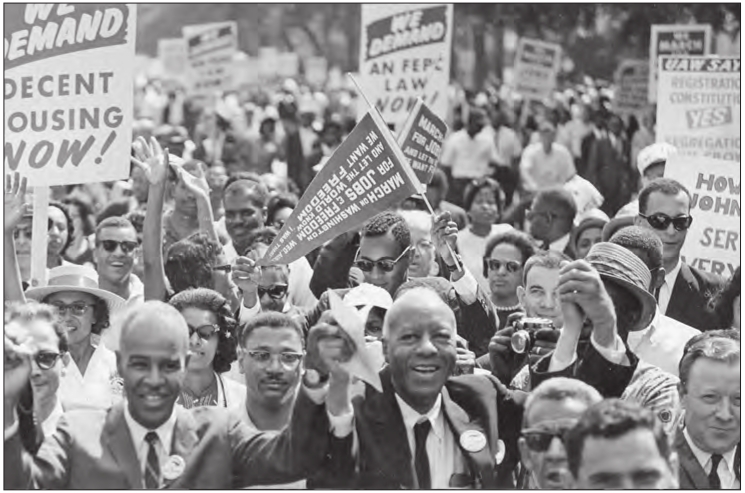
Roy WIlkins and Bayard Rustin photographed at the March on Washington, 1963.
They have always said the quiet parts out loud and we have always responded. The project of white nationalism has been to create a white ethnostate that subjugates others to the will and desires of those who believe themselves to be white. It has used Christianity, violence, the law, and capitalism to execute the plan. Despite the prowess of this endeavor those of us who have been marginalized and oppressed have always resisted, fought back, and more importantly thrived.
From the genocide of Native Americans to the forced enslavement of Black people, to the violence of the Post-Reconstruction era, the disenfranchisement of Jim Crow, the internment of Japanese Americans, the malevolence of the war on drugs and
mass incarceration, and the assault on women’s reproductive freedom, to
the paramilitary occupation of our nation’s cities, there has always
been a revolutionary spirit that has responded to the overreach and harm
of empire and colonialism. We now find ourselves at another junction in
this nation’s existence where the organized and individual acts of
liberation are critical to defeating what in no uncertain terms is a
clear and present danger. The question for us is how we respond.
The
rhetoric coming from the highest office in America and the
administration’s embrace of white supremacist iconography and language
may be jarring to many of us. It’s as if they are saying the quiet parts
out loud. Saying the things that many of us believe have been the true
feelings and motivations of those in power to restore the country to a
romanticized state of glory that has never truly existed and certainly
could not come close to existing without the presence, contributions and
sacrifice of those not included in the vision. Black folks, queer
folks, immigrants, poor people, Native, Latinx and other people of
color, as well as the diversity of believers from a multitude of
religions, none of whom were conceptualized in the image of American
Progress, a painting by John Gast that portrays the belief of manifest
destiny.
What has
never been quiet is the use of racialized capitalism to drive a wedge
between poor people, people of color and white people, insiders and
outsiders, the haves and the have nots, while we continue to turn a
blind eye to one of the sources of the malady that afflicts us. The
unjustifiable accumulation of wealth by a few at the expense of the
masses has easily been rebranded to draw the nation’s collective
attention to the Black welfare queen who is draining the US economy. The
reason you are struggling to find a job is because of the undocumented
immigrants who are coming in and stealing those jobs. White and
qualified Asian children cannot get into top tier colleges because
unqualified and undeserving children of color are unfairly being
admitted as a result of affirmative action. The Civil Rights Act was a
bad thing because, “white people were very badly treated.” … Or so they
would have you believe.
These
faulty narratives deflect attention from who controls capital, policy,
and labor conditions by redirecting resentment toward marginalized
groups. Racial capitalism politicizes
racial grievance, exploits economic anxiety, and makes civil rights and
other equity initiatives the enemy while the structural drivers of
inequity remain unchallenged and unchecked. It is difficult to navigate
the deluge of assaults to our conscience, dignity and sense of
self-worth. A seemingly unending barrage of indignities, geopolitical
overreaches, and militarized power grabs keep us reeling and unable to
regain our footing. All the while the unprecedented wealth hoarding of
billionaires continues unmolested.
Our
response must be intentional, unwavering and collaborative, lest we
find ourselves forever on the losing end of this battle. In a report to
the Southern Christian Leadership Council staff in 1967 Dr. Martin
Luther King Jr. stated “We must recognize that we can’t solve our
problem now until there is a radical redistribution of economic and
political power… this means a revolution of values and other things. We
must see now that the evils of racism, economic exploitation and
militarism are all tied together… you can’t really get rid of one
without getting rid of the others… the whole structure of American life
must be changed. America is a hypocritical nation and [we] must put
[our] own house in order.”
In
this political moment we must be clear in our understanding of the
consolidation of wealth and political power that is intensifying under
this administration. We cannot isolate ourselves by issue, group or
grievance. The days of being single issue voters or identifying the
things that separate us as opposed to the cause for solidarity are over.
We cannot end racial inequality without confronting labor exploitation.
We cannot end poverty while funding war, genocide and repression. We
cannot claim justice while protecting markets that require inequality.
“The evils of racism, economic exploitation and militarism are all tied
together…”
What this
moment demands is not moderation, politeness, or patience but a
revolution of values that exposes and destroys the quiet part. Dr. King
was clear: A society that worships profit while abandoning people, funds
war while starving communities and criminalizes poverty while
protecting obscene wealth has already declared its values. Yet, those
pushed to the margins have endured, organized, built, loved, created,
and thrived anyway. That survival, that brilliance, that refusal to
disappear is itself an act of resistance.
A
revolution of values begins by rejecting the normalization of cruelty
and scarcity. It means refusing the lie that suffering is inevitable or
that inequality is the cost of progress.
Racial
capitalism survives by isolating us severing race from class, justice
from economics, democracy from daily life. But marginalized communities
have always known how to do the opposite: how to share resources when
systems deny them, how to build power when institutions exclude them,
how to imagine freedom even when surrounded by constraint. That is how
we resist and thrive.
Defending
democracy is not optional, it is survival. Democracy cannot coexist
with voter suppression, political violence, or the consolidation of
power in the hands of a wealthy few. It cannot endure when dissent is
criminalized and whole communities are treated as disposable. To defend
democracy is to protect the right to vote, organize, protest, and live
without fear. It is to insist that governance serve the many, not the
hoarders of capital. Marginalized people have defended democracy for
generations even when it did not defend them back.
Demanding
diversity is not about optics it is about power. Diversity without
equity is decoration. Diversity without redistribution is theft. A
nation built on stolen land and stolen labor does not get to pretend
inclusion is charity. Demanding diversity means dismantling systems that
ration opportunity by race, gender, citizenship, and zip code, and
recognizing that the resilience and excellence of oppressed communities
have always driven this country forward.
And
defeating poverty is where the lie finally collapses. Poverty is
engineered. It is maintained by low wages, disinvestment, and markets
that require desperation to function. You cannot claim justice while
defending those systems. You cannot claim freedom while millions live
one crisis away from ruin.
This
is the revolution of values King demanded: one that defends democracy,
demands diversity, and defeats poverty not in spite of those who have
survived oppression, but because of them. We have always done this out
loud… and we will never be quiet.
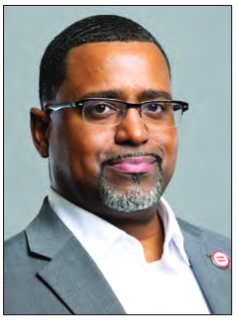
Rahsaan D. Hall is President and CEO Urban League of Eastern