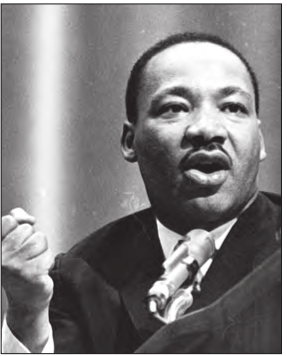
Martin Luther King Jr. speaking passionately about justice.When the Trump administration eliminated free admission to U.S. national parks on Martin Luther King Jr. Day and Juneteenth — two dates commemorating Black freedom and the civil-rights struggle — it was easy to dismiss the decision as symbolic or petty. It was neither. In their place, the administration added June 14—Flag Day and the president’s own birthday—to the list of fee-free days. The message was precise: civil-rights memory would no longer be honored by the federal government.
That small change revealed something much larger. When Donald Trump first campaigned on the slogan “America First” in 2016, it was framed as a return to patriotic, populist priorities— border security, domestic manufacturing, and resistance to globalization. But across both of his administrations, Trump’s governing philosophy has reflected a far narrower interpretation of who counts as “American.” His policies, language, and executive actions reveal a consistent pattern:
a state structured to preserve and privilege White America, at the expense of Black, Brown, immigrant, and other marginalized communities.
From
dismantling racial-equity infrastructure to weaponizing immigration
policy and promoting cultural erasure, Trump’s blueprint was never
merely America First. It has been White America First.
Supporters
argue these actions simply restore neutrality—eliminating
“preferencing,” enforcing merit, and removing politics from government.
But neutrality in a society shaped by centuries of exclusion does not
level the field; it freezes inequality in place. Civil-rights law in the
United States has never been premised on identical treatment alone, but
on addressing disparate impact—the recognition, affirmed repeatedly by
courts and Congress, that formally race-neutral policies can still
produce unequal outcomes. To deny that reality is not colorblindness; it
is willful blindness.
That
reframing became explicit as senior administration figures, including
Vice President JD Vance, began arguing publicly that the central
civil-rights concern of our time was no longer discrimination against
historically excluded groups, but discrimination against white
Americans. In this telling, Diversity, Equity, and Inclusion is no
longer a corrective to structural exclusion, but a new injustice
requiring federal intervention.
Once
that inversion is accepted, the consequences follow quickly.
Civil-rights enforcement becomes favoritism. Data collection becomes
bias. Equity requirements become discrimination.
Upon
reentering office in January 2025, Trump acted immediately. On Day One,
he signed Executive Order 14151, “Ending Radical and Wasteful
Government DEI Programs and Preferencing.”
The
order eliminated Diversity, Equity, Inclusion, and Accessibility (DEIA)
programs across federal agencies, including those tied to environmental
justice and civil-rights enforcement. DEI staff were removed. Agency
websites were stripped of civil-rights history. Public acknowledgment of
Black History Month, Pride, and related observances effectively
vanished.
Led by the
newly created Department of Government Efficiency (DOGE), this was not a
budget exercise. It was a coordinated campaign to remove the federal
government’s capacity to remember, measure, and remedy inequality—the
core functions of modern civil-rights governance.
Cultural erasure and racialized identity politics
Trump’s
attacks on racial inclusion did not stop with DEI programs. His
administration pursued a broader effort to reshape the nation’s cultural
and civic narrative.
During his first term, Trump defended white supremacists in Charlottesville as “very fine people,” referred to Black
Lives Matter protesters as “thugs,” and described majority-Black cities
like Baltimore as “infested.” In his second term, those attitudes were
no longer merely rhetorical— they were institutionalized.
Through
DOGE and related agencies, references to racial, gender, and LGBTQ+
inclusion were systematically removed from federal websites, training
materials, and hiring guidance. Women’s History Month, Pride,
Juneteenth, and Indigenous Peoples Day quietly disappeared from the
federal calendar.
Trump
also targeted the Smithsonian Institution, including the National
Museum of African American History and Culture. He sought to curtail
funding for programs he labeled “divisive” or “improper ideology,”
singling out the museum for promoting what he called a “race-centered”
narrative. The goal was not historical accuracy, but historical
control—narrowing public memory to what affirms, rather than challenges,
white identity.
At
the same time, the administration pushed for Department of Justice
investigations into universities that considered race in hiring,
reviving claims of “reverse discrimination.” This is not reform. It is
institutional amnesia—elevating racialized grievance while silencing the
record of injustice civil-rights law was designed to confront.
Even
policies framed as race-neutral produce predictable racial
consequences. Cuts to health care disproportionately harm Black and
Brown families. Rollbacks of environmental regulation strike frontline
communities first. Attacks on public education and curriculum standards
undermine honest engagement with slavery, Jim Crow, and civil rights.
When
government abandons data, history, and enforcement capacity, it loses
the ability to govern fairly—for anyone. A democracy that cannot name
inequality cannot manage it, and a state that treats memory as ideology
cannot sustain legitimacy.
Martin
Luther King Jr.’s birthday invites reflection. Too often that
reflection is framed as a scorecard of progress—how far we’ve come, what
barriers remain, how much work is left to do. That work still matters.
But this year demands something more unsettling: an honest accounting of
how much has been lost in just one year.
For
decades, civil-rights advocates have warned—correctly— that equality is
fragile, that gains can be reversed, and that rights are not
self-executing. In 2025, that warning stopped being theoretical.
Conclusion: White America First by design
Through
executive orders, immigration enforcement, institutional rollbacks, and
cultural censorship, Trump has sought to elevate white identity as the
moral and demographic center of American life. Patriotism, in this
vision, is defined not by pluralism or equal dignity, but by the
preservation of racial hierarchy.
The
choice before the country is not whether America will be “first,” but
whether it will be honest, inclusive, and governed by equal justice—or
reshaped around grievance and exclusion. True leadership demands the
former. Democracy depends on it.
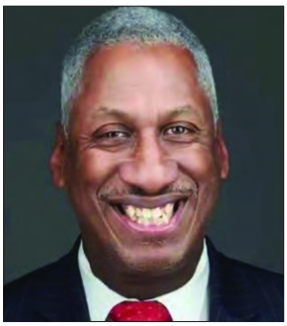
Ed Gaskin is the Greater Grove Hall Main Streets executive director and a graduate of MIT’s Sloan School of Management