Architectural rendering of proposed Shonda Rhimes Hall at Darthmouth College.
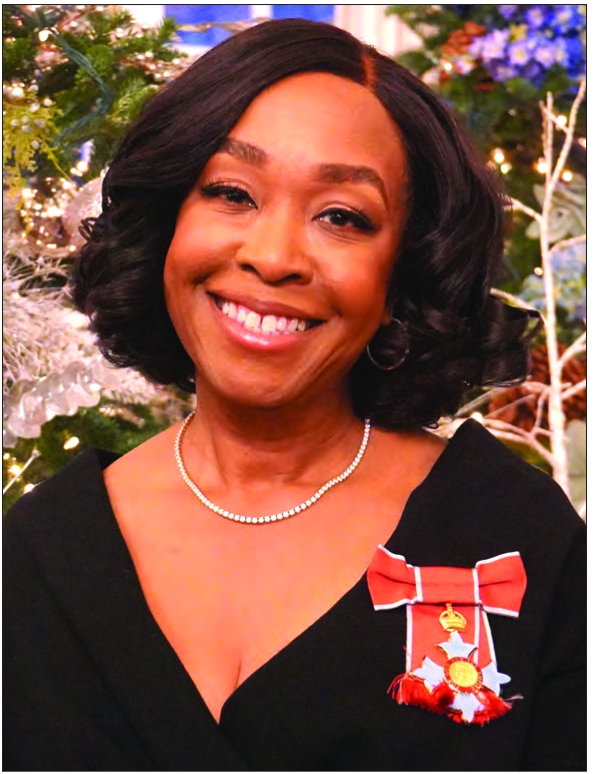
Shonda Rhimes On West Wheelock Street in Hanover, New Hampshire, a new residence hall will break ground this year on Dartmouth College’s campus, thanks to a legendary alumna.
The forthcoming building is Shonda Rhimes Hall, named after Dartmouth trustee and Emmy Award-winning television showrunner and producer known for iconic hit shows like “Bridgerton,” “Scandal” and “Grey’s Anatomy.”
Rhimes, whose net worth is an estimated $240 million, made a donation of $15 million last year to underwrite the first campus building to be named after a woman and Black alumna.
Shonda Rhimes Hall is part of Dartmouth’s $500 million commitment to expand undergraduate student housing. The residence, which will house upperclassmen, is part of Dartmouth’s efforts to add more than 1,000 beds over the next decade. It is the institution’s hope that additional housing will make it possible for 90% of undergraduate students to live on campus and help with the affordability of the campus’ surrounding communities.
In a statement about her donation, Rhimes said, “It’s an opportunity to show how formative my college experience was for me. It’s also really beautiful to be able to place some legacy on the building — to give back what was given to me and to leave something behind.” Rhimes said. “And at a time when it feels like people are questioning the value of higher education, it feels important to put my money back into higher education.”
A broader movement in Black alumni giving
Rhimes’ donation is part of a growing pattern of Black alumni using major gifts to exert
intentional influence over the ways institutions invest resources,
support students, and tell their histories.
In
2020 at Princeton University, Mellody Hobson, co-CEO of Ariel
Investments and a member of the class of 1991, provided the university
with an undisclosed gift for Hobson College — a residential college that
replaced the former Woodrow Wilson College. Wilson, the former U.S. and
Princeton president, barred Black students from attending the
university during his tenure. Hobson College is expected to be complete
by spring 2027.
In a
video statement about her donation Hobson said, “When I was approached
last year about this opportunity, I was most compelled by the symbolism
of a Black woman replacing the name of someone who would have not
supported my admission three decades ago.”
Hobson’s gift and the subsequent renaming of the college is a symbolic reckoning with institutional history.
At
Cornell University, billionaire investor Robert F. Smith purchased a
9,000-square-foot building to house the brothers of his fraternity,
Alpha Phi Alpha, and their leadership institute in 2023. He donated the
building to the fraternity’s nonprofit social impact fund, Alpha Light
Fund, with an additional $9 million gift for renovations along with
donations from other donors and brothers. The building opened last Oct.
18 and serves as a student residence and the organization’s leadership
institute.
Smith uses
his wealth to “preserve the Black American experience,” with his
foundation, Fund II Foundation. Fund II has pledged to eliminate student
loan debt for 2019 graduates of Morehouse College. The fund has also
contributed millions to Cornell University’s engineering departments
creating scholarships, fellowships, programming support and the naming
rights to Cornell’s chemical engineering school.
Strategic
giving beyond headline donations Back at Dartmouth, Black alumni giving
extends far beyond capital projects. Dr. Maria Cole, president of Black
Alumni of Dartmouth Association (BADA), said some alumni focus on
targeted, sustained investments that directly affect the student
experience.
One
example is the African and African American Studies (AAAS) Enrichment
Fund started by the class of 1982. The enrichment fund supports campus
programming that fosters intellectual engagement and community building
for Black students and faculty on campus. Alumni donations to the fund
help finance lecture series, professional networking events and visits
from scholars whose work centers Black history, culture and lived
experience.
Cole
mentioned that other alumni contributions are directed toward emergency
funds designed to support students facing unexpected financial hardship.
These flexible resources can cover costs ranging from travel
emergencies to academic materials, providing immediate relief that can
be crucial for student success.
The
E.E. Just Program, named for Dartmouth’s first Black valedictorian, is
another source of enrichment for Black students and faculty on campus.
The program supports opportunities for research related to equity and
excellence in the sciences. Alumni support helps fund fellowships,
collaborative research and programming that connects Dartmouth scholars
with national and international experts.
The
June 2023 SCOTUS decision ending race-based affirmative action in
college admissions and the Trump administration’s 2025 executive orders
targeting diversity, equity and inclusion programs in both public and
private sectors was the canary in the coal mine for Cole. She wasn’t
deterred, however.
“When the SCOTUS decision first came out, I actually was not afraid of it.” Cole said, “We will either find a way or make one.
And I feel like that SCOTUS decision gave us an opportunity to do things differently.”
She
looked at traditional giving models like donor restricted funds, which
are gifts given to organizations with conditions on how, when and where
the money can be allocated. According to Cole, restricted funds ensure a
democratic, long-term and community building model for BADA members and
the wider Dartmouth community. The AAAS Enrichment Fund and the E. E.
Just Program are examples of this mode of giving. The enrichment fund
has a published statement of understanding between the institution and
the class of 1982 with explicit instructions and guidelines.
“We’ve
only been doing this for five years, really — when you think about
colleges having a vice president of diversity, equity, and inclusion,
and all of these things that we’re attempting to do to dismantle
systemic racism,” said Cole.
“And
in that time, every attempt has been made for our erasure. And [we are
thinking about] what are the things that we can do to preserve and
protect, and to celebrate and amplify this magnificent contribution that
we’ve made to all of these campuses. And that’s why our focus is where
it is.”
Student leaders navigating a shifting climate
On campus, students are keenly aware that today’s institutional climate will shape tomorrow’s alumni engagement.
Dominique
Quiñonez, a sophomore and president of Dartmouth’s Women of Color
Collective and member of the school’s Black Congress, said students want
to see universities invest consistently in their well-being — not just
during moments of national reckoning, but over time.
Quiñonez
said improving relationships between students and administrators
requires transparency, responsiveness, and a willingness to address
concerns around campus climate, curriculum and representation. Those
efforts, she said, play a significant role in whether students feel
connected enough to give back as alumni.
Dartmouth
has recently navigated national scrutiny of higher education
institutions, including federal investigations related to antisemitism.
Under President Sian Beilock, the college was the only Ivy League school
not cited by the federal government — a
distinction administrators attribute to proactive engagement and
community-based programming like the Dartmouth Dialogues, which
“facilitates conversations and skills bridging political and personal
divides.”
Student
leaders say similar intentionality is needed to strengthen trust with
Black students, particularly as colleges nationwide roll back or
reevaluate diversity, equity and inclusion initiatives.
Rhimes,
whose legacy is built on the value of diversity and inclusion, has
said, “Dartmouth wasn’t made in my image, but it is possible to remake
it to include my image. There has been a continual making and remaking
of who Dartmouth is for and who belongs here. I think philanthropy can
set an example and open doors for other people to see what’s possible.”
Quiñonez
shared Rhimes’ sentiment about philanthropy being an inspiration for
others. “I think it does inspire me. I always make the joke a
half-serious joke, though. ‘I’m gonna donate money, and I’m gonna change
that library name to my library,’” she said.
“A
lot of people have that language, like, when I get a lot of money, I’m
gonna donate to the school and put my mark on it. So that people know
that I came here, and I did something and I deserve to be here.”