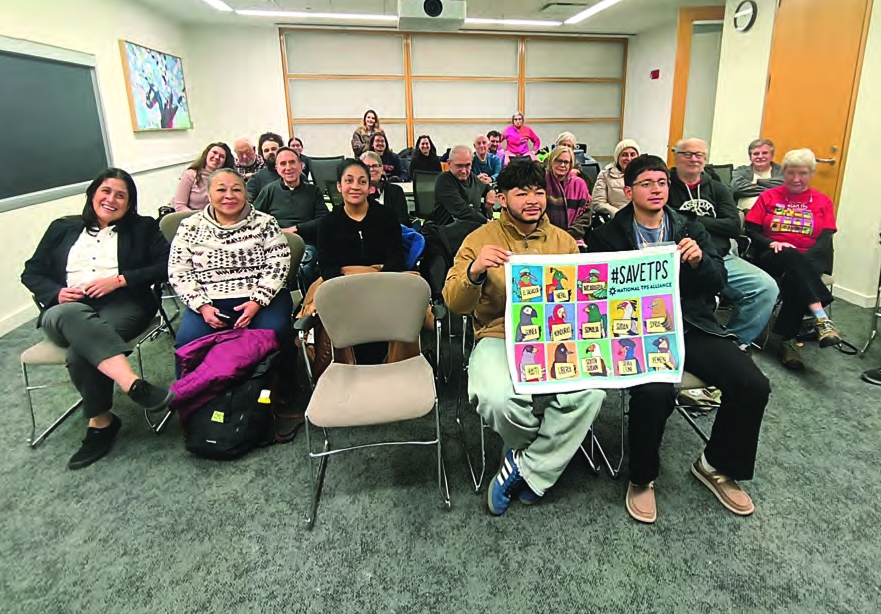
Audience members and panelists pose for a group photo after the screening and discussion of “The Next Dream,” reflecting the community involvement behind the documentary. 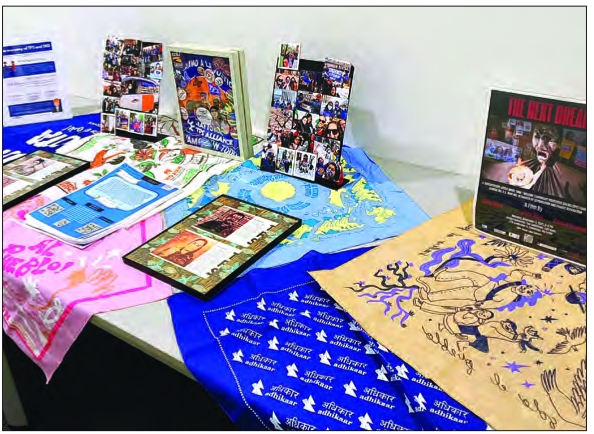
Flyers, program materials and visual displays trace the evolution of “The Last Dream” and “The Next Dream,” documenting years of community organizing and storytelling around Temporary Protected Status.
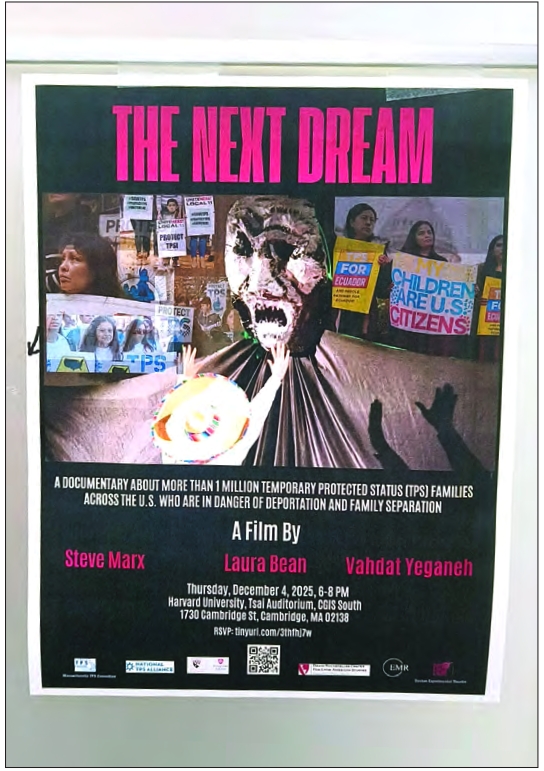
A promotional poster for “The Next Dream” stands on display outside the auditorium, highlighting the filmmakers and the documentary’s focus on TPS families across the United States.
A documentary screening and panel discussion at Harvard University this month, focused on the experiences of families living in the United States under Temporary Protected Status, a federal humanitarian designation that allows certain immigrants to live and work legally in the country but does not provide a path to permanent residency.
“The Next Dream,” produced by Boston Experimental Theatre, was screened at Tsai Auditorium at Harvard’s CGIS South building, followed by a discussion with members of TPS families and the filmmakers.
The film examines how long-term TPS holders — many of whom have lived in the United States for decades — now face uncertainty as protections expire or are revoked.
According to advocacy materials distributed at the event, TPS is granted by the secretary of homeland security to nationals of designated countries already in the United States when conditions in their home countries make return unsafe due to armed conflict, natural disasters or other extraordinary situations.
While TPS provides protection from deportation and work authorization, it does not grant legal permanent resident status or citizenship.
Organized by Boston Experimental Theatre, the event was led by founder and artistic director Vahdat Yeganeh, who also works in education and engagement with the American Repertory Theater. Yeganeh said the project grew out of his first encounters with TPS families in 2018.
“I’m a refugee here from Iran,” Yeganeh said during a conversation following the screening. He shared the story of how he left his home country at age 20 and arrived in the United States seeking safety. “The U.S. was the place that gave me a home,” he said, adding that he later built a family and founded his theater company in Boston.
Yeganeh said that when he met TPS families during the first Trump administration, he noticed a sharp contrast between his own experience and what many of the children he met were now facing.
“For them, the understanding of the U.S. was very different,” he said. “The U.S. was going to separate them from their families, not letting them pursue their dreams.”
That realization led to the creation of “The Last Dream,” a stage production that later became a documentary film. “The Next Dream,” Yeganeh said, continues that work, focusing on how changing immigration policies affect TPS holders and their families.
According to information shared at the event, many TPS recipients have lived and worked in the United States for 20 to 30 years. The materials state that many are business owners, homeowners, health care workers and parents of U.S.-born children, contributing economically and socially to their communities.
Yeganeh said the new documentary was developed after conversations with the National TPS Alliance ahead of the 2024 presidential election cycle.
“They said things were going to be much worse than how it was,” he said. “They asked us to help again, to make another movie so we could share the story.”
During the post-screening discussion, speakers described potential consequences they said TPS families face when protections end, including loss of work authorization, driver’s licenses and access to health insurance. Yeganeh also said the loss of legal status can affect younger family members’ ability to attend college and can place families at greater risk of deportation enforcement.
“As soon as their TPS is canceled, they are subject to be deported at any time,” he said.
Yeganeh emphasized that the documentary was created through collective effort rather than individual authorship. He thanked co-creators Steve Marks and Laura Bean, as well as volunteers who assisted with filming, translation and logistics.
“This is literally community coming together,” he said. “People who made donations, people who helped with translation — if you’re watching the film, you’re seeing that.”
Information screens following the documentary directed audience members to Boston Experimental Theatre’s website, where visitors can find additional information about the film and related efforts.
In closing remarks, Yeganeh said the purpose of “The Next Dream” is to inform audiences about TPS and encourage public understanding of how policy decisions affect families who have long-standing ties to the United States.
“It’s really about sharing the story with more American citizens,” he said. “So they know what TPS is and can talk to their wrepresentatives.”
He added that many TPS holders, like other immigrants who have made lives in the United States, consider the country their home.
“This is home for us,” Yeganeh said. “We are fighting for our home.”
ON THE WEB
Learn more about the film at bostonexperimentaltheatre.com