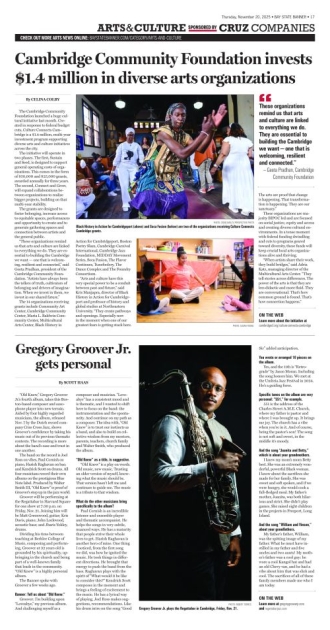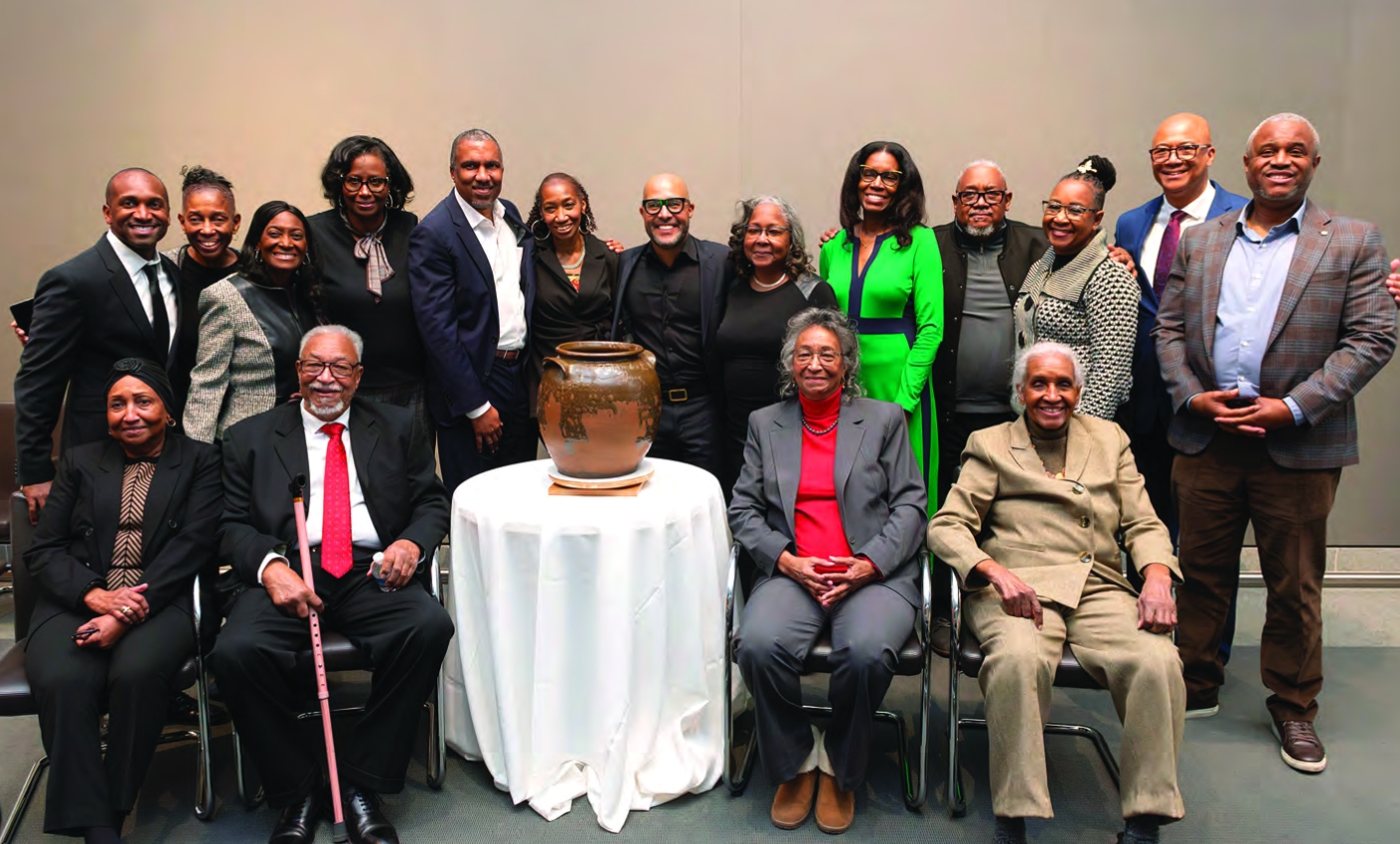
Descendants
of David Drake attend a ceremony at the Museum of Fine Arts, Boston, to
celebrate a historic resolution regarding ownership of two works by the
enslaved potter and poet. The group is shown with Drake’s “Jar,” 1857,
stoneware with alkaline glaze, ethically borrowed from the Dave the
Potter Legacy Trust LLC, established for the benefit of the artist’s
descendants. 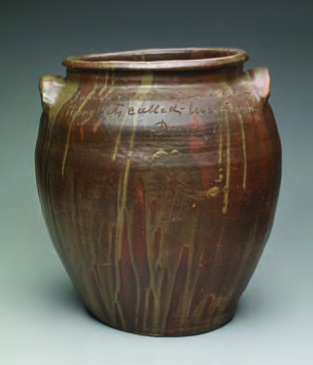
“Storage Jar,” Dave Drake, 1857
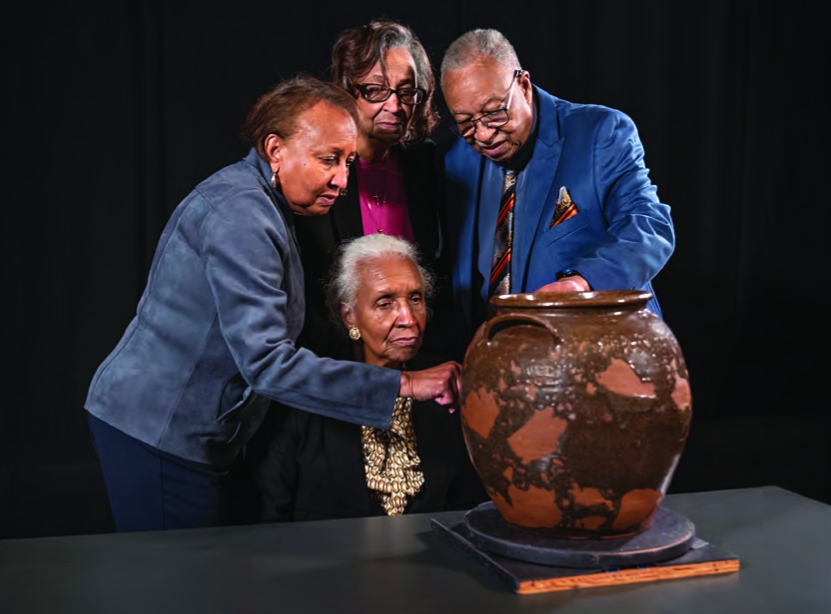
Pauline Baker, Daisy
Whitner, John Williams and Priscilla Williams Carolina, descendants of
potter David Drake, examine one of the artist’s works, “Jar” at the
Museum of Fine Arts, Boston.
In late October, the Museum of Fine Arts, Boston restored ownership of two stoneware vessels made by David Drake, an enslaved potter and poet, to his descendants. They then bought one back for the museum’s collection.
Drake, also known as Dave the Potter, was enslaved in Old Edgefield, South Carolina. During his nearly 70-year life he created thousands of beautiful ceramic vessels. In addition to his skilled craftsmanship, Drake’s work is unique in that he began signing, dating and inscribing poetry verses on his ceramic pieces in the 1830s. This is significant for several reasons — it was a criminal offense for enslaved people to read and write and it was also highly unusual for enslaved artists to get credit for their work. It is because of these signings that curators are able to identify and celebrate Drake’s work today.
The museum acquired these two pieces, “Poem Jar” and “Signed Jar,” in 1997 and 2011 respectively. The objects were displayed in the 2023 exhibition “Hear Me Now: The Black Potters of Old Edgefield,” and discussions began with Drake’s descendants about rightful ownership.
This resolution rectifies
the unjust seizure of Drake’s work under enslavement by restoring
ownership to his descendants, operating under the Dave the Potter Legacy
Trust, LLC. By choosing to sell one of the pieces back to the MFA, the
trust ensures that Drake’s work will continue to be enjoyed and
celebrated by both the public and the art world, on equitable terms.
“We
are pleased to reach this landmark resolution with the family of David
Drake,” said Pierre Terjanian, the Ann and Graham Gund Director at the
MFA. “His works tell important stories. We acquired two jars by him to
share his accomplishments as a talented artist, and to also call
attention to the conditions of slavery under which he lived and worked.”
This
is the latest in a slew of ownership and repatriation resolutions made
by the MFA, but it’s the first time it resolved an ownership claim for
works taken wrongfully under the conditions of slavery in the
19th-century United States.
Earlier
this year, the MFA restituted two works of art that were pillaged from
the Kingdom of Benin by British soldiers in 1897 and then sold to the
museum
through the London art market and the British protectorate state. In
2024 the museum returned a gold and carnelian necklace to the Republic
of Türkiye, commonly known as Turkey.
Equity
and acquisition in longstanding museums like the MFA is a complex,
often thorny issue. The Drake restitution is an illustration of the
mutual benefit of restoring objects to their proper owners.
“We
are honored to be able to continue to share Drake’s creativity and
story with our visitors and to preserve his legacy for future
generations with support from his family,” Terjanian said.
ON THE WEB
Learn more about MFA Boston’s ownership resolutions at mfa.org/collections/provenance/ownership-resolutions