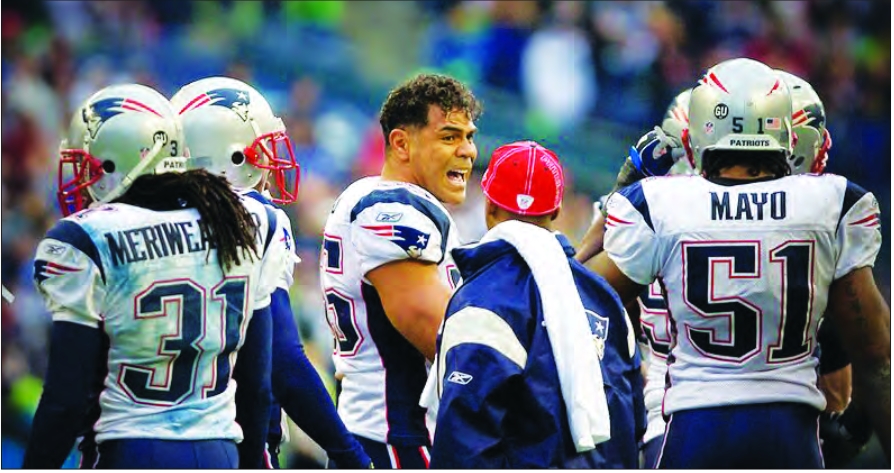
Junior Seau was a 12-time Pro Bowler and played for the Patriots from 2003-2005. 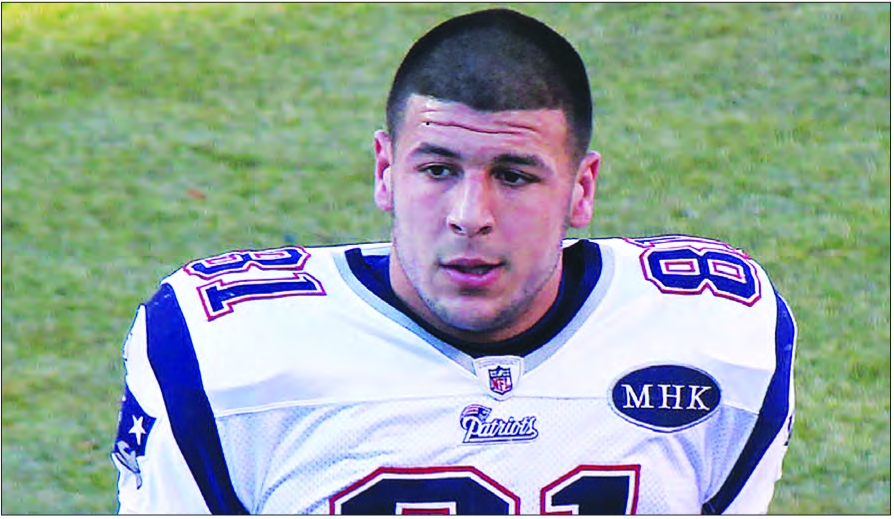
Aaron Hernandez of the Patriots suffered from Chronic Traumatic Encephalopathy or CTE.
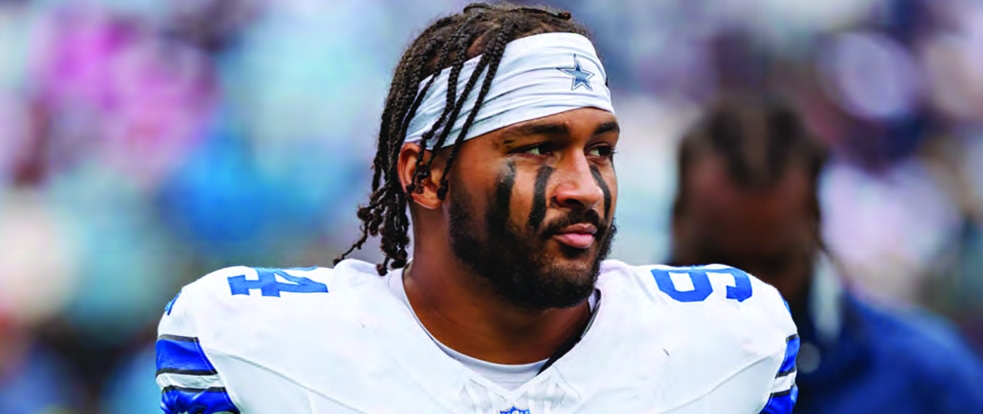
Former Dallas Cowboys defensive player Marshawn Kneeland died at the age of 24.

Former LSU wide receiver Kyren Lacy committed suicide at age 24.
When the news broke that 24-year-old Marshawn Kneeland of the Dallas Cowboys had taken his life, an all-too-familiar chill ran through me. Just days before, I had watched Kneeland, a second-year player with the Cowboys, score a touchdown in his team’s loss to the Arizona Cardinals — his high-water mark as a player in the National Football League.
I remembered the joy he exhibited during his end zone celebration. That scene flashed through my mind as I sifted through the news reports about his death.
Marshawn Kneeland is one of the latest casualties in the ongoing saga of mental health issues surrounding young athletes today. With more than 50% of U.S. suicides occurring in people without a mental illness diagnosis, it is crucial to recognize that many suicide risk factors are not tied to a formal diagnosis. This underscores the importance of universal suicide prevention efforts, which can reach an athlete who has not disclosed or been diagnosed with depression, anxiety or other concerns, and who may otherwise be struggling in silence.
Though college students considering suicide may not be diagnosed with mental illness, they may have experienced one or more of the following feelings: hopelessness, loneliness or disconnection from others, burdensomeness and lack of life purpose. Importantly, both hope and reasons for living help prevent suicide.
The history of this issue dates back before the days when young athletes started to “play for (in some cases LARGE) sums of money” with the title “professional” attached to their names. However, with this new title came unrealistic expectations that overwhelmed their thought process.
Over the past decade, the names of NFL Players Junior Seau and Aaron Hernandez, along with former National Hockey League player Wayde Belak, were added to a list of suicides that made national headlines. College athletes, Katie Meyer of Stanford, Lauren Bernett of James Madison University, Sarah Shulze of Wisconsin-Madison, and Kyren Lacy of LSU all took their lives.
College athletes have been suffering the same fate. According to a recent study in the British Medical Journal, “Deaths by suicide among NCAA athletes increased in both males and females throughout the 20-year study period, and suicide is now the second most common cause of death in this population. Greater suicide prevention efforts geared towards NCAA athletes are warranted.”
Further, experiences of sexual or physical abuse within the sports setting are strongly associated with suicidal ideation, particularly in female athletes. But the question of why they choose to end their lives remains a shadowy mystery, as do all deaths by suicide.
Kevin McCarthy, LICSW, president of Clinical Consultants of Boston and director of mental health at NDUR for Athletes, provided some answers to this dilemma. “Athletes, especially professionals, put their entire lives and ‘values of self-worth’ into expectations that are perceived as ‘unrealistic’ by normal standards. And when they fail to measure up to what are nearly impossible expectations from the people closest to them (parents, loved ones, fans, etc.), they cannot deal with the ‘Failure-Factor’ and find themselves running away from reality.”
This syndrome begins when a young athlete starts to think that they can become a professional athlete. “And for the 1,000 out of every 10,000 that become Division One athletes (and ‘have a chance’ to reach the pro level) they inherit the vicarious dreams of their parents, many who fail to realize that their D1 athlete/prodigy is on a life-and-death treadmill,” McCarthy said.
“Disparities within our society are one of the leading causes for increased suicide levels among young athletes (and young people in general). And for the thousands of young athletes that don’t make it to the pros, many lean to the ‘slow death’ of drug and alcohol usage as they attempt to ‘run from reality.’ The factor of ‘Command Hallucinations’ enters the equation, producing the will to commit suicide,” he said.
As the number of suicides among athletes ages 18 to 25 increases, the struggle for answers continues to plague the brightest minds in the mental health community. McCarthy offers another answer: “I believe that ‘intervention with education’ is the answer to deal with this issue. My organization (NDUR), along with other groups of this type, is working hard to come up with solutions for this very compelling issue. There are answers out there, and we (as a society) cannot rest until we find them.”
For those who are left to try to pick up the pieces of a life that is shattered by the specter of suicide, you have my heartfelt sympathy. For someone who has dealt with this issue many times in my life, I always come away with the same thoughts: Why, why, why? And what could I have done to contribute to the solution to this critical mental health issue?
We will continue to find answers and ask for prayers for everyone who is attempting to deal with this issue, one of the toughest to deal with in this thing called “LIFE.”