
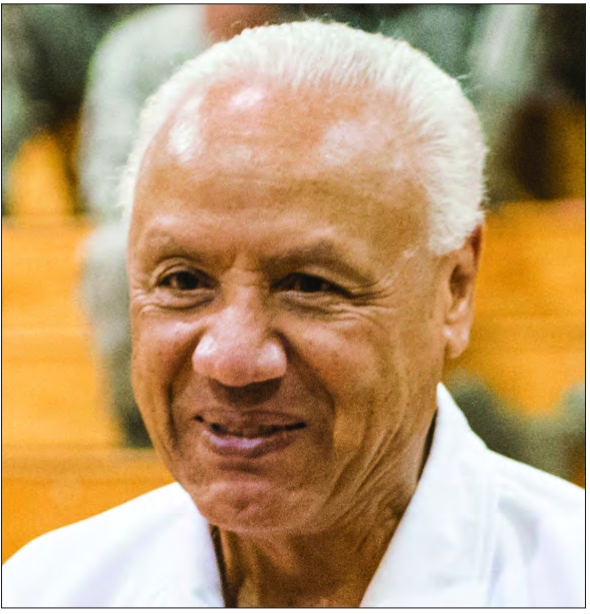
Lenny Wilkens is one of five people to be inducted into the NBA Hall of Fame as a player and a coach.
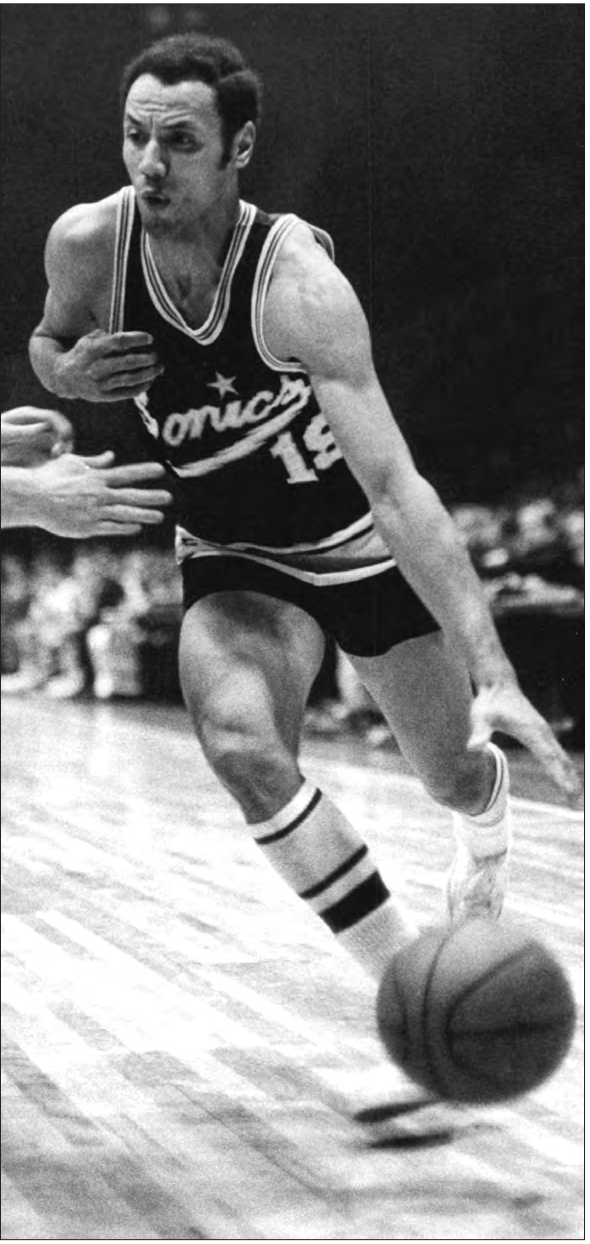
Lenny Wilkens was a player on the Seattle Super Sonics from 1968 to 1972.
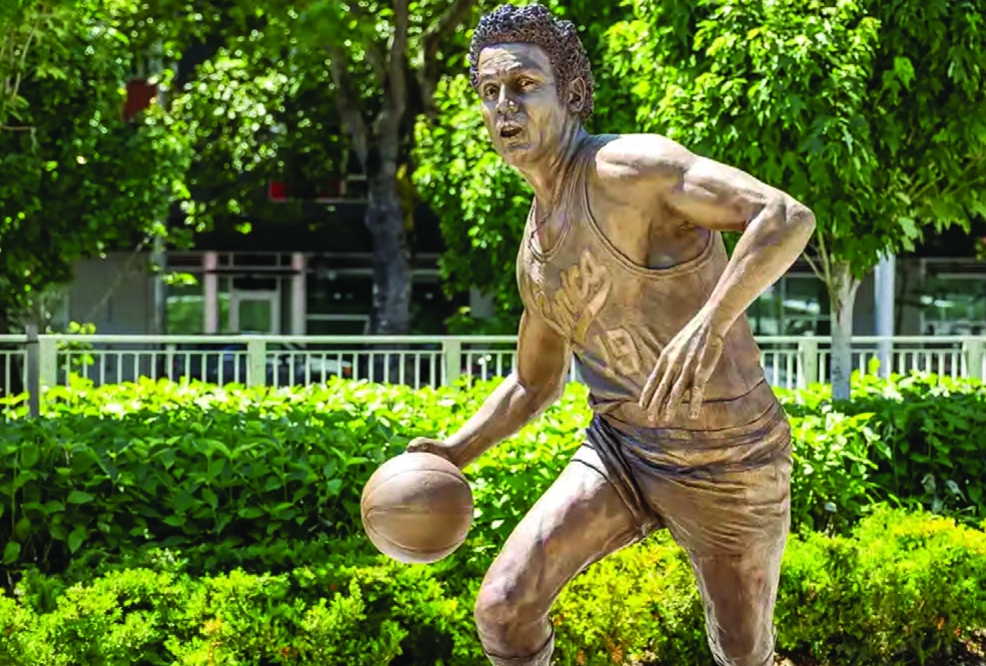
A statue of Lenny Wilkens stands outside Climate Pledge Arena.
Lenny Wilkens, 88, and Paul Tagliabue, 84, two men of high integrity and quality, passed away on the same day, Nov. 9.
Wilkens holds a very special place in this writer’s heart, having covered his basketball career for many years and gotten to know him as a person.
We will start with Paul Tagliabue, the former commissioner of the National Football League [1989-2006]. I met the man in 1990, shortly after he replaced Pete Rozelle. I was immediately impressed by his quiet demeanor as he took over for a man who drew strong opinions from his critics, particularly from the National Football League Players Association. Rozelle, considered an “NFL Owners’ commissioner,” had weathered many storms during his tenure, including key forces that molded the modern National Football League, such as significant labor conflicts, franchise and divisional realignments, the ascension of free agency, and the landmark legal cases that established its contemporary structure.
Rozelle left office as an unpopular figure. Enter Paul Tagliabue, an attorney knowledgeable in labor law, who was brought in to deal with the NFL Players Association. One of his first moves was to reach out to Gene Upshaw, executive director of the NFLPA. Following the constant labor struggles and work stoppages during the Rozelle regime, Tagliabue recognized that peace with the NFLPA was crucial for the league’s advancement.
Fans were tired of all the bickering between the union and the NFL owners. And Tagliabue became a peacemaker between the warring parties.
“When I took the job, I knew what obstacles I was facing,” Tagliabue told me during an interview shortly after he took the job.
“We [the players and owners] had to come together and work out our differences. It was not easy due to the mistrust between both sides, but we found a way to overcome our differences.”
The NFL enjoyed massive growth under Tagliabue with the building of new stadiums and television contracts that generated billions of dollars in revenue, with the key factor to the success being no work stoppages. The major criticism of Tagliabue was his failure to adequately deal with the concussion/CTE problems of NFL players. He and the league owners were embarrassed when it was exposed that they attempted to dispel the findings of Dr. Benjamin Amalou on the CTE (Chronic Traumatic Encephalopathy) medical issue, which remains a significant problem in today’s NFL. In 2017, following these revelations, Tagliabue apologized for his insensitivity to the concussion/CTE situation. His induction into the Football Hall of Fame came in 2020.
My final thoughts center on Lenny Wilkens. I met Lenny during his 15-year NBA playing and 34-year coaching career. The Boys High School (N.Y.) star, who didn’t make his school team until his senior year, before becoming a legendary player at Providence College, went on to become one of the top 75 players in NBA history.
A soft-spoken gentleman of the highest order, Lenny taught this reporter the “art” of point guard play, and, along with fellow Hall of Famer Nate “Tiny” Archibald, imparted to me “PhD knowledge” of how the NBA game should be played.
Countless interviews over decades have produced such sayings as, “Never cheat the game. Always study the ‘nuances’ of how to play this game.
Never lose control of your emotions to the point where it affects your play. Be the leader of your team, not a follower; yet, always respect your teammates at all times. Never be afraid to ‘take charge’ in the big moments of games.”
He not only taught me these things, but he also demonstrated his teachings in every game I ever watched him play and coach. Following a stellar playing career, during which he acted as a player-coach four times, he transitioned into coaching on a full-time basis. I saw him at one of his lowest moments, following the Seattle Supersonics’ loss to the Washington Bullets in the 1978 NBA finals. Lenny, as always, was his dignified self while fighting back tears during the post-game interview.
It is incredibly difficult to lose a seventh game in the NBA finals, but you have to learn from disappointing moments like these. His Supersonics team learned its lesson well by winning the NBA championship the very next year, beating the Bullets in five games as the late Dennis Johnson, who went 0-14 from the floor in Game 7 of the 1978 finals, rewarded his coach’s faith in him by winning the 1979 NBA Finals MVP award. Coach Wilkens: “I guess we learned our lessons this time around.”
Lenny Wilkens would go on to become one of the winningest coaches in the history of the NBA. Among his many coaching accolades is guiding the Olympic Dream Team in 1992, then becoming the head coach for the famous 1996 gold medal-winning USA Olympic basketball team. Every player who has ever played for Mr. Lenny Wilkens uses the words “first-class gentleman and first-class coach.”
A statue of the man stands in Seattle as a testament to his coaching greatness. They couldn’t make a statue big enough to match the magnitude of the “Godfather of Seattle Basketball.” I stand with the multitudes of people whose lives you have touched, and I will always cherish the memory of you.
Rest in eternal peace, my coach, friend and teacher.