

After years of price levels for household products rising rapidly, central bank officials are beginning to worry about another issue: unemployment.
Both goals, stable prices and maximum employment, compose the dual mandate of the U.S. Federal Reserve. Aiming at each, monetary policy is always rebalancing.
Lately, central bankers have favored allowing more money to circulate. The Federal Open Markets Committee reduced the target federal funds rate a quarter of a percent in September.
This year “we’ve kept our policy at a restrictive level,” Fed Chairman Jerome Powell told reporters.
Restrictive monetary policy helps curb price inflation by reducing the supply of money in the economy, but it can also slow hiring.
The Fed chair pointed to the labor market’s “very solid condition” earlier this year. However, after job creation numbers were revised down this summer, he said, “I can no longer say that.”
“The risks were clearly tilted toward inflation,” he added. Now, “they’re moving toward equality.”
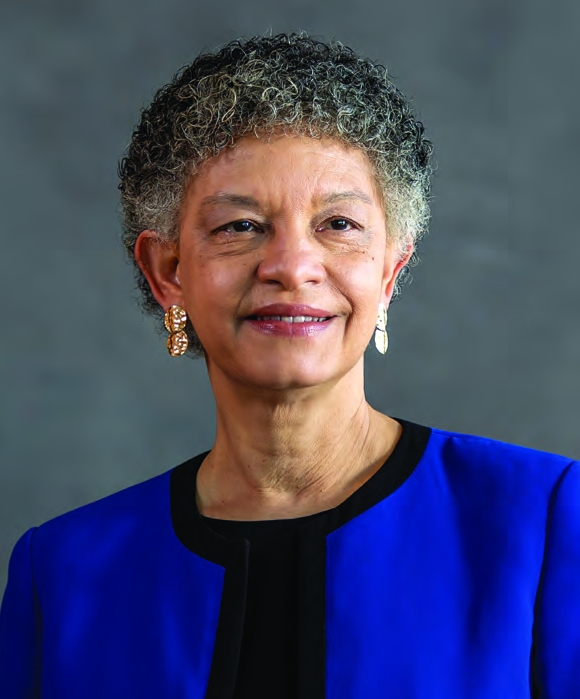
Boston Fed. President Susan Collins’s perspective
That view is shared by Susan Collins, the leader of New England’s central bank, the Federal Reserve Bank of Boston. She serves on the Federal Open Market Committee (FOMC).
“With inflation risks somewhat more contained, but greater downside risks to employment,” she told attendees at an event convened by the Greater Boston Chamber of Commerce earlier this month, “it seems prudent to normalize policy a bit further this year to support the labor market.”
Even so, “with some additional easing, monetary policy would remain mildly restrictive,” she said.
Such fine tuning allows people to adapt. Only rarely is drastic intervention required.
“Three years ago, coming out of the pandemic era,” Collins recalled, “inflation was much too high, the labor market was much too tight.”
She credited restrictive monetary policy with restoring some normalcy. Regardless, Collins supports steps to ease off.
“While the labor market remains relatively healthy,” she said, “further weakening would be unwelcome.”
Another quarter percent of easing, Collins opined, “would be appropriate.” The FOMC met Oct. 28–29 to discuss interest rates; its decision was not public at press time.
Her outlook is nuanced. She is attentive to new data and open minded to unexpected scenarios.
Black economy is an early indicator
“This is a rough economy,” OneUnited Bank President Teri Williams told the Banner. Continued inflation and a dearth of job openings are a double challenge to working people.
“Nationally, the unemployment for the Black community has gone up significantly,” Williams said. At 7.5%, Black unemployment exceeds anything post-pandemic.
Black communities offer early indicators of broader economic trends. “Last hired, first fired,” she summarized. “It happens to us first.”
She’s yet to see signs of widespread distress. “Most of our customers pay us back,” she said. In 13 years, affordable rental housing loans and single-family loans OneUnited originated have never lost a dime. “Still $0,” Williams said.
Other banks report some jitters.
Eastern Bank’s non-performing loan ratio rose to 0.76% in Q4 of 2024, before settling back under half that.
Privately-owned, OneUnited is not obligated to disclose its finances publicly.
Williams suggested OneUnited’s “residential” lending was reliable. “Knock on wood,” she said, “it’s held up.”
“Outside of multifamily” housing, she said, there are “some concerns in commercial real estate: office buildings, retail buildings.”
For Williams, “the great thing about New England is that we’re resilient.”
Headquartered in Boston with branches in Roxbury and Dorchester, OneUnited is the foremost Black-owned bank in New England. It serves Black communities from California to Florida, too.
“Our branches are in banking deserts,” she said. OneUnited’s loans compete with pay-day lenders.
Williams said OneUnited tried to steer clients “away from the predatory options that are out there.”
Whereas pay-day lenders charge more interest to cover potential losses, OneUnited’s products are comparable to credit cards. Plus, Williams pointed out, OneUnited reports successful repayment to credit bureaus. Not all her competitors do.
“If you don’t pay back, they do report this,” she said. “It can hurt your credit score but not improve it.”
“The communities that we serve locally have lower income, lower net worth,” she said. “And they are struggling with their credit score.”
But OneUnited doesn’t focus on the risks. Their clients are “actually very good with money,” Williams said, “they just don’t have a lot of it.”
When people don’t pay, she said, it’s because life threw them a curveball: they “lost a job or they’ve gotten sick.”
Inflation hits lower-income families most, she said. Low- and moderate-income families spend more of their income on essentials than high-earners. Prices for groceries, housing and transportation have “a real impact” on family budgets.
Many have yet to cut back.
“We’re definitely seeing a drawdown in savings,” she noted.
Public policy matters to New England
The pillars of our regional economy, especially education and health care, rely on public policy. For Black communities, key employment sectors are exposed to trade or tourism.
Black people tend to be “overconcentrated” in government, said Williams. “The loss of government jobs is going to impact us more.”
Likewise, Blacks and Latinos are over-represented in construction and services.
Statewide employment data released in August shows job losses in many of these sectors.
Year over year, there are 6,000 fewer business services jobs in Massachusetts and 4,400 fewer in government. Construction and leisure payrolls are 1,800 lower each.
Williams sees “strain” in key sectors over the last “six to nine months.” She pointed to a “rollback” in grants and research spending.
Nationally, the unemployment rate, 4.3%, is lower than in Massachusetts, 4.8%.
Boston Fed President Collins said, “Recent job gains have been concentrated in just a few industries.”
Due to decreased immigration, fewer jobs need to be created to maintain existing employment levels.
Before the pandemic, the economy needed 80,000 new jobs monthly for a stable unemployment rate, Collins said in her speech. About half such openings were filled by new immigrants.
Excluding the pandemic, “year-over-year payroll employment growth rates for New England and the United States both are among the slowest since 2011,” reads research from the Boston Fed.
“Although employment declines moderated in other sectors, including manufacturing, financial activities and professional and business services, the recovery was insufficient to offset the diminished growth in the education and health services sector and the government sector, resulting in an overall stagnation in the region’s employment.”
As always, jobs are only part of the economic puzzle. Inflation in New England has exceeded that of the United States for 16 consecutive months.