
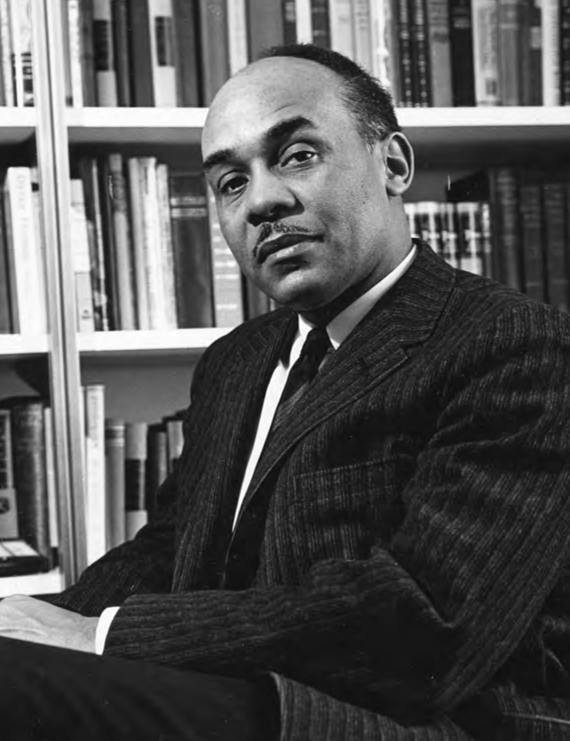
Ralph Ellison
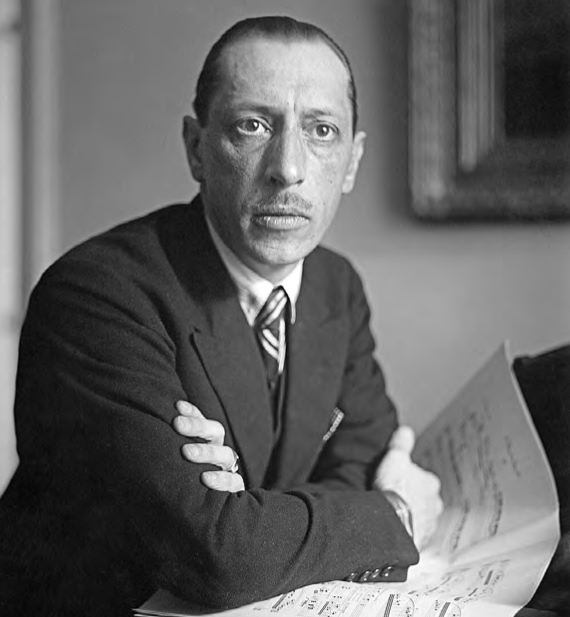
Igor Stravinksy
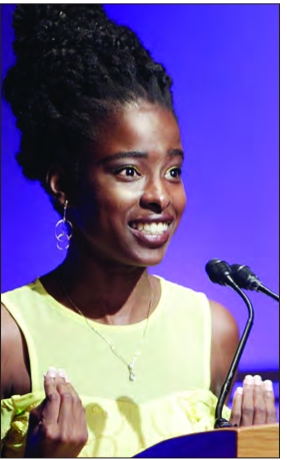
Amanda Gorman
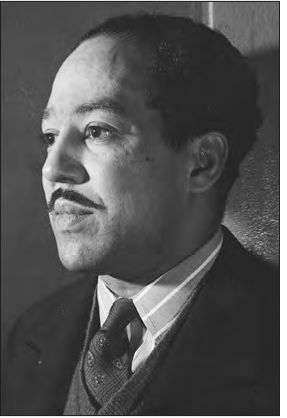
Langston Hughes

“We come … to the question of art. … artistic selectivity is to eliminate from the art form all those elements of experience which contain no compelling significance. Life is as the sea, art a ship in which man conquers life’s crushing formlessness … Though drawn from the world, “the organized significance of art … is stronger than all the multiplicity of the world … that significance alone enables man to conquer chaos and to master destiny.”
— Ralph Ellison, Shadow Act
So here we are today, and the great question rises again: to chaos or community, where are we all headed? It’s both an American question and a global one.
Exploring important cultural value sets is helpful for discussion. Because when people value something, they believe in it, and are willing to defend, support and propagate it. As we have raised, these are important considerations for all people. Recognizing values and culture are critical aspects that define communities today.
It was Black music and creative artistry that made the clarion call to raise voices, spirits, minds and moments that shaped and marked the world’s grand contemporary human narrative and paths.
Everything that was carried and raised in cultural experiences and heritages, from African rituals and slavery to the elegant minds of the Harlem Renaissance, to the progressive gospel-flavored communal activism in churches, has come through the distinct melodies of African Americans. If you listen to the street political shouts for social rights from the 1980s to the 2000s, and the next generation’s protest in hip-hop, you will hear and feel those notes.
Without this, the dialogues are rootless. In these discussions, it’s helpful to know what to believe and be willing to engage with, as well as see how others experience empathy. That’s the role of art: to lay before us the landscapes of human experiences. Art that does this can transcend and transform our definitions.
That’s the hope anyway. As we have been writing in this series, the arts call from us a capacity for understanding experiences.
And that’s why creative voices are vital because they refresh, recall and inspire ritual, imagination and memory, which allow us to access and perhaps understand the worlds around us, within us. That’s what a painting, a sculpture, a picture, an artful weaving of fabrics/textures, a poem, a song, a dance or a story does every time — they refresh, recall and inspire ritual, imagination and memory, which allow us to access and perhaps understand the worlds around us, within us.
Now, in times of chaos, what do the people want to do?
“Do not underestimate the power of a people who can put together the powers of ownership with the determination to have their voices and images firmly implanted in the fields of the culture they have cultivated. (Benny MM Andrews, journal entry, January 29, 2003, from Reconning, AAMCH)
I love that, “powers of ownership with the determination.”
In other words, when you know, when you own and value the power in culture, this can empower determination against all odds.
Artists tend to express, bend and shape their work to serve the purpose of enhancing human understanding and conveying causes and yearnings.
The great Russian composer Igor Stravinsky wrote in 1932, “I live neither in the past nor in the future. I am in the present. I can know only what truth is for me today. That is what I am called upon to serve, and I serve in all lucidity.”
Our own questions today — our dialogues — should be about our living in this society and our civic responsibility to address the current social situation. Just as the writer Richard Wright stated in his time, “this was a time to theorize.” Ralph Elliso’s idea that the function of serious arts and literature is to deal with the moral core of a given society makes good sense.
Richard Wright musing on his own work stated, “Many of the religious symbols (in Spirituals) appealed to my sensibilities and I responded to the dramatic vision of life held by the church...feeling that to live day by day with death as one’s sole thought was to be so compassionately sensitive toward all life … and the trembling sense of fate that welled up, sweet and melancholy, from the hymns blended with the sense of fate that I had already caught from life.”
His younger devotee, Ralph Ellison, goes further. “There was also the influence. … What were the ways by which others confronted their destiny. … Let us close with one final word about the blues: their attraction lies in this ..that they at once express both the agony of life and the possibility of conquering it through sheer toughness of spirit.… They fall short of tragedy only in that they provide no solution, offer no scapegoat, but only the self. …With its refusal to offer solutions, it (life) is like the blues.”
And in this lies Wright’s most important achievement: He has converted the impulse into a will to confront the world, to evaluate his experience honestly.
However, in a climate of impending cultural shifts, where taking late-night talk shows are going off the air indefinitely and owners of affiliated stations are seeking market mergers that would require government intervention, there are certainly legitimate concerns.
For all artists, we are in awe of the suppression of creative expression in this time.
The actors’ union SAG-AFTRA recently wrote, “Our society depends on freedom of expression.
Suppression of free speech and retaliation for speaking out on significant issues of public concern run counter to the fundamental rights we all rely … endangers everyone’s freedoms.”
With these concerns about attacks on artistic voice and freedom of expression, one hears the young artists of 1926 raising questions about their work and critiquing American societal structures, as well as the freedom needed to be expressive.
Langston Hughes wrote in “The Negro Artist and the Racial Mountain,” June 23, 1926, “An artist must be free to choose what he does, certainly, but he must also never be afraid to do what he might choose. … We, younger Negro artists who create now, intend to express our individual dark-skinned selves without fear or shame. If white people are pleased, we are glad. If they are not, it doesn’t matter. We know we are beautiful. And ugly too…. If colored people are pleased, we are glad. If they are not, their displeasure doesn’t matter either. We build our temples for tomorrow, strong as we know how, and we stand on top of the mountain, free within ourselves.”
What must we do to be saved? Music, dance, film, visual arts, poetry, and jazz, with its improvisational nature, were all promoted as symbols of American freedom, democracy, and innovation.
The U.S. government sent Louis Armstrong, Duke Ellington, Dizzy Gillespie, and many other artists “to represent.” It’s in The Arts’ DNA to represent these ideals as our defining values.
I like the book title “Dancing With Scars, My Choice” by Wyatt Jackson. It says it all.
Roxbury-born, dancer, educator, producer, spoken word, rap artist, in his brilliant book writes:
“Every time I dance, every time I speak truth in front of an audience, I’m honoring their legacy, honoring one’s culture, history. Every breath I take is borrowed from their survival. Knowing this changes how I walk through the world. It grounds me. It humbles me. It pushes me to make choices not just for myself, but for the future generations I will never meet, just like they did for me.
Growing up in Roxbury during the Civil Rights era meant walking in a world alive with both promise and peril. The streets were rich with Black excellence artists, doctors, dreamers and warriors for justice. I was a child in a sanctuary made sacred by sound, spirit, and survival… ultimately called to the stage, a place where truth could be spoken and dreams could be reborn ... . I found a mirror and a megaphone.”
Amanda Gorman’s latest children’s book, “Change Sings,” is a lyrical picture book that follows a young girl inspired to commit to her community, using music as a metaphor for collective action. This work is another contemporary account of the arts in collaboration, utilizing voice to raise matters for calls to action, encouraging readers to use “that voice” to make a transformational difference in the world.
There are at least four early dialogue movements of note: Harlem Renaissance, Negritude, Black Arts Movements and Civil Rights during the 1950s, 1960s and 1970s. Here, communities, arts visions, and the world were alerted globally as the musicians lifted popular and folk songs, dance, gospel songs, and community activism from all corners of the people for the good of the globe.
Arts are tied to a grounded allegiance of higher values that transcend what one sees. That commitment never seeks to be powerful over anybody; it aims to be of service to others. The inward immersion to tap into that larger creative power brings about a transformative energy, which, for lack of a more concrete explanation, art lifts the soul.
Yes, we are spending a great deal of time on faith, culture, heritage, values and the moral core of our society, all centered on love and uplift.
In this series, we will continue to address these ideas on arts movements and artists who spoke without fear or shame.