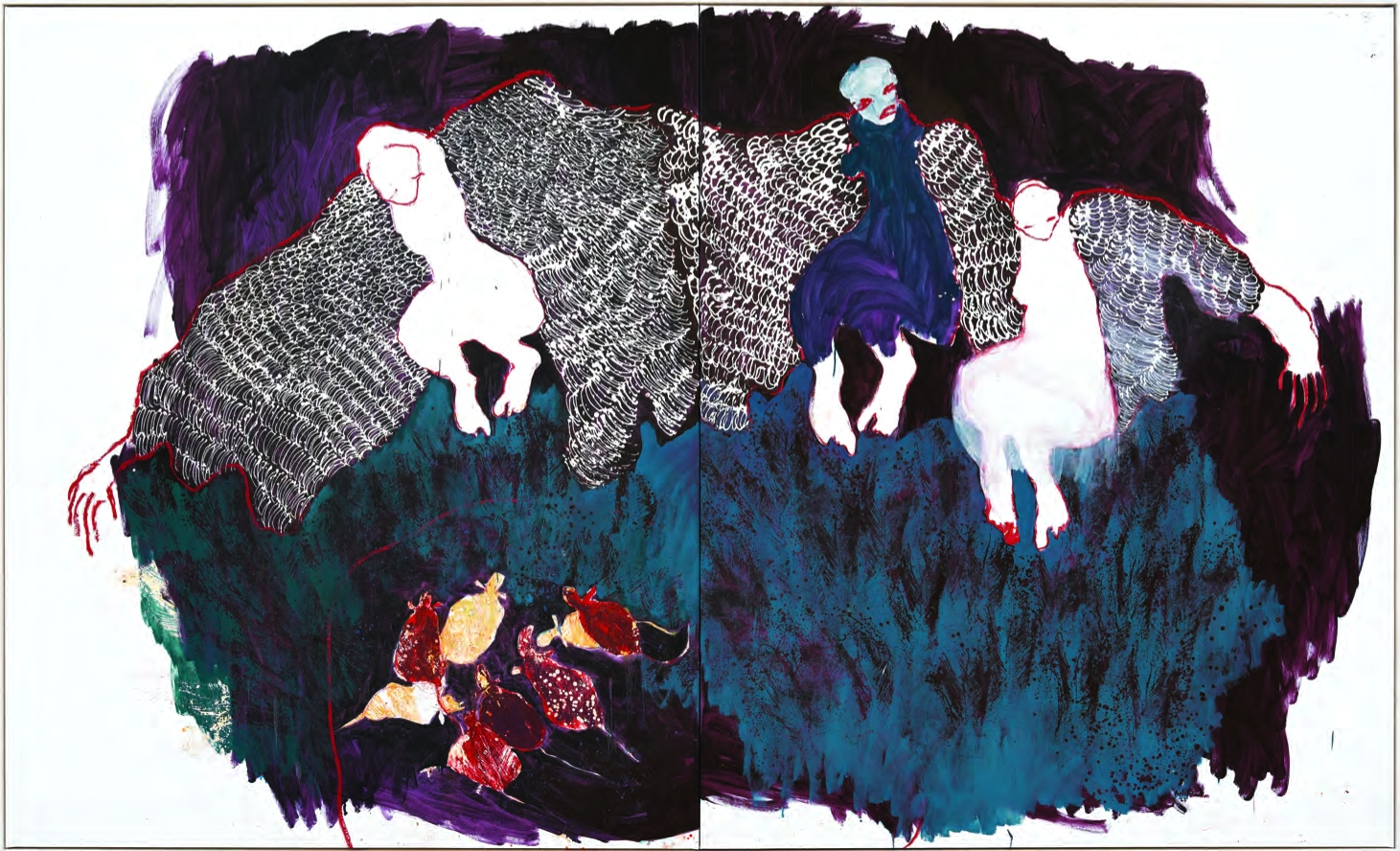
“Tinosvetuka rusvingo,” 2024. Oil-based printing ink and oil bar on linen. © Portia Zvavahera 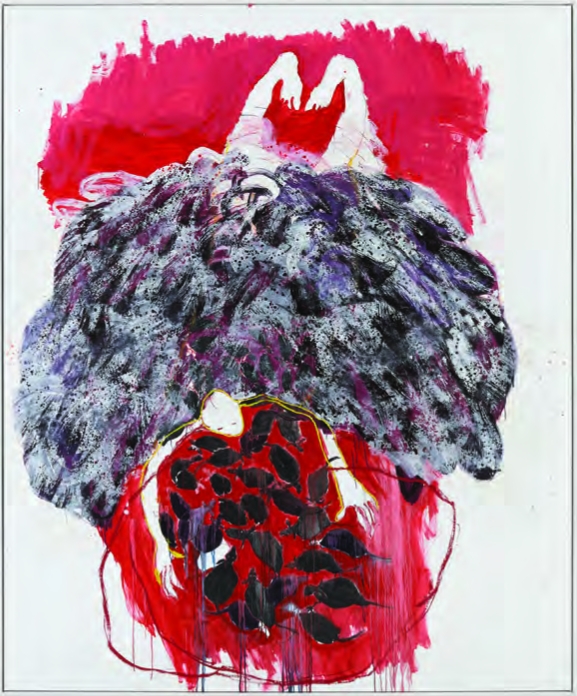
“Ndirikumabvisa,” 2024. Oil-based printing ink and oil bar on linen. © Portia Zvavahera
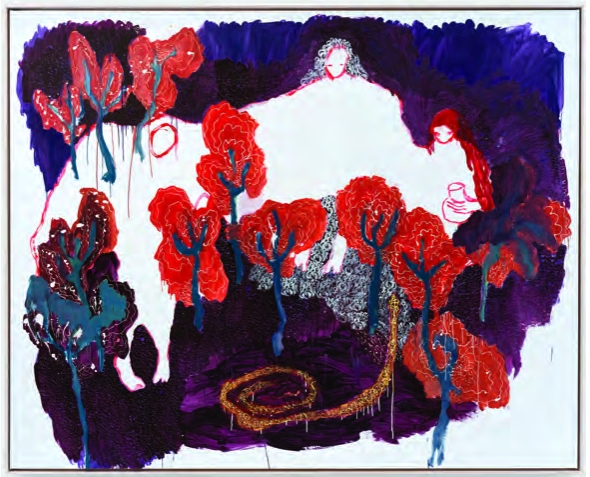
“Hondo yakatarisana naambuya,” 2025. Oil-based printing ink and oil bar on linen. © Portia Zvavahera
The dream world comes alive in “Portia Zvavahera: Hidden Battles / Hondo dzakavanzika,” an installation of seven gripping, large-scale artworks at the ICA Boston. This is the first solo U.S. museum show of Zimbabwean artist Portia Zvavahera featuring three works that have never been exhibited.
The large scale of each piece allows viewers to see up close all the different materials used to create these compositions. Painting and printmaking techniques are the base of the artworks. Zvavahera uses cardboard stencils, wax reliefs, linocut stamps and lace to create layers of intricate, painted patterns, not unlike the many interpretive layers of a dreamscape.
“Zvavahera compares her practice to the act of worship,” said Ruth Erickson, Barbara Lee Chief Curator and Director of Curatorial Affairs and Meghan Clare Considine, curatorial assistant, the duo that put together the exhibition. “Her vivid paintings conjure worlds glimpsed in her dreams, where animals repeatedly appear, bringing with them foreboding and prophetic associations that she is able to visualize in her work.”
Animals
are a core theme connecting these artworks and viewers can spot a large
bull, rats, snakes and winged animals throughout the exhibition. Many
of the symbols repeat; there are rats and snakes in multiple paintings
representing foreboding and danger. Zvavahera will often make multiple
paintings about one dream.
The
artworks are multilayered not just in visual patterns but also in
symbolic and cultural references. Zvavahera visually alludes to the
tradition of
Zimbabwean figurative painting, while also drawing on her experiences
with the indigenous Shona and African Pentecostal faith traditions.
“Ndirikukuona
(I can see you)” shows a nest of owls with sharp claws and leering red
eyes. In the Shona tradition, owls are a bad omen and often a sign of
death. In “Hondo yakatarisana naambuya” a trinity of figures (another
recurring symbol) faces down a large, menacing snake. The central figure
is Zvavahera’s grandmother.
The paintings are entrancing and unsettling. Like in many nightmares, the viewer feels a lack of control over the circumstances.
“Ndirikumabvisa”
depicts a recurring nightmare the artist had during pregnancy. A prone
figure lies on a field of vivid, violent red. The figure grasps at a
nest of rats, perhaps in an attempt to eradicate them. The only comfort
is the protective, feathery layer covering the figure. Zvavahera makes
this texture, repeated throughout the exhibition, by painting over palm
leaves from her garden.
For the viewer, there is no resolution. But for Zvavahera, the act of painting out the dreams is how she resolves them.
“Transferring
the energy of my dreams into my paintings has helped me heal myself,”
she notes in the exhibition wall text. “And remove the negative energy
from my nightmares.”
“Portia
Zvavahera: Hidden Battles / Hondo dzakavanzika” runs at the ICA Boston,
located in the Seaport District, through Jan. 19, 2026. Adult admission
is $20, student admission is $15 and the museum is free to everyone
Thursday evenings after 5 p.m.
ON THE WEB
Learn more at icaboston.org/exhibitions/portia-zvavahera


