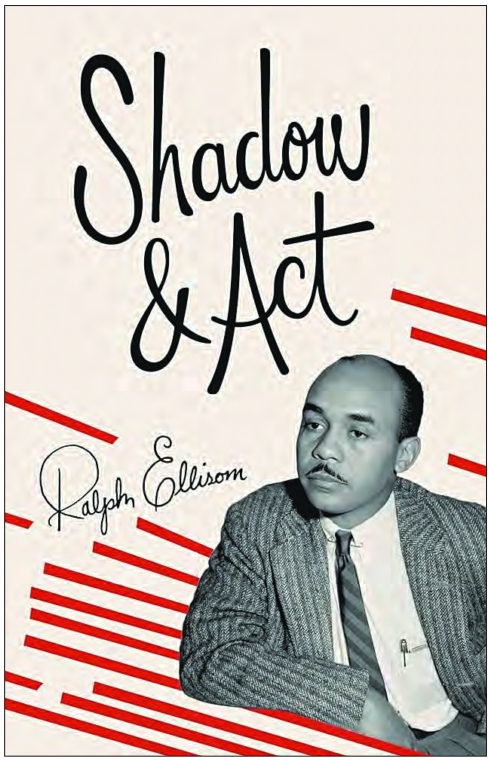
Ralph Ellison, author of Shadow & Act 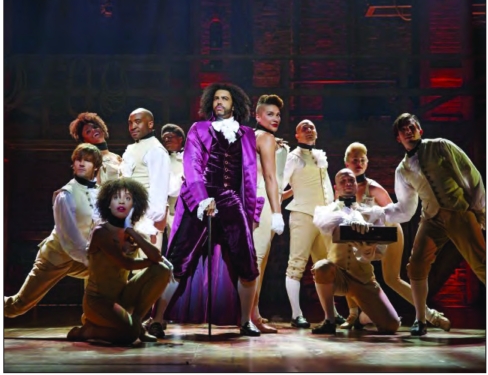
The cast of Hamilton

Nina Simone at the 1986 Playboy Jazz Festival
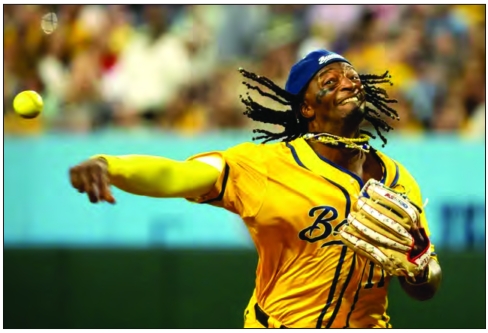
Savannah Banna’s pitcher, Correll Prime, delivers a fastball.
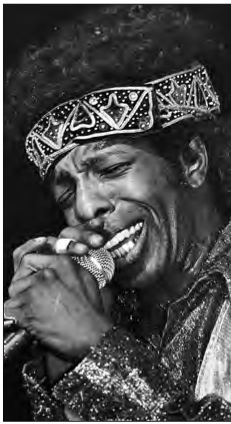
Sly Stone

“This is precisely the time when artists go to work. There is no time for despair, no place for self-pity, no need for silence, no room for fear. We speak, we write, we do language. That is how civilizations heal.”
— “No Place for Self-Pity, No Room for Fear”
Toni Morrison
I was recently watching the
Netflix series “Sunday Best,” which focuses on how Black performers,
from Sammy Davis Jr. to Nina Simone, broke down barriers and were for
all people.
Artist after artist and commentators spoke about how music was one of the “great healers of life” and “the barrier breaker.”
Ed
Sullivan, host of the show that championed Black artists in the mid-
1950s to 1971, commented, “The fight for freedom is the fight for
brotherhood. … This is a great crusade for brotherhood. The hope for a
shattered world.” Black performers were considered courageous citizens,
models of democracy, and goodwill ambassadors, seen as talented and
instrumental in lifting the nation. It made me think: Is there a
consensus today on what drives and draws this generation together,
across generational and ideological divides or discussions among us
about this?
Author
Ralph Ellison wrote in”Shadow Acts,” his 1964 essay collection, that
“For us the questions should be, what are the specific forms of this
[our] humanity … what in our backgrounds is worth preserving or
abandoning … folklore … rites, manners, customs, and so forth, which
insure the good life, or destroy it … . Such symbols serve dual
function; they allow the artists to speak of complex experiences, that
will enable the viewer an orientation, both emotional and associative
which goes so deep, that a culture may resound in a simple rhythm, an
image, an especially courageous expression as to the definition of
reality.”
What are the
language(s), images, rituals we can use today to define and display our
cultural voices, our heritages without fear or shame? What is safe and
sane? What are the boundaries of public cultural expression? And, a
larger question looms: What are the signs and symbols we use to define
our humanity? What values are we aligned with that underlie those
definitions?
What this
series of articles will do is raise ideas that can emerge and suggest
reflection, and then align them with values and themes that move
people’s spirit, imagination, thoughts and redemptive actions in our
world. Every generation has to find alignment within the values embodied
in our heritages.
Living forward; speak up for justice
What
counts is the way you represent and what message you bring to the
public, as Rev. Ray Hammond put it, to “take justice to the streets.”
This act represents your value stance to uphold and advocate for the
less protected in your community. How will you bear witness to what you
stand for? What song will you sing forward now and stand to be counted
in for, and what restorative rituals will you dance among?
These are relational questions, not religious but relevant, relatable and realistic.
This
is perhaps a kind of “arts evangelical humanism,” but with cultural
expressions and artistry that emphasize the importance of human dignity,
freedom and reason and the importance of human flourishing. It calls
for justice, and our ability from all angles to advocate for the
well-being of all people and with love and compassion. Rev. Martin
Luther King Jr. made the distinction in his book, “Between Chaos and
Community.” But today, how do we represent that and bear witness to a
value stance that potentially gets muffled or muddled in today’s times
of social and cultural uncertainty?
Culture and heritage: What did it feel like?
Do
you get excited about the times you are living in? Like the taste of
the food from an outside festival or a family reunion, the exhibits in a
museum stir you. What it felt like to be in your favorite live music
venue, or how you danced all night to a great DJ?
When the choir rocked it, and the spirit rose? Many folks just live to be
absorbed in the creation and cultivation of our culture(s) and their
reach. Today, that means many things. Are you perhaps exhausted from the
noisy blasts of news sound bites on your phone, iPad, TV or radio? The
question now becomes, “to be or not to be plugged in.” “The matrix” is
becoming the only way to take in, with ease and convenience, what
commercial culture is selling us today. So, where do you stand?
In
his song “Stand” Sly of Sly and the Family Stone state, “Stand, in the
end, you’ll still be you. One that’s done all the things you set out to
do. Stand, there’s a cross for you to bear.
Stand for the things you know are right. It’s the truth, the truth that makes them so uptight!”
Middle passages. Watch out for disruptive innovation.
What gets distributed in today’s “mega-media-cultural
technology-money-machinery?” If we are not mindful, we will find
ourselves in a situation where the pursuit of money and power morphs
into a quest for worthiness, distorting truth to lead us into unsafe
territories of blind commitment for comfort. So watch out for disruptive
innovations.
Today,
there is a highly persuasive and pressing politics-of-convenience
stance; push the button you like, then tap into popular culture
impulses. Due to social media access, “Doing the right thing” is outdone
by the politics and optics of dissecting popular culture, chasing and
choosing what you like.
Unfortunately,
outdated conventions or notions of value(s) cannot compete with today’s
market-shaped popular culture impulses. This is certainly not a new
phenomenon, but what accompanies today’s generation is access, acumen,
self-autonomy and
automation of digital engagement. “I push the button” that suits “me’
now. In this case, mass appeal triumphs and trounces old-school business
and marketing approaches. This disruptive innovation taps into the
popular culture of impulses, crowd interaction and digital media
technology that outperforms, or outsells traditional programming in
realistic and relatable ways.
Tread Lightly, ‘Hamilton’; Do you really want to have that conversation?
Remember
“Hamilton,” where opera, musical theater and hip-hop met, and the
generational camps intersected within traditional arts values
construction? What emerged was a product that totally rocked the
game and the results were extremely culturally fruitful. Hip-hop lyrics
and performance practices meet old world European form and fashion on a
Broadway musical stage, addressing the politics of democracy, history,
power, politics, race, class and “the American ways.”
The
musical achieved huge success due to several factors; it included an
innovative musical style, diverse casting and its ability to resonate
with contemporary audiences while exploring what Americans believed in
and valued. Add in ambition, legacy, immigration and the complexities of
nation-building, which remain relevant to modern audiences.
This
same formula was on display on a beautiful July evening when I went to
Fenway Park to see my cousin, pitcher Correll Prime, play for the
Savannah Bananas baseball team. It’s a league that was founded in 2016
with a “fans first” approach to the game, which features a wildly
entertaining format.
During this baseball game, fans sang songs ranging from hip-hop tunes
to classic rock, as well as Burger King commercial jingles and the theme
from “Cheers,” along with Bruno Mars material. In the middle of this
game, a rock concert featuring the All-American Rejects band took place,
giving an amazing performance on the level of a halftime Super Bowl
show. There was
onscreen, real-time, live, interactive singing and choreographed dances
as the team joined in on the staged numbers.
The
Bananas filled the stadium with over 37,000 people. It’s baseball, but
with a twist, focusing on entertainment and fan engagement. The league’s
unique approach has garnered significant attention on social media,
particularly on platforms like TikTok. This unique idea presents
traditional baseball with a real generational challenge, as it taps into
two major human engagement factors that are unbeatable: fan interaction
and participation, and popular culture, music and entertainment.
We
have come to a place where clearly the national cultural impulse,
values sets are shifting. Our cultural values, definitions of where we
stand, what’s worth preserving or abandoning— folklore, rites, manners,
customs — will, as Ellison pointed out, insure the good life, or destroy
it.
Coda
So, as Sly asked, where do you/we stand?
These
Banner pieces in this series represent positions at our current cross
sections of potential generational and ideological divides, from soul
songs and poetry to the power of technology and spiritual or ideological
paths to find better routes, keeping us caught up, connected and
aligned. And let’s remember, the best of what we bring now to the table
can, if we are thoughtful, be our attempts to humanize our community.