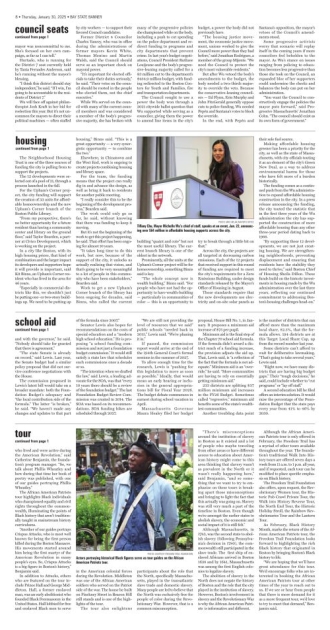
Rev. Dr. Tamara E. Wilson is pastor of Pleasant Hope Baptist Church in Baltimore. 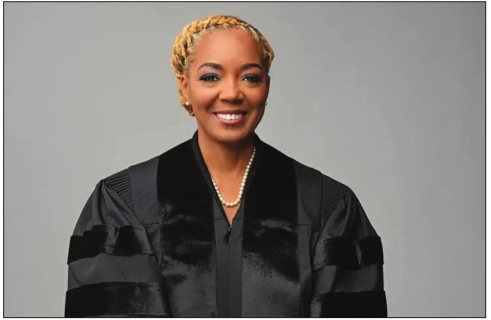
By fostering a sense of resilience and collective identity, Black churches are catalysts for resistance against oppression.
The church has always been a pillar within the Black community and when issues arise they often stand in protest with the very people who fill their pews. Throughout time, whenever Black people have needed a place to gather, the Black church has answered the call.
During the Civil Rights Movement, Dr. Martin Luther King Jr., was well recognized for his use of local congregations and his partnerships with fellow faith leaders in the fight for civil rights.
As the fight for social justice, racial equality and civil rights continues, so too does the Black church’s involvement in creating change for the masses. Serving as both spiritual havens and epicenters of social change, churches have been instrumental in advancing civil rights and addressing systemic injustices that continue to affect Black communities.
“Historically, churches have been involved in the Civil Rights Movement and served as meeting places, sources of funding and centers for us to come together to strategize,” said Rev. Dr. Tamara E. Wilson, pastor of Pleasant Hope Baptist Church in Baltimore. “The church is like a hub of our community and activism is an opportunity for us to come and connect our faith to what we’re dealing with in our everyday life.”
By
fostering a sense of resilience and collective identity, Black churches
are catalysts for resistance against oppression. The unique dynamic
shared by churches and social change movements has been a vital part of
progression in the Black community.
“The
church and social justice movements must coexist if we’re going to have
any civil society. In the Bible, Jesus literally turned over tables in
the temple and beat people in the temple,” said Rev. Robert Turner, of
Empowerment Temple in Baltimore. “Of course, Jesus also told us to turn
the other cheek, so it is important to know the context and to know what
the situation is. The intended goal determines the intended methods. If
your goals are to transform the system, then your methods should be
parallel to that.”
Turner has been involved in activism his entire life and his role as a faith leader has helped him better
support his community during times of political tension and social
injustice. “Arm them with the truth and arm them with means of voicing
discontent,” he says.
Turner
also believes one of the best ways he can serve his community is by
accompanying his mustard seed faith with real life action. “Every month I
walk from Baltimore to the White House for social justice, for
reparations, for my people,” said Turner.
Although
politics, civil rights and social justice are touchy subjects, they
cannot be ignored, especially in the Black church, which once served as a
news source for members of the community that lacked access to
information.
“For a
long time Black people didn’t have televisions and they really couldn’t
afford newspapers, so they got their news from the church on Sunday
mornings. The Civil Rights Movement and those types of things were able
to be done because of the pulpit,” said Scottie Willis, pastor of Big
Creek Missionary Baptist Church in Jackson, Miss. “It wasn’t just a
place for the preacher — it was a place for politics.”
Willis
noted that although there is room for politics to be discussed in the
pulpit, he never takes that space to push his own political beliefs.
Much like Turner he provides his
congregation with the truth and allows them to make their own decisions
about how to be involved in political and social justice movements.
“As
a pastor I’ll never tell you who to vote for, but I will make sure that
you are informed of both sides of the story. I can’t just have one
side. It’s my job to make sure that the congregation knows this is
what’s going on,” said Willis. “Even when we disagree, as the church it
is our job to be like Jesus and so in that way — we gotta love
everybody.”
All of the
faith leaders who spoke with the AFRO noted that their involvement and
support of social justice movements are a matter of their own personal
feelings but also their responsibilities as a faith leader. Wilson
shared that caring for the oppressed, feeding the hungry and speaking up
for the voiceless are the kind of things the Bible encourages people to
do; making these actions of advocacy a matter of faith — not politics.
“Our
faith teaches us that we are to care for the oppressed, that we are to
feed the hungry and speak up for those who are voiceless,” said Wilson.
“I don’t see that as being political, per se. It’s about us living out
the teachings of our faith. We can do those things in a bipartisan way.”
From
the pews to the streets, Black churches continue to be a source of
strength, resilience, and transformation. Their legacy as champions of
civil rights and social justice is a testament to the power of faith and
community in the ongoing fight for a more equitable society.
The
article Walking with God: Faith leaders discuss the role of the church
and social justice appeared first on AFRO American Newspapers.