

Erosion Of Constitutional Protections At Risk As Nation Debates Birthright Citizenship
Shortly after he was sworn into office as the 47th President of the United States, Donald Trump signed 26 executive orders into law. In alignment with his campaign promise to address aspects of U.S. immigration policy, he included an order aimed at ending birthright citizenship, a move that, predictably, instigated a firestorm of controversy about its legality and direct conflict with the Fourteenth Amendment of the U.S. Constitution.
Also predictable was the collective rebuke that he received from a multitude of agencies and individuals from across a wide spectrum of society. Federal District Court Judge John C. Coughenour issued a temporary injunction to the order, refusing the constitutionality of the order, while four separate lawsuits were filed by a coalition of state attorneys general, immigrant advocacy organizations, a union of pregnant mothers, and the American Civil Liberties Union (ACLU). The legality of this attempted policy change remains uncertain, but its significance lies in its potential to reinterpret the intent and application of the Fourteenth Amendment — an act of contrition for the wrongdoing of slavery in the United States that was set forth during the Reconstruction era.
Proposed by a House Joint Resolution and passed by the Senate in 1866, the ratification of the Fourteenth Amendment marked a pivotal step in granting citizenship and equal rights to African Americans and formerly enslaved people. It established citizenship for all individuals born or naturalized in the United States, prohibited states from denying equal protection under the law or depriving individuals of life, liberty, or property without due process, and allowed for the reduction of congressional representation for states that denied suffrage. It also disqualified former Confederate officials from holding office without congressional approval and empowered Congress to enforce its provisions. As a cornerstone of civil rights, it also provided the legal foundation for combating discrimination and achieving equality, paving the way for landmark legislation such as the Civil Rights Act of 1964 and the Voting Rights Act of 1965.
The Fourteenth Amendment has been widely interpreted to grant citizenship to all children born in the United States, regardless of their parents’ immigration status. In 1898, the Supreme Court affirmed this principle when it ruled that Wong Kim Ark, born in San Francisco to Chinese immigrants, was a U.S. citizen despite federal attempts to deny him re-entry under the Chinese Exclusion Act. Congress reinforced the precedent of jus soli birthright citizenship in 1924 by extending citizenship to all Native Americans born in the United States. This interpretation of the Fourteenth Amendment has thus stood as a symbol of inclusion and opportunity for the world’s “Dreamers,” shaping the identity of a nation built by immigrants.
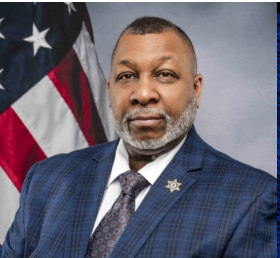
According to the American Immigration Council, this legal principle of automatic citizenship applies to individuals upon birth, based on either their ancestral (jus sanguinis) or birthplace (jus soli) status. Under the Fourteenth Amendment, children born on U.S. soil, including those of unauthorized immigrants, have the right to citizenship: “All persons born or naturalized in the United States, and subject to the jurisdiction thereof, are citizens of the United States and of the state wherein they reside.” The Presidential executive order redefining this long-held constitutional amendment supersedes the urgency of immigrant rights; it challenges how far any cabinet can undermine civil rights law. By targeting the birthright citizenship clause of the Fourteenth Amendment, this policy has ignited debate over the potential erosion of foundational protections that have defined American identity for over 150 years. Critics fear it could create legal uncertainty for children of immigrants, jeopardizing their access to essential services, legal protections, and opportunities. In my work as the Sheriff of Suffolk County, I see daily reminders of the desperate need for services and supports that the majority of the individuals remanded to the custody of the Suffolk County Sheriff’s Office, and many out in the community, require. I, and many of my colleagues in elected office, law enforcement, and the criminal legal system worry that such a policy, if upheld, will further destabilize the social and legal framework of the United States, placing millions of constitutionally-affirmed American citizens in limbo and plaguing immigrant communities through the immediate loss of federal protection.
The implications of this executive order extend beyond the immediate political landscape. If upheld, the policy could fundamentally alter the meaning of citizenship in the United States, affecting an estimated four million U.S.-born children with at least one parent considered an unauthorized immigrant, according to a 2016 Migration Policy Institute analysis. Future generations, particularly those of immigrant descent, may face increased barriers to belonging, fostering an environment of exclusion and inequality. Beyond the threats to emotional and social development, individuals without citizenship may struggle to obtain passports and legal identification. Without citizenship, not only will these individuals be unable to travel freely or participate in civic processes, but they will potentially be barred from obtaining secure employment, housing, education and healthcare -- the four major factors that often determine chronic involvement in the criminal legal system. Alarmingly, this order would also create the risk of statelessness for many, leaving them vulnerable to exploitation, discrimination, and a lack of sanctuary in the only country they’ve ever called “home.”
This attempted reinterpreting of the promise of birthright citizenship under the Fourteenth Amendment should prompt a deeper reflection on the values that shape our great nation’s identity, for it doesn’t just undermine our nation’s founding Enlightenment principles of universal and unalienable rights, it, sets a dangerous criterion for eroding other constitutional protections previously believed to be unassailable.