
Kelly Bates
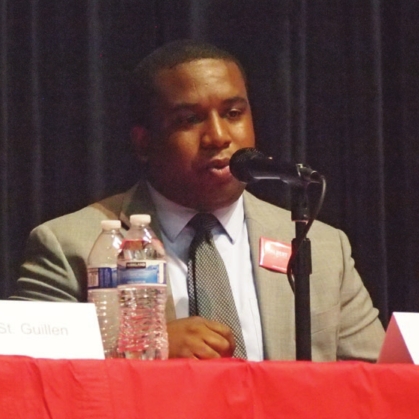
David Halbert
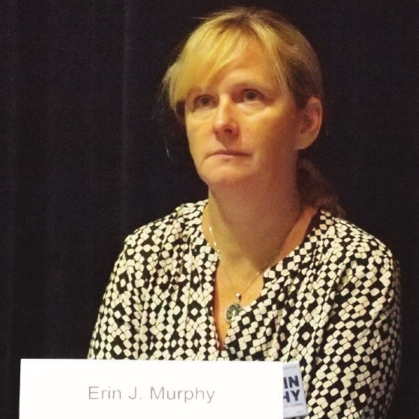
Erin Murphy
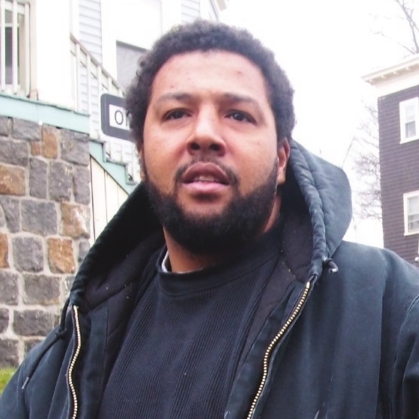
Domingos DaRosa
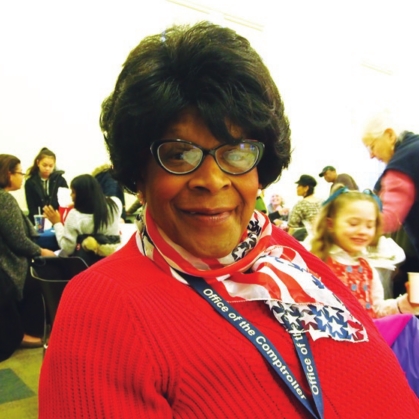
Althea Garrison
As incumbents Wu, Essaibi George vacate seats, candidates see opening
Boston is in a moment of profound social and political change coming on the heels of a year of a global pandemic and racial reckoning.
Now, as the city is on the verge of having its first Black acting mayor and a mayoral campaign in which the three current front-runners for the office are women, several candidates are positioning themselves to run for the at-large City Council seats vacated by mayoral candidates Michelle Wu and Annissa Essaibi George.
“Boston is in crisis,” said Kelly Bates, a Roslindale resident and nonprofit leader who has opened a campaign account and is considering a run. “Not only do we have COVID-19 ravaging our community, we have people in the throes of addiction, families no longer able to afford to remain in the city they love. We need a swift economic recovery that works for everyone.”
Also considering a run is Erin Murphy, a Boston Public Schools teacher and Dorchester resident who finished in sixth place during the 2019 at-large race and is currently putting together a campaign team.
Murphy says supporting small business owners and employees will be a special focus for her.
“We need a plan to get businesses back up and running,” she said.
Mattapan resident David Halbert, who finished in eighth place in the 2019 race, says he’s in a stronger position to run this year. He cites his experience and expertise with city government as an advantage over others in the race, having served as an aide to former at-large Councilor Sam Yoon and former District 6 Councilor John Tobin.
He says his experience with the City Council aide roles positions him to hit the ground running.
“I know what it is to be at community meetings as a representative of a councilor, fielding questions,” he said. “I know what it is to be a part of the deliberations on the council.”
Jamaica Plain resident Alex Gray, a policy analyst working for the Walsh administration, has raised more than $63,000 for his at-large campaign. Gray says his experience in city and state government, as well as his work with the disability community, would make him a good addition to the council.
“My work has brought me into every single neighborhood in the city,” he said.
Perennial candidate Althea Garrison is also planning a run. Garrison, whose campaign account balance hasn’t topped $2,000 over the last 10 years, currently has a balance of $1,232. Garrison, who came in fifth place in the 2017 at-large race, served on the council during 2019, after Ayanna Pressley left the body to represent the 7th Congressional District.
Also in the race are Lower Roxbury resident Said Abdikarim and Hyde Park residents Domingos DaRosa and Nick Vance.
The
challengers will likely face off against incumbent at-large councilors
Michael Flaherty and Julia Mejia to vie for the four atlarge slots.
Candidates may need to garner more than the 44,000 votes received by the
lowest vote-getter in the last open mayoral election in 2013.
The
ongoing COVID pandemic could put a damper on the large public
gatherings, door-knocking and house parties that have long been staples
of campaigns in Boston. Mailers, phone banking and advertising may play a
larger-than-normal role in this election season, making the tight
competition for campaign contributions even greater now than in years
past.
The council candidates are in early stages of putting together campaigns.
Halbert,
who said he’s raised more than $50,000 since December, this week hired
as campaign manager Annika Jensen, who last year led the successful
reelection campaign of state Sen. Becca Rausch.
Bates
and Murphy, who during the 2019 race raised more than $73,000, are
still in the exploratory phase of their campaigns and have not yet
assembled campaign staff. They will likely need to spring into action
soon. Veteran campaign strategist Eldin Villafañe said campaigning in
the current conditions will require that candidates for citywide office
raise more than $100,000.
“You want to be into sixfigures to be considered a strong, viable candidate,” he said.
Where do they stand?
Issues
that will likely play a prominent role in this year’s municipal
election include housing, education and criminal justice reform. Bates,
who is in the early exploratory stages of a campaign, has not yet staked
out positions on issues. Halbert, Gray and Murphy spoke about their
positions.
With many
in the city expressing frustration with Boston’s School Committee,
members of whom are appointed by the mayor, a recent poll found a
majority of likely voters support a return to an elected body.
Halbert
said he supports a hybrid model, a position he took in the 2019 race,
which would include some elected and some appointed members.
“I still believe a hybrid School Committee is our best option,” he said.
Gray, too, expressed support for a hybrid body.
“What’s most important to me is that we have as many voices as possible represented in the School Committee,” he commented.
Murphy expressed support for an elected body.
“I
do think the School Committee needs to work closely with the mayor, but
I think they’d be held accountable if they’re elected,” she said.
Asked
whether she would support rent control, Murphy did not take a position,
but said she is concerned about the cost of rents in Boston.
“I’m not a homeowner,” she said. “I’m worried my kids won’t be able to stay in the city. When rents go up, it’s hard to stay.”
Gray would not take a position, but said he’s open to a conversation on a targeted approach to implementing rent control.
“I’m
open to it, but I don’t know that there’s a one-size-fitsall solution,”
he said. Halbert said rent control alone cannot fix the city’s housing
crisis.
“I am in support of us having the option,” he said. “But I don’t think it’s a silver bullet.”
Halbert
said he supports zoning reforms that would allow developers to build
more housing as well as increased requirements for the number of
affordable units developers are required to build or fund.
Asked
whether she would support reallocating funds from the Boston Police
Department to pay for social services and violence prevention programs,
Murphy did not take a position but said she doesn’t think that police
should be called on for mental health emergencies.
“We
need programs to address mental health and trauma,” she said. “Where we
get the money to support them — I’d have to look into city funding.”
Halbert said he is “absolutely in support of reimagining how we allocate public safety dollars.”
Gray said he is open to the idea. “I don’t know the exact dollar amount, but I’m open to talking about it,” he said.


