How to make the best brew at home
When I go to the coffee shop, it isn’t for the coffee. It’s to see and be seen. Maybe do some “networking,” or hold someone’s baby, or type intently on my laptop. I’m too much of a snob to let someone else brew my coffee.
I respect the gentle complexity of a pour over, and the dark intensity of the French press. But espresso is my drink, and I’ll take its tight, focused flavor all day long. Sharp yet smooth, espresso is the purified essence of what I like about coffee.
The first espresso was made in late-1800s Turin, Italy, by forcing steam through coffee grounds. Today’s machines, which can cost north of $20,000, usually use water that’s just below boiling. But the classic stovetop moka pot, invented by Alfonso Bialett in 1933 — and its many imitations — can come remarkably close. With a price point in the mid two-figures, this investment can pay for itself in about a week.
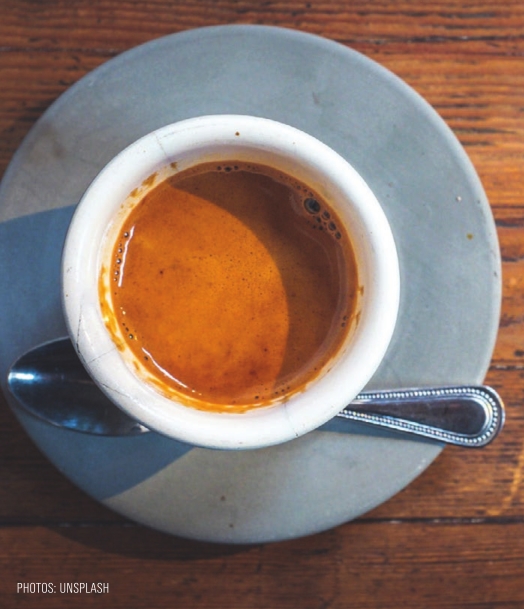
If the home barista plays their grounds right, the espresso will finish with a flurry of crema, a golden foam of small bubbles with a sharp, velvety flavor that marks a truly great cup of espresso. It appears when you have just the right amount of pressure and heat in the coffee filter, which depends on the balance of water and coffee grounds.
I started my home espresso journey with the original, octagonal-shaped aluminum Bialetti moka pot from a yard sale. Then I picked up a $35 stainless steel AMFOCUS online. I will always love that machine for being the one by my side when I made my quantum leaps, but now I’m totally into my $50 stainless Bonvivo, which is slightly larger and has a metal handle.
The other thing you need is a burr grinder, which crushes the beans to a uniform size between spinning metal spools.
My Baratza Virtuoso lists for $250, and is worth every penny. It replaced my $35 Cuisinart, which got the job done, if loudly and slowly.
A moka pot contains three pieces: a lower chamber to which you add water; a “filter basket” in the middle, where the grounds go; and a spouted collection chamber on top. I haven’t tested enough models to make any recommendations.
The ideal moka pot espresso has just the right amount of grounds to force up the pressure, and the right amount of water to end on a flurry of crema. Too much water and the crema will be doused with weak, off-tasting coffee, as steam continues to rush by the spent grounds. If there are too many grounds in the filter basket, steam won’t be able to push through, and so much pressure will build in the lower chamber that a little valve will start releasing steam, as the overpacked grounds burn in the filter basket. The few drops of coffee to make it through the grounds will taste of burnt plastic.
I make the best coffee with about a cup of water and 3 tablespoons of fine grounds, loosely added. For more intense, concentrated shot, use even less water — as little as a half-cup. A pound of beans will make about 20 cups per week.
THE TECHNIQUE:
• Heat the water, pre-measured, while you grind the beans. Pour the boiled water into the lower chamber, slip in the filter basket and carefully add the grounds, loosely, without tamping or even tapping. Shake slightly to make the grounds somewhat level. Screw on the top, using a hot pad for the base part that’s got a cup of hot water in it.
• Place the moka pot on the stove. If using a gas burner, don’t let the flames creep around the bottom and up the sides.
• As it heats, watch the little espresso machine like a hawk. The first fluid to emerge will be dilute, almost clear, but will soon darken. The crema can be fleeting, melting into the coffee almost as quickly as it emerged. But if you catch even a glimpse of crema, then you know it will be a good cup of coffee.
• When the water is mostly through, turn off the heat and pour the coffee. It may keep sputtering a little, and there will always be liquid left in the lower chamber. Let it go; we don’t want those dregs in our coffee.