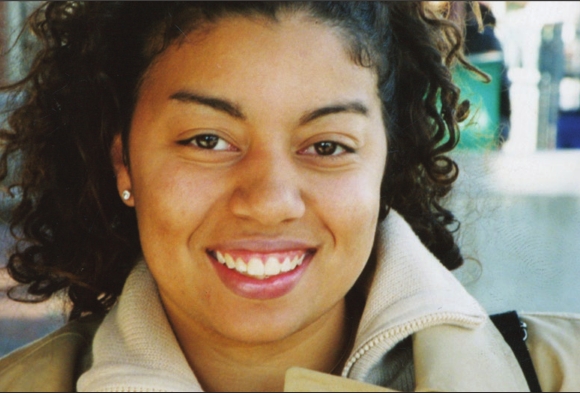
State Rep. Liz Miranda has introduced legislation that would require MassHealth to cover doula services.
Miranda seeks health coverage for doulas
City councilors are considering expanding doula services in Boston as a way to close health disparity gaps for black mothers, and experts say it could be an achievable way for the city to make a significant public health impact.
At a public hearing on Oct. 25, the Boston City Council Committee for Healthy Women, Families and Communities discussed solutions to maternal health care inequality among black women in Boston.
“There is a lot more that we need to do … to make sure that we are pinpointing and targeting certain populations,” said Councilor Kim Janey. “To make sure we are doing more for them and providing the services that they actually need, recognizing the intersection of womanhood and blackness.”
The most recent Health of Boston report shows that in the neighborhoods of Roxbury, Dorchester, Hyde Park and Mattapan, the black infant mortality rate is 10.3 deaths per every 1,000 births compared to the statewide average of 3.7 deaths. Black mothers in Boston also have the least access to prenatal care, but have the most preterm births, and are three times more likely to suffer from postpartum depression than their white counterparts.
Experts
who testified at the hearing recommended expanding doula care as a way
to close the disparity gaps. Although their services are not considered
medical care, doulas provide pregnant women with emotional, physical and
educational support and can act as advocates and as witnesses to
discrimination.
“What
doulas do is just introduce more autonomy into the birth experience,”
said Christina Gebel, a birth doula who works with Accompany Doula Care
in Boston. “You are choosing someone from your community who understands
you culturally, who shares your same race, languages, dialects within
those languages.”
A
2016 study reports that access to doula services improves birth outcomes
for racially diverse, low-income women, and increasing their feelings
of agency, knowledge and connectedness.
“I
would like to see a doula for every mom who delivers in Boston,” said
Gebel. “And I would really like to see those doulas come from the
community.”
A
nationwide survey in 2018 showed that 39 percent of black women who did
not use a doula said they wished they had doula care. Medicaid
beneficiaries were half as likely as privately insured women to know
about doula services, which are not typically covered by health
insurance.
“This
difference across races is significant,” said Rep. Liz Miranda, who is
working to make doulas more accessible in Massachusetts. “Women of color
are at the most risk of poor outcomes, yet have the least access to
doula care, and this must change.”
Miranda
is the sponsor of a bill in the Massachusetts House of Representatives
that seeks to have doula care covered by Mass- Health. It would also
establish a statewide registry of certified doulas who have been vetted
and approved by the government.
Dr. Robin Reed, an assistant professor at Tufts
University, called the doula solution “low-hanging fruit,” explaining
that of all the solutions for improving maternal health outcomes, it’s a
fairly easy one.
“If
[a doula service] were available to all, it could provide more comfort,
trust and communication where people may feel inhibited speaking out
themselves,” Reed told the committee. “The doula can help with that.”
The
city council committee plans to refile legislation at the beginning of
the next session in January that will allow members to revisit the issue
in a working session.
“There’s
a lot more as elected officials that we can do in the city of Boston
that will help us address the implicit bias and the explicit bias,”
Janey said, “and also arm black women with the tools that they need to
ensure that they get the health care that they deserve.”
ON THE WEB “Health of Boston” report: https://www.bphc.org/healthdata/health-of-boston-report/Pages/Health-of-Boston-Report.aspx