In
2017, the Massachusetts Black and Latino Legislative Caucus prioritized
and pushed forward significant pieces of legislation, including
sweeping criminal justice reform, police officer accountability and data
collection, recreational marijuana provisions and greater flexibility
for schools that teach English language learners. This year’s
legislative session will see Caucus members continue the enactment of
these bills and submit new policies that will improve the lives of
residents of color.
In
November, the House passed one of the biggest pieces of legislation
this year, the criminal justice reform bill that would repeal some
mandatory minimum sentences, give teenage offenders the opportunity to
seal and expunge their criminal records, and put limits on the use of
solitary confinement in state prisons, among other provisions.
Continued criminal justice work
In
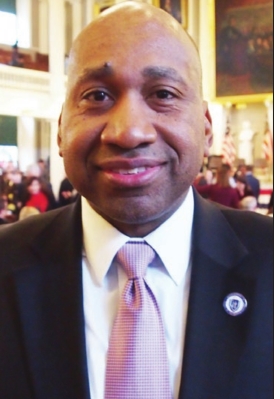
a phone conversation with the Banner, Rep. Russell Holmes said, “That
was a great accomplishment because we’ve been advocating for this since
five years ago and we’ve been able to see it progress substantially.”
Holmes
believes that the rise of opioid addiction in the state has changed
lawmakers’ minds on treatment versus punishment. “The opioid crisis has
changed the perspective of many folks,” he said.
The
bill is currently in conference period, Holmes noted, which allows for
last-minute amendments. “The House and Senate are getting the pieces
done to get it to the finish line,” he said.
Neither
the Senate or House version of the criminal justice reform bill
contained language mandating that police departments compile data on
police stops of pedestrians and motorists by race, something Black and
Latino Caucus members have long been advocating for.
Holmes
said another priority for the Caucus is the Special Commission on Peace
Officer Standards and Training, or POST. This bill, filed by Holmes and
Rep. David Vieira, would create a commission to study and implement a
POST system.
The POST
bill was introduced after a police officer in St. Louis shot and killed a
minor during a traffic stop. “This police officer had been moved from a
previous department and had been seen as a concern but the new
department was never notified,” said Holmes.
He
added, “When you move from one police department to another, there
should be background checks on how you performed in previous
departments.”
Sen. Sonia Chang-Diaz said criminal justice reform will continue to be high priority in 2018.
“We will be able to circle back to it in the beginning of the year with fresh eyes,” she said.
In
2017, the Senate passed a bill that would ban the use of cellphones
while driving — unless it’s through hands-free technology. “We want to
add provisions on that about racial profiling data collection,” said
Chang-Diaz. The House is currently still reviewing the bill.
Education, civil service 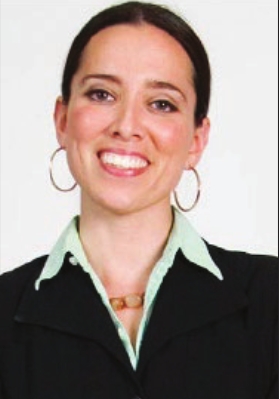
Chang-Diaz
said she was also excited about the state legislature passage of An Act
Relative to Language Opportunity for Our Kids, or the LOOK bill,
allowing public schools the ability to deviate from the previously
mandated Sheltered English Immersion model.
Since
the establishment of the SEI model in 2002, educators and bilingual
education advocates have argued that the learning technique was not
conducive for all English learning students, many of whom are already
marginalized for not being native English speakers.
Rep.
Holmes said that in 2018, through his work with the Caucus, he will
further push civil service reform. “State change needs to happen with
civil service and veteran preference,” said Holmes. “Mayor Walsh gets criticized
for the lack of diversity in the Boston Police and Fire Departments,
and removing absolute preference for veterans could alleviate this,” he
said.
Holmes said he wants civil service reform to change the residency requirement from one year to five years.
Cannabis equity
Last
year, Caucus members added several provisions to legal recreational
marijuana in Massachusetts including a bill introduced by Caucus members
Rep.
Byron Rushing
and Rep. Aaron Vega that would require an automatic expungement of
convictions for marijuana possession that are now legal.
Chang-Diaz
said she, along with other Caucus members, agree with the provisions.
“We were united in the conviction that since it’s going to be a legal
industry, we need to make sure it’s done in a way that’s equitable and
empowers communities, especially those negatively impacted by the war on
drugs,” she said.
The
Caucus would like to see a cannabis control commission that includes
people that would represent community issues, said Chang-Diaz.
Help for Puerto Ricans
In
the new year, Chang-Diaz said she would like to continue working with
the Caucus to advocate for supplemental funding for school systems
receiving new students from Puerto Rico post-hurricane, as well as
housing and employment flexibility for Puerto Rican families.
The state budget will be particularly important to focus on this year, said Chang-Diaz.
“With
the new Republican-proposed tax plan, our scarce funds dedicated to
issues we care about might become even more scarce,” she said.


